

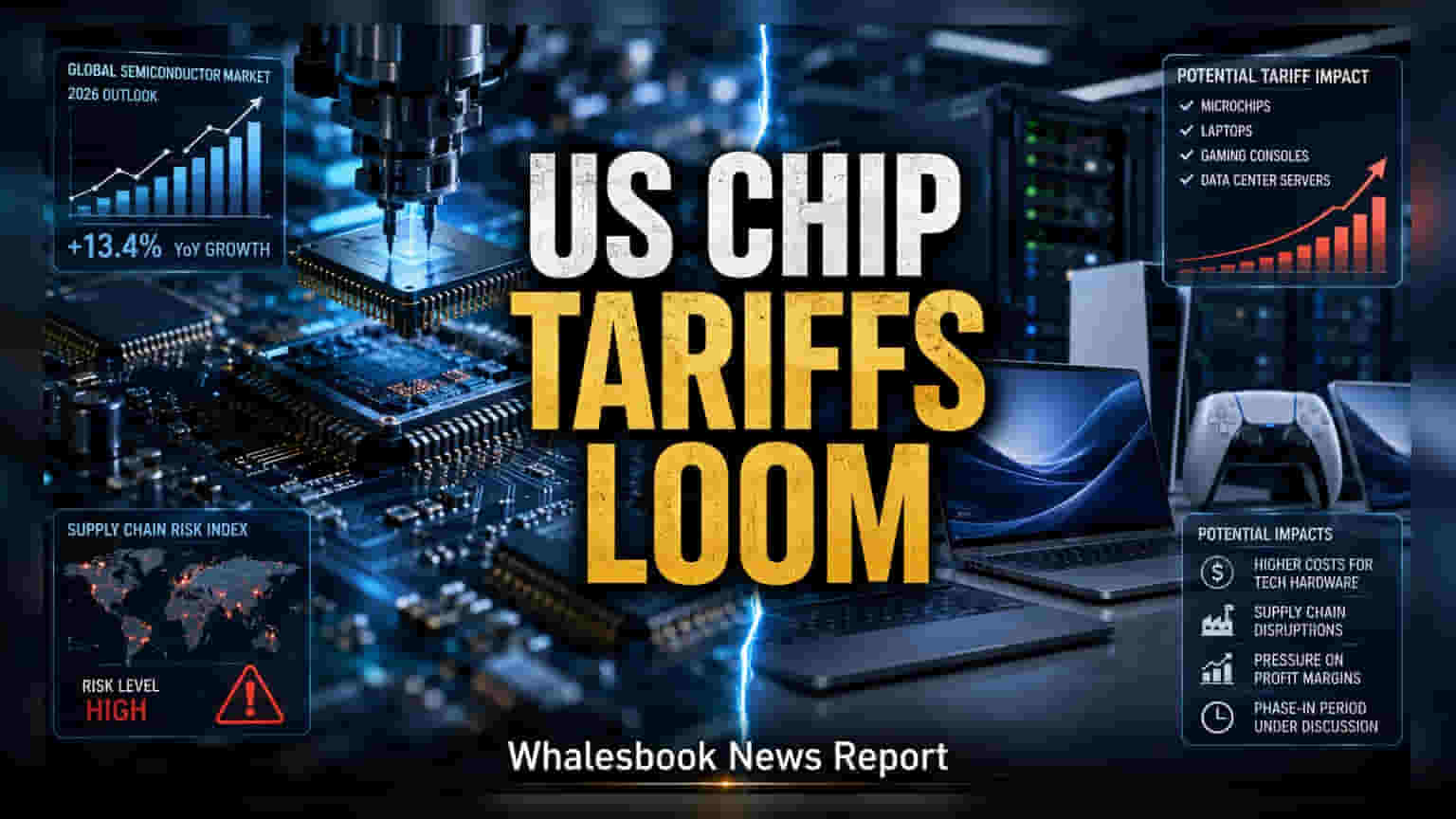
The US administration is reportedly considering expanded tariffs on semiconductors and tech hardware, including laptops and servers, to promote domestic manufacturing. Commerce Secretary Howard Lutnick is exploring a plan to link tariff relief to investments in US-based chip production. This potential policy aims to force global supply chain shifts, raising concerns about higher hardware costs and market volatility for technology firms.
The US government is considering a significant expansion of tariffs on the semiconductor and technology hardware industry. According to reports emerging in late August 2026, the potential new measures could move beyond just microchips to include finished products such as laptops, gaming consoles, and enterprise-grade data center servers. This move is part of an ongoing policy push by the administration to shift manufacturing away from overseas locations and into the United States.
Commerce Secretary Howard Lutnick is reportedly advocating for a specific structure to implement these tariffs. The proposal suggests a trade-off: foreign companies could avoid these new duties if they commit to building semiconductor manufacturing capacity directly within the US. This mechanism is designed to force global firms to move production closer to the US market, with the stated goal of reducing reliance on external supply chains.
While official confirmation from the White House and the Commerce Department is pending, the prospect of such broad tariffs has introduced uncertainty for global technology markets. For investors, the primary concern is the potential for supply chain disruption. If implemented, these tariffs could increase costs for companies that rely on imported hardware for data centers and cloud infrastructure. This inflationary pressure could eventually reach end-users, potentially affecting profit margins for tech companies that cannot easily pass on higher costs.
The semiconductor and hardware sector has been sensitive to geopolitical trade friction for some time. This potential policy shift highlights the administration's priority to secure domestic production capabilities. Market observers are keeping a close watch on how this might impact the global hardware ecosystem, particularly for companies that have established manufacturing footprints in overseas markets. The administration is reportedly discussing a phase-in period for the policy, which would be a critical factor in how quickly markets adjust to the new costs.
For investors, the situation remains fluid. The next important steps involve monitoring official US Commerce Department updates. The market will likely look for clarity on the timeline, the specific product categories affected, and any potential exemptions for companies that already have significant investment commitments in the US. Until official details are confirmed, the unpredictability of these trade policies will likely remain a source of volatility for the technology sector.