

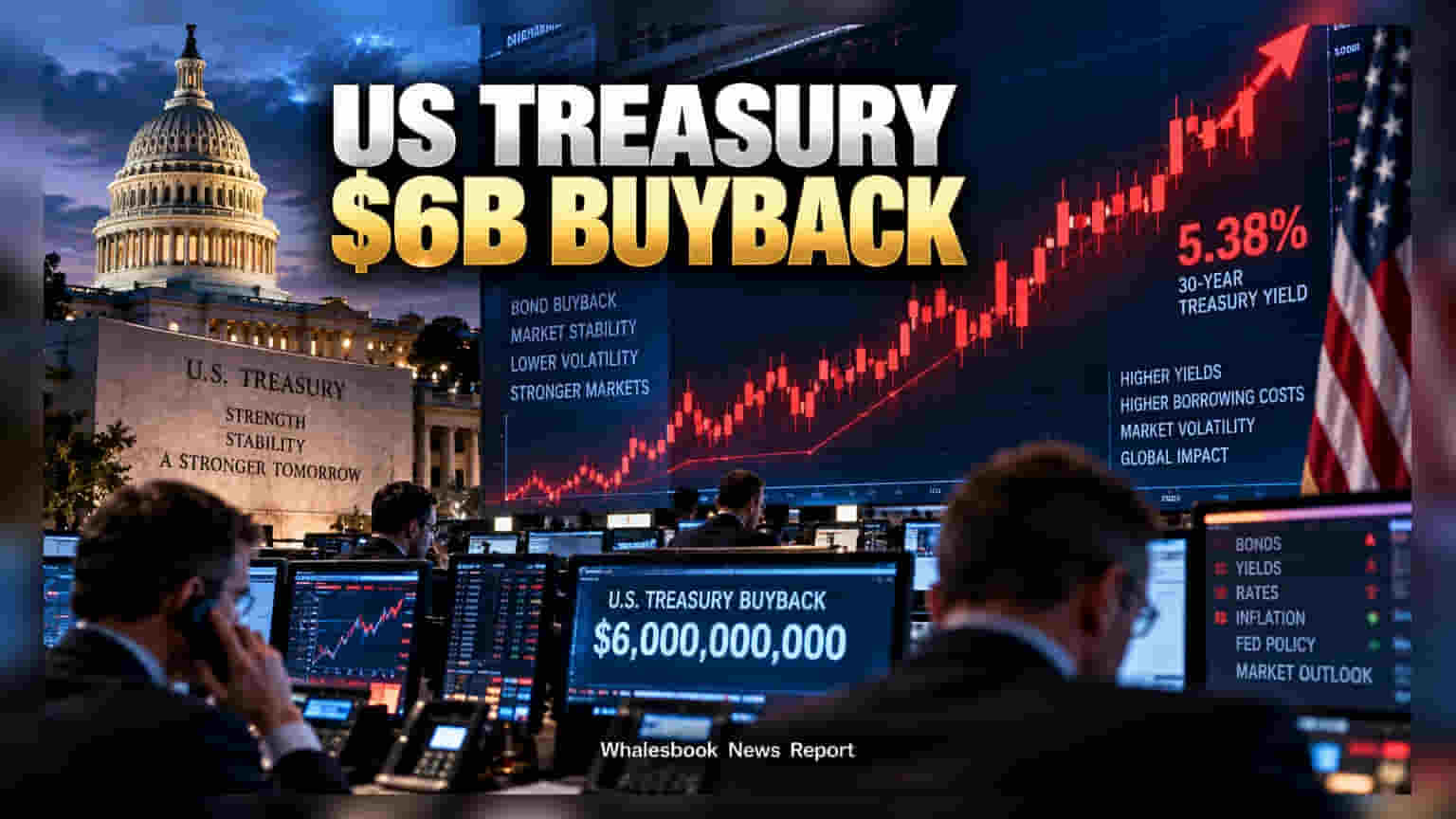
The US Treasury will purchase up to $6 billion in long-term government bonds to stabilize rising borrowing costs. This move aims to cool 30-year bond yields, which are currently testing 2007 highs, following a recent interest rate hike by the Federal Reserve.
The United States Treasury has announced a significant increase in its bond buyback program, planning to purchase up to $6 billion in longer-dated government debt. This is a sharp rise from the $2 billion target signaled in August and highlights the government's attempt to manage volatility in the financial markets. The initiative, led by Treasury Secretary Scott Bessent, aims to provide stability as borrowing costs climb, which directly affects interest rates for loans and mortgages across the economy.
Bond yields have been climbing rapidly, with the 30-year Treasury yield touching 5.38% on Wednesday. This brings yields close to the 5.40% level last seen in 2007. Rising yields generally occur when bond prices fall, indicating that investors are demanding higher returns to hold government debt. The pressure on these bonds is intensified by recent policy moves, including the first interest rate hike since 2023 implemented by the Federal Reserve under Chairman Kevin Warsh. These rate increases are intended to curb inflation, but they simultaneously put upward pressure on yields, making the government's debt-servicing costs more expensive.
While the Treasury aims to calm the market, the decision has faced criticism from some financial institutions. The Institute of International Finance has suggested that these buybacks amount to financial engineering rather than structural economic reform. Critics argue that while such interventions might temporarily lower yields, they do not address the fundamental issue of the national debt.
Investors are also cautious because of past outcomes. A previous buyback attempt on September 9 failed to reach its full capacity because there were not enough competitive bids from the market. This suggests that investors may remain hesitant to sell their bonds at prices the Treasury is willing to offer, or they may be holding out for even higher yields. If the market continues to react with skepticism, the impact of this $6 billion intervention could be limited.
The key for market participants will be to track whether this increased buyback volume can successfully narrow the gap between market demand and government pricing. Any sign of continued weak participation in these auctions could signal deeper challenges in the bond market, adding to the uncertainty surrounding global economic policies and the path of interest rates.