

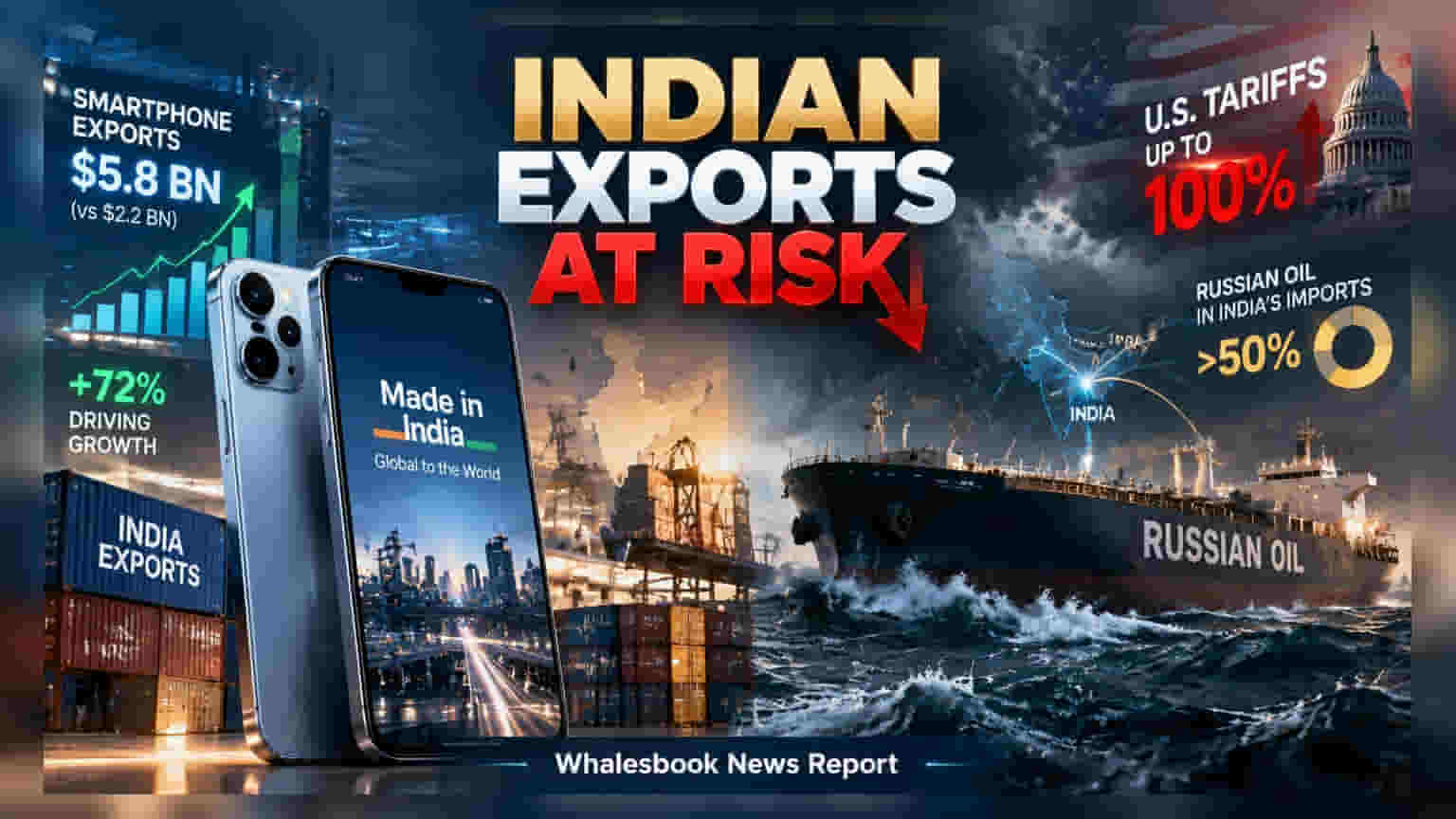
India’s recent export success, led by a surge in smartphone shipments, faces a new threat as the US considers 100% tariffs on countries purchasing Russian energy. With India’s reliance on Russian crude exceeding 50% at times by mid-2026, this policy conflict poses a direct risk to the trade recovery achieved over the past year.
The United States has enacted new legislation that grants the administration authority to impose tariffs of up to 100 percent on nations that continue to purchase Russian oil and gas. This policy update creates a major challenge for India, which has been working to reorient its export strategy to maintain economic growth amid global trade volatility.
Throughout late 2025, India successfully navigated a difficult trade environment by pivoting away from categories targeted by US duties. By focusing on goods outside of the immediate punitive measures, India managed to stabilize its trade deficit. Smartphone exports were the primary driver of this recovery, with shipment values rising to $5.8 billion, a significant increase from $2.2 billion in the previous year. This single category contributed to about 72 percent of the incremental export value during that period. Other sectors, including therapeutic substances, optical fibers, and aluminum, also provided essential support to this diversification strategy.
However, this export-led cushion is now at risk due to changing geopolitical factors. India has deepened its reliance on Russian crude oil as traditional supply chains from West Asia faced consistent disruptions. By mid-2026, data showed that Russian energy accounted for more than 50 percent of India’s total oil imports at certain intervals, marking a notable increase from the previous year. This heavy dependence on Russian energy is now creating a potential bottleneck for India’s international trade policy.
If the US administration chooses to exercise its new power to enforce punitive tariffs, the structural gains achieved through export diversification could be neutralized. The fundamental task for Indian policymakers is to navigate the difficult balance between ensuring energy security—which currently relies on affordable Russian imports—and protecting the export market from restrictive US trade measures.
Investors should monitor future official updates, including any potential trade negotiations between India and the US, as well as statements regarding energy procurement. Any shift in government energy policy or sudden changes in trade relations could directly impact sectors that rely heavily on global trade, such as technology hardware and manufacturing. The long-term sustainability of the current export growth will depend on how effectively the government manages these overlapping energy and trade pressures.