

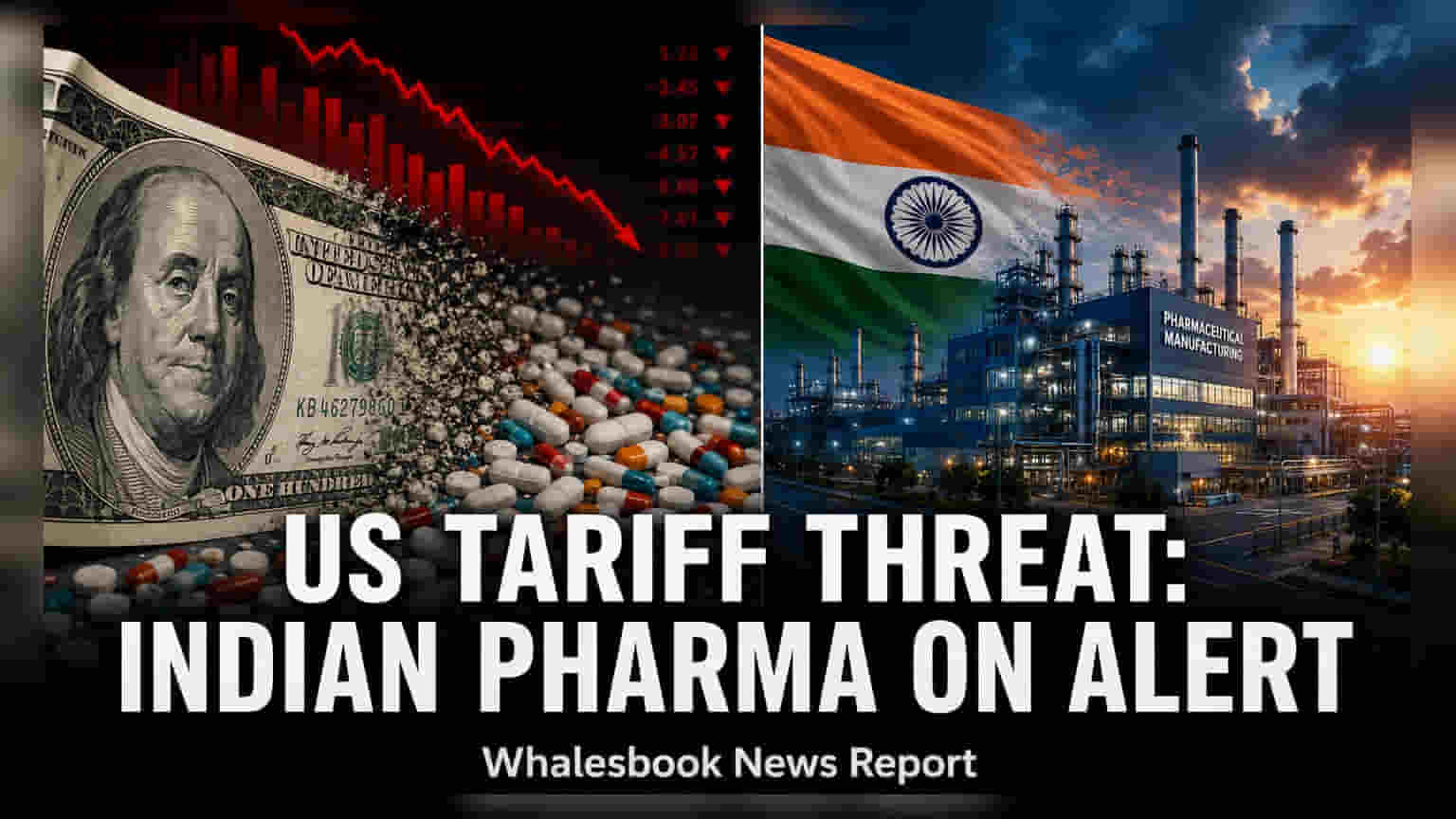
The US government has proposed a 100% tariff on imported generic drugs starting August 2028, rising to 200% by 2029. This policy aims to push manufacturing back to the US, creating potential revenue pressure for major Indian pharmaceutical exporters that rely heavily on the American market.
Detailed Coverage
The U.S. government has announced a major shift in its trade policy that could significantly impact the Indian pharmaceutical industry. Starting in August 2028, the U.S. plans to impose a 100% tariff on generic drugs manufactured outside its borders. This tax is scheduled to double to 200% exactly one year later. The core objective of this move is to encourage global pharmaceutical firms to shift their manufacturing base to the United States.
Revenue Exposure and Business Impact
Indian pharmaceutical companies maintain a deep connection with the U.S. market, which serves as a primary destination for their exports. Many large firms generate between 30% and 70% of their total revenue from U.S. sales. Companies with high exposure to the American market, such as Aurobindo Pharma, Dr. Reddy's Laboratories, and Biocon, face the most immediate risk if these tariffs are implemented as planned. Other major players like Sun Pharmaceutical Industries, Lupin, and Cipla also have significant business interests in the region that could be affected.
In contrast, companies that generate a larger share of their revenue from the Indian domestic market or other emerging regions may be better insulated. Firms such as Mankind Pharma, Ajanta Pharma, Alkem Laboratories, and IPCA Laboratories have business models that are less dependent on U.S. generic sales, potentially reducing their risk profile compared to their export-heavy peers.
Cost Disparity and Operational Challenges
Even for companies that consider building or expanding manufacturing plants within the U.S. to avoid these tariffs, the economic reality remains complex. The cost of production in the U.S.—covering labor, land, power, and regulatory compliance—is substantially higher than in India. Maintaining competitive pricing for generic drugs is already difficult due to the industry-wide trend of annual price erosion, which typically ranges between 6% and 8%. Adding high U.S. operating costs to these existing pressures could create significant stress on profit margins for manufacturers.
Potential Effect on U.S. Consumers
There is also a broader question regarding the impact on the U.S. healthcare system. Generic drugs make up roughly 80% to 90% of total drug consumption in the United States, and India is a major supplier for nearly half of these medicines. If these tariffs are applied, it could lead to higher medicine prices for American consumers, with estimates suggesting that a significant portion of the tariff cost could be passed on to patients. Furthermore, the U.S. is already managing a list of drug shortages; any disruption to the import supply chain could potentially worsen these availability issues.
Investors are now looking toward upcoming earnings calls and management commentary to understand how these companies plan to adjust their long-term strategies. The key monitorable will be whether companies attempt to set up new U.S. facilities or pivot their focus toward other international markets to reduce their reliance on the U.S. region.