 Whalesbook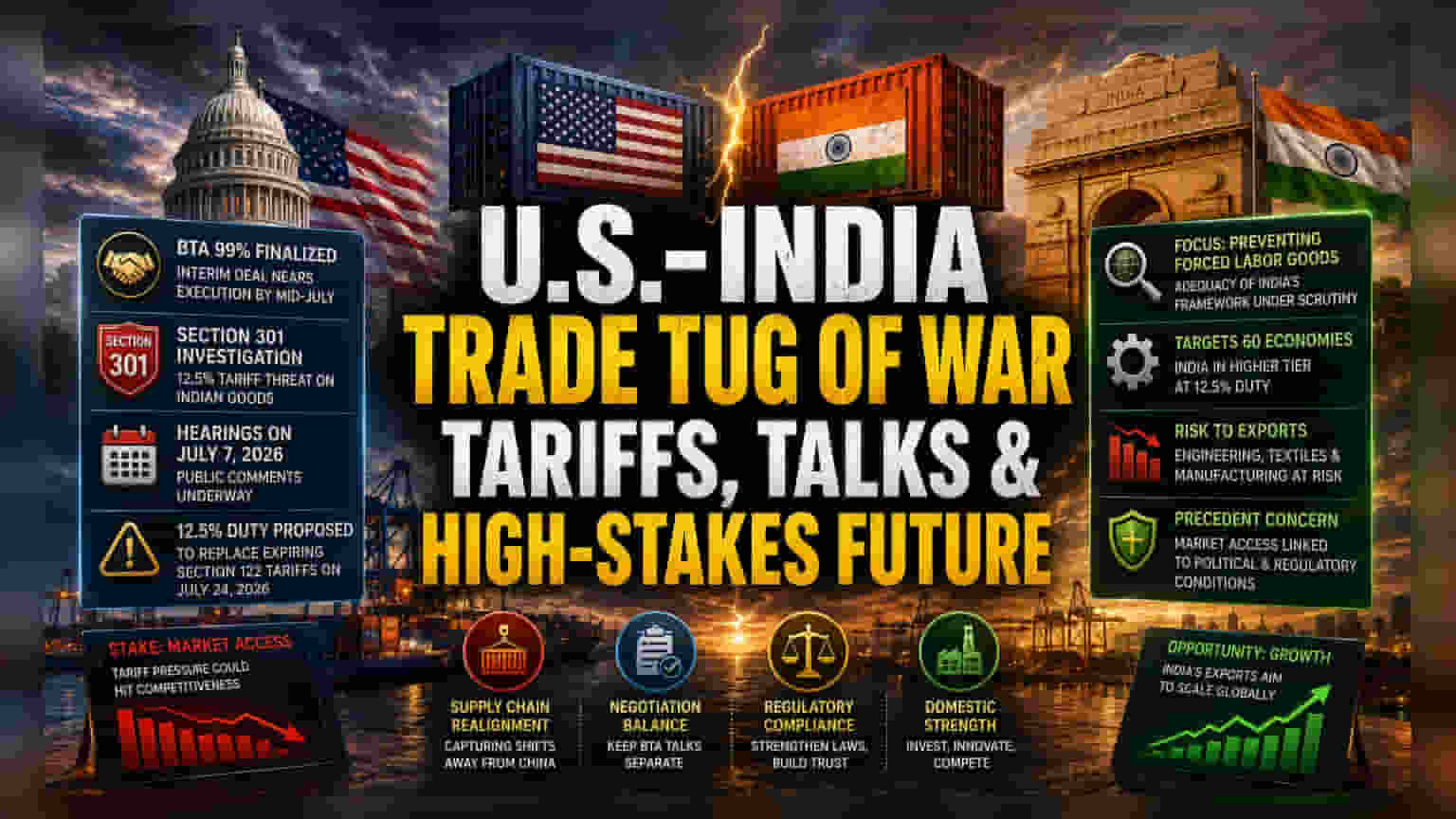


The Valuation of Diplomatic Leverage
While U.S. Ambassador to India Sergio Gor recently characterized the interim Bilateral Trade Agreement (BTA) as "99% finalized," the synchronized announcement of a Section 301 investigation introduces a layer of calculated volatility. This dual-track approach—negotiating an preferential trade pact while simultaneously threatening to levy a 12.5% tariff on a broad swathe of Indian goods—is characteristic of the current administration’s trade policy, which prioritizes immediate leverage over conventional diplomatic protocol. The USTR's investigation does not allege that Indian exports themselves are manufactured using forced labor; rather, it centers on the adequacy of India's regulatory framework in preventing the entry of goods produced with forced labor from third countries. By shifting the goalposts toward border enforcement and supply chain traceability, Washington is effectively turning an ethical policy stance into a new form of market access barrier.
The Analytical Deep Dive: Strategic Coincidence
The timing of these Section 301 findings is anything but accidental. With temporary Section 122 tariffs—originally implemented at 10%—set to expire on July 24, 2026, the proposed 12.5% levy serves as a ready-made successor to maintain the tariff wall that the U.S. Supreme Court previously challenged. India is not a lone target; the investigation encompasses 60 economies, including the EU, Japan, and the United Kingdom. However, placing India in the higher tier of proposed duty (12.5%) compared to other partners suggests a strategic attempt to compel concessions in the final 1% of the BTA negotiations. Trade observers note that India’s engineering and manufacturing sectors are particularly sensitive to these duties, as they are currently attempting to scale production to capture supply chain shifts away from China.
The Forensic Bear Case: Structural Risks
From a risk-averse perspective, the primary danger lies in the precedent being set. By successfully utilizing domestic trade law to force regulatory changes in foreign jurisdictions, the U.S. is signaling that market access will increasingly come with non-negotiable political and regulatory strings attached. Indian stakeholders face a significant hurdle: if these tariffs are finalized following the public hearings on July 7, they could take effect almost immediately, potentially nullifying the price advantages anticipated from the interim BTA. Furthermore, some analysts warn that relying on the BTA for long-term economic stability is misguided when the U.S. frequently shifts the criteria for "fair" trade. Unlike competitors who may secure lower duties through specific textile-mechanism exemptions, India’s broader economic profile leaves it vulnerable to these sweeping, entity-agnostic tariff applications.
The Future Outlook
Despite the friction, both New Delhi and Washington appear committed to the interim pact, with expectations for an execution phase by mid-July. The focus for Indian trade officials remains on keeping the BTA negotiations compartmentalized from the Section 301 proceedings. While the immediate focus is on the July comment period and upcoming hearings, the broader economic trajectory suggests that India will need to move beyond simple tariff-based bargaining toward internal industrial strengthening, as the U.S. appetite for tariff-based leverage shows no sign of diminishing.