

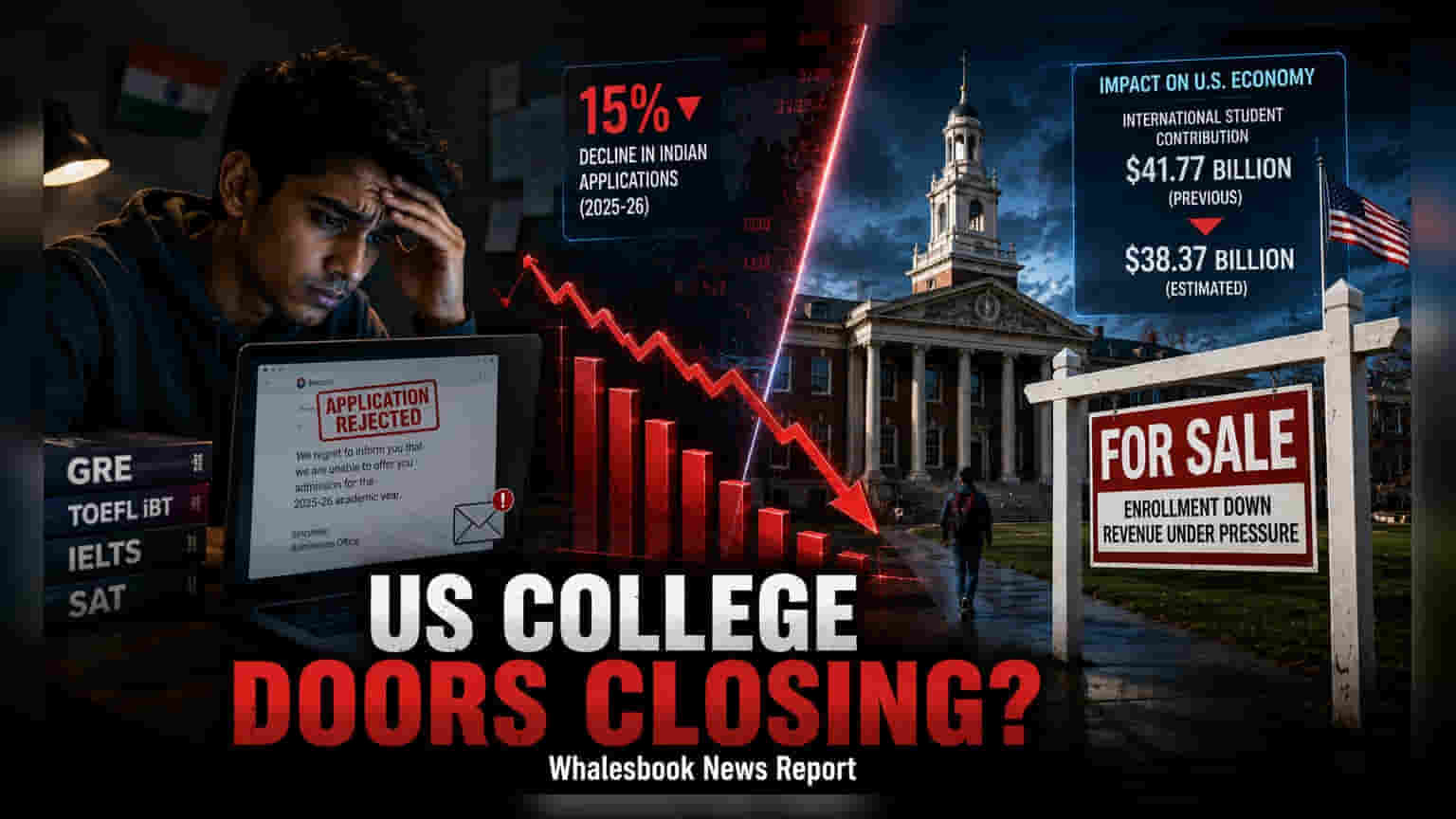
Indian student applications to U.S. universities have fallen 15% for the 2025-26 academic year, marking the steepest decline on record. This downturn, driven by new visa rules, impacts Indian ed-tech and study-abroad consultancy firms that rely on student volumes. Investors should track how these policy shifts affect revenue growth for companies focused on student placement and test preparation services.
A significant shift in the U.S. education market is emerging as applications from Indian students to U.S. colleges and universities have dropped by 15% for the 2025-26 academic year. This decline, which is the sharpest recorded decrease, is being attributed to stricter U.S. immigration policies and growing uncertainty regarding post-graduation work opportunities.
The drop stems from a direct change in how the U.S. handles international student visas. The Department of Homeland Security has phased out the traditional "Duration of Status" system, which allowed students flexibility during their studies. It has been replaced with a fixed admission period, generally capped at four years. This policy change, combined with concerns over potential new fees for the Optional Practical Training program, has created a less certain environment for prospective students.
For Indian investors, the development is relevant because of its impact on the education services sector. Many Indian ed-tech companies, test preparation providers, and overseas education consultancies derive a substantial portion of their revenue from facilitating admissions for students aiming for U.S. degrees. A sustained 15% decline in applicant interest suggests that these businesses may face pressure on their customer acquisition numbers and overall revenue growth in the coming quarters.
The broader economic implications are also notable. Data indicates that international student registrations could fall by approximately 1.1 lakh for the Fall 2026 term. This reduction in the student population is expected to lower the economic contribution of international students to the U.S. economy from $41.77 billion to an estimated $38.37 billion. While this impact is primarily on the U.S. local economy, the cooling demand serves as an early indicator of a slowdown in the international student mobility business.
Investors in the education and recruitment space should monitor whether this trend is temporary or signals a long-term shift in student preferences toward other destinations like the U.K., Canada, Australia, or Germany. The key monitorable will be the upcoming quarterly results of companies involved in study-abroad services, specifically focusing on commentary regarding application volumes, conversion rates, and any diversification of their student placement markets. Any further regulatory tightening or additional changes to post-study work rules in the U.S. will likely remain a risk factor for the sector.