

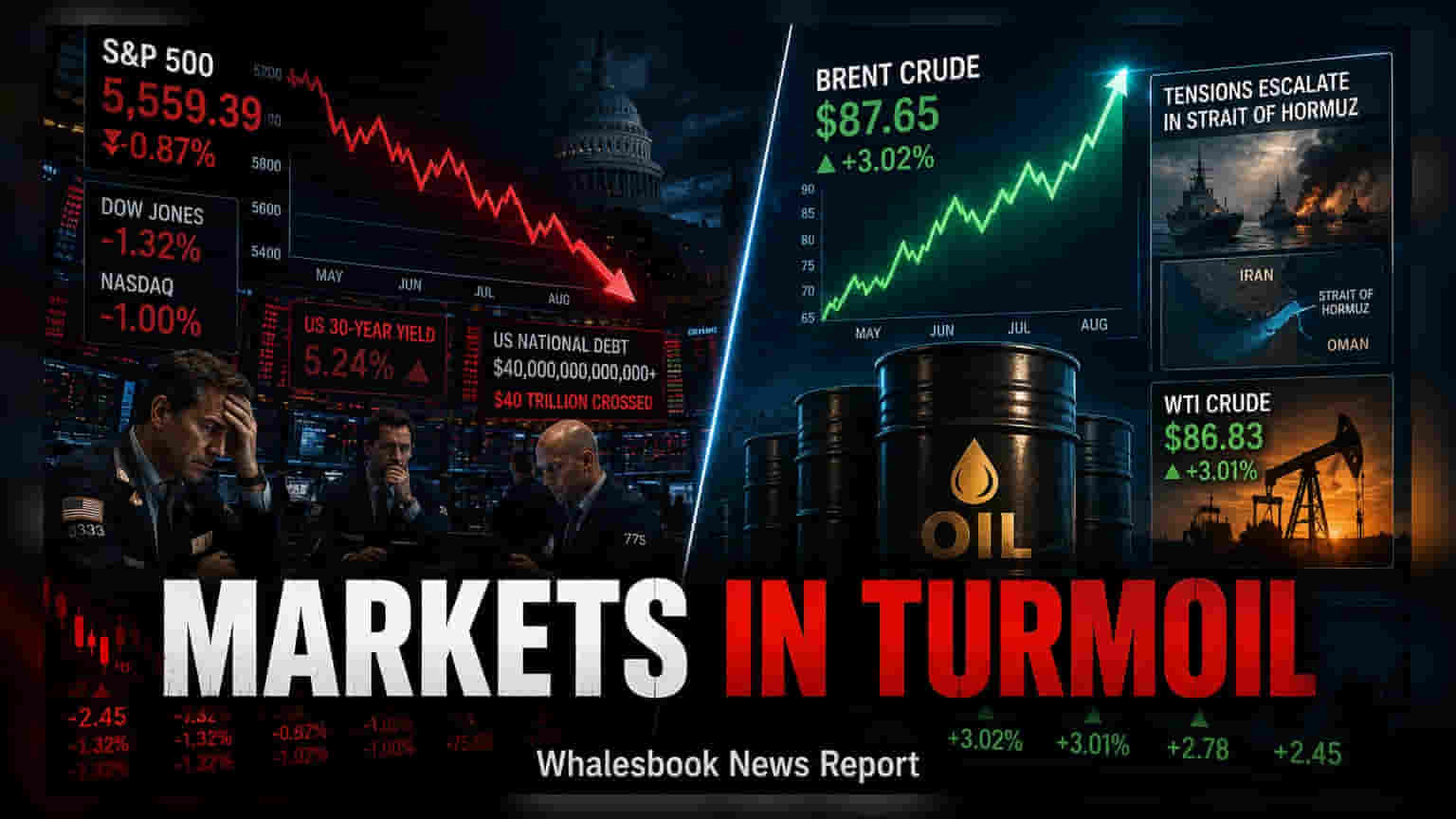
Wall Street indices fell as long-term bond yields rose, overshadowing the US Treasury’s attempt to stabilize the debt market. Despite plans to increase bond buybacks, investor confidence remains low due to concerns over surging national debt and geopolitical instability. For Indian investors, the focus remains on how global risk appetite and rising oil prices influence foreign fund flows and local inflationary trends.
US stock markets ended in the red on August 20, 2026, as investors remained wary despite government efforts to calm the bond market. The Dow Jones Industrial Average dropped 1.32%, the S&P 500 fell 0.87%, and the Nasdaq Composite lost 1.00%. This sell-off was driven by a sharp rebound in long-term Treasury yields, which climbed back to roughly 5.24% for 30-year notes, erasing the temporary relief from recent policy announcements.
The market reaction highlights skepticism regarding the US Treasury’s latest move. Treasury Secretary Scott Bessent had announced plans on August 19 to increase liquidity support buybacks for 10-30 year securities to at least $4 billion per operation, effective September 9, 2026. While the goal was to support the debt market, investors seem more concerned with the underlying fiscal reality. For the first time in history, US national debt has crossed the $40 trillion mark, a figure that continues to weigh on investor sentiment and long-term borrowing costs.
Adding to the pressure, crude oil prices surged as tensions between the US and Iran continued to create uncertainty. West Texas Intermediate (WTI) rose by approximately 3%, reaching $86.83 per barrel. Geopolitical conflicts often raise fears of supply chain disruptions, which can lead to higher global energy costs. Because higher oil prices often fuel inflation, they complicate the work of central banks trying to keep prices stable.
For Indian investors, developments in US financial markets are a key indicator of global risk appetite. When US yields rise and uncertainty grows, it can sometimes lead to foreign investors pulling money out of emerging markets like India in favor of safer assets. Additionally, sustained high oil prices are a pressure point for the Indian economy, as they increase the import bill and can create volatility for the rupee.
The market is now shifting its focus to the upcoming annual Jackson Hole economic symposium. Investors will be looking for clues regarding the future path of US monetary policy and the direction of the incoming Federal Reserve leadership. The ability of the US government to manage its record-high fiscal debt without triggering further market volatility remains the primary concern for global participants in the coming weeks.