

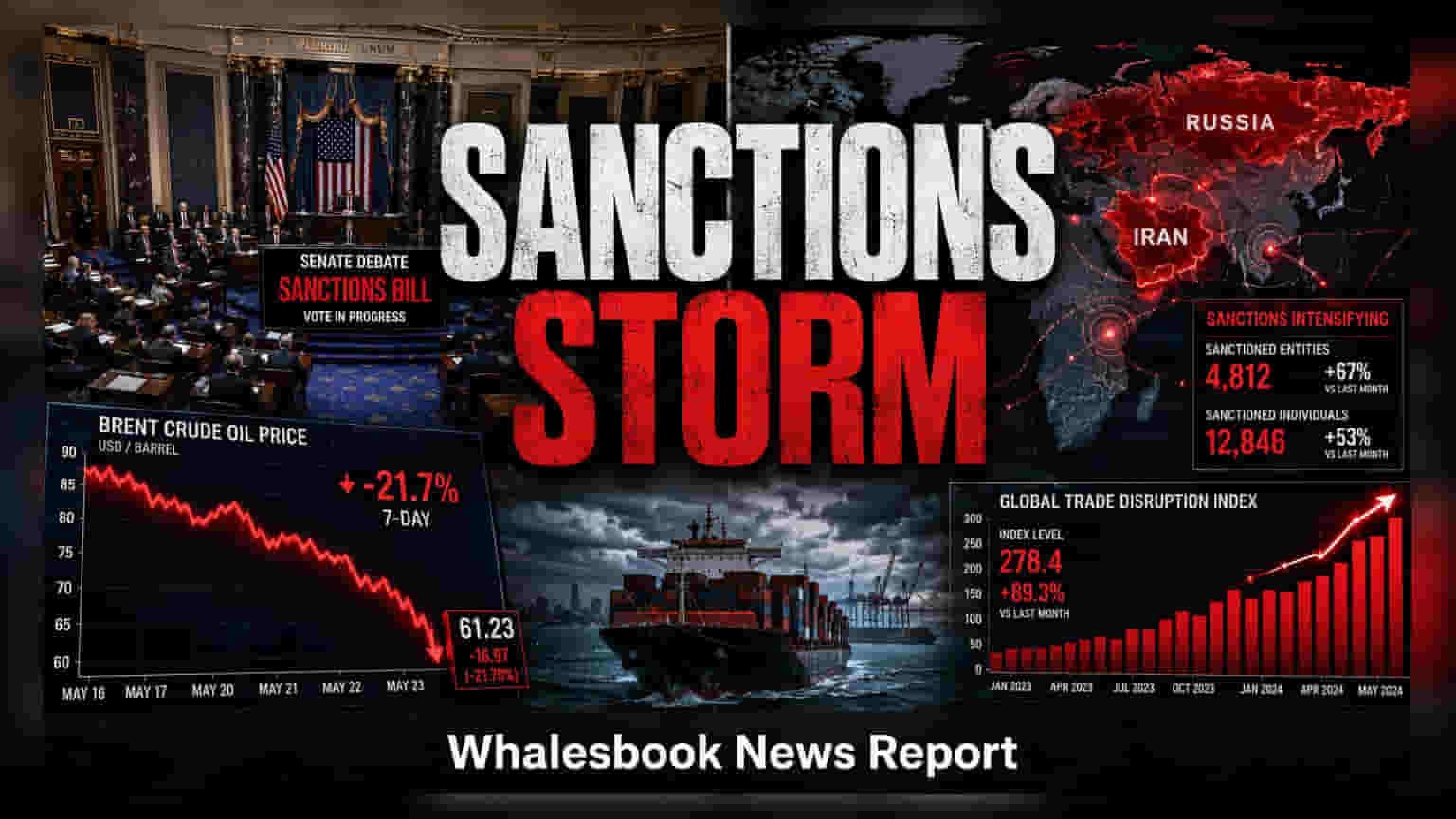
A bipartisan U.S. Senate group is advancing the 'Lindsey O. Graham Sanctioning Russia and Iran Act of 2026' to penalize major importers of Russian and Iranian oil. The bill includes provisions for tariffs of up to 100% on imports from nations identified as top purchasers of Russian fuel. This legislative move may impact energy trade dynamics and costs for major economies that rely on these sources.
A bipartisan group of U.S. Senators is fast-tracking new legislation that could significantly change global energy trade. The proposed bill, officially named the 'Lindsey O. Graham Sanctioning Russia and Iran Act of 2026,' aims to impose stricter financial penalties on countries that continue to buy oil from Russia and Iran. The move is intended to limit funding for Russia's operations in Ukraine and curtail Iran's energy and weapons programs.
Potential Tariff Impact
The legislation introduces a critical provision that grants the U.S. President the authority to impose tariffs of up to 100% on imports from countries that are primary buyers of Russian oil and gas. According to the proposed text, specifically under Section 113, the top five nations by volume of Russian fuel purchases are the primary focus of this measure. The bill also seeks to sanction entities associated with the so-called 'Shadow Fleet' that is often used to transport Russian energy products.
Extension of Iran Sanctions
Beyond Russia, the act includes a significant extension for existing restrictions on Iran. It proposes to extend the current Iran Sanctions Act by five years, keeping secondary sanctions in place until 2031. This is designed to maintain consistent pressure on the country's energy sector. The tariff authorities granted in this bill are also set with a five-year sunset period, meaning they would require future legislative action to remain active beyond that window.
Investor and Market Context
For investors and market participants, the primary concern lies in the potential for increased costs and volatility in global energy markets. If the U.S. proceeds with tariffs, it could lead to disruptions in supply chains for countries that are major importers of Russian or Iranian crude. Increased trade tensions often lead to higher freight costs, insurance premiums for tankers, and overall instability in energy pricing.
Companies in the oil and gas sector, particularly those involved in refining and importing, may face uncertainty if trade routes are restricted or if the cost of sourcing raw materials rises due to these geopolitical measures. While the bill is currently in the legislative process, the market will likely track how these potential tariffs could affect international trade policy and the availability of energy supplies globally. The next step for the legislation involves procedural votes and committee discussions, which will provide more clarity on the final scope and potential enforcement dates of the proposed sanctions.