

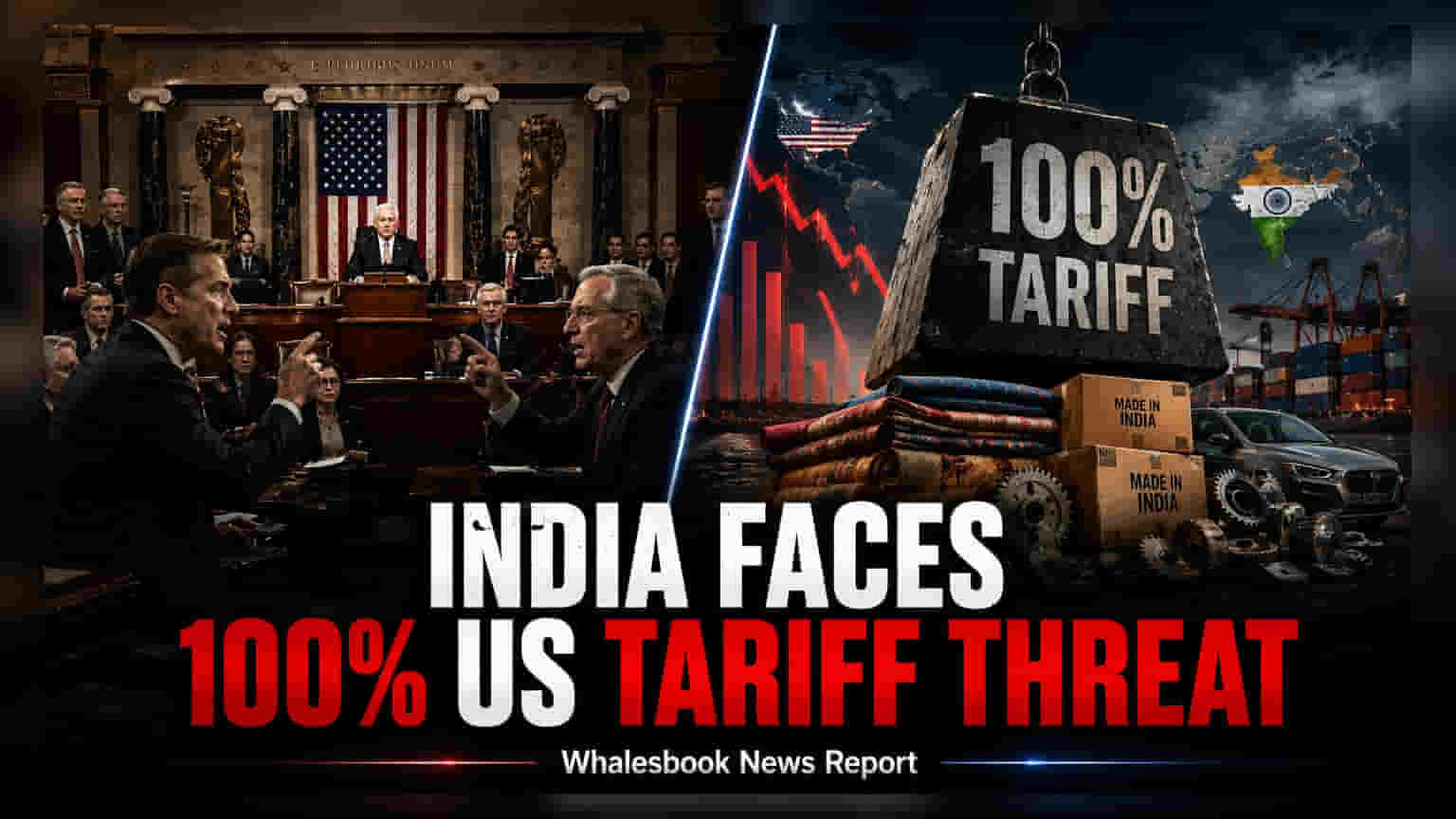
The US Senate has passed a legislative measure that could allow for tariffs of up to 100% on goods from major importers of Russian energy, including India. While this indicates rising trade pressure, the bill is not yet law and must pass the US House of Representatives. Investors should watch for diplomatic updates, as potential enactment could affect key export-oriented sectors like textiles, pharmaceuticals, and engineering.
The US Senate has voted 86-11 to pass the 'Lindsey O. Graham Sanctioning Russia and Iran Act of 2026.' This legislation seeks to limit Moscow's revenue by targeting countries that maintain significant energy trade with Russia. For Indian investors, the development brings attention to the country's position as a top purchaser of Russian crude oil, placing Indian goods under the potential scope of this tariff framework.
It is important for market participants to note that this bill is not currently law. It must still be reviewed and approved by the US House of Representatives before it can be sent to the President for signature. The House is scheduled to reconvene on August 31, 2026, meaning there is a period of uncertainty before any concrete action can take place.
The bill includes provisions that grant the US President authority to apply tariffs as high as 100%. However, there are also mechanisms for waivers. Countries that import less than 15% of their total natural gas requirements from Russia and can demonstrate efforts to reduce their reliance on Russian energy may be exempt. This creates a significant diplomatic pathway for the government to manage trade relations and potentially mitigate the impact of the proposed legislation.
Should the bill become law in its current form, the economic implications would be closely monitored by sectors heavily reliant on the American market. Industries such as engineering, pharmaceuticals, chemicals, textiles, and auto components could face pressure if their exports to the US become subject to high tariffs. Such costs would force companies to either absorb the expense, which would hurt profit margins, or pass them on to customers, which could risk losing market share to alternative suppliers.
For investors, the immediate focus is not on current earnings impact but on future trade policy and diplomatic negotiations. The government’s ability to navigate these potential trade barriers and secure necessary waivers will be a critical factor in determining the long-term effect on India's export landscape. Market sentiment may remain cautious until there is more clarity from the US House of Representatives regarding the final language and status of the bill.