

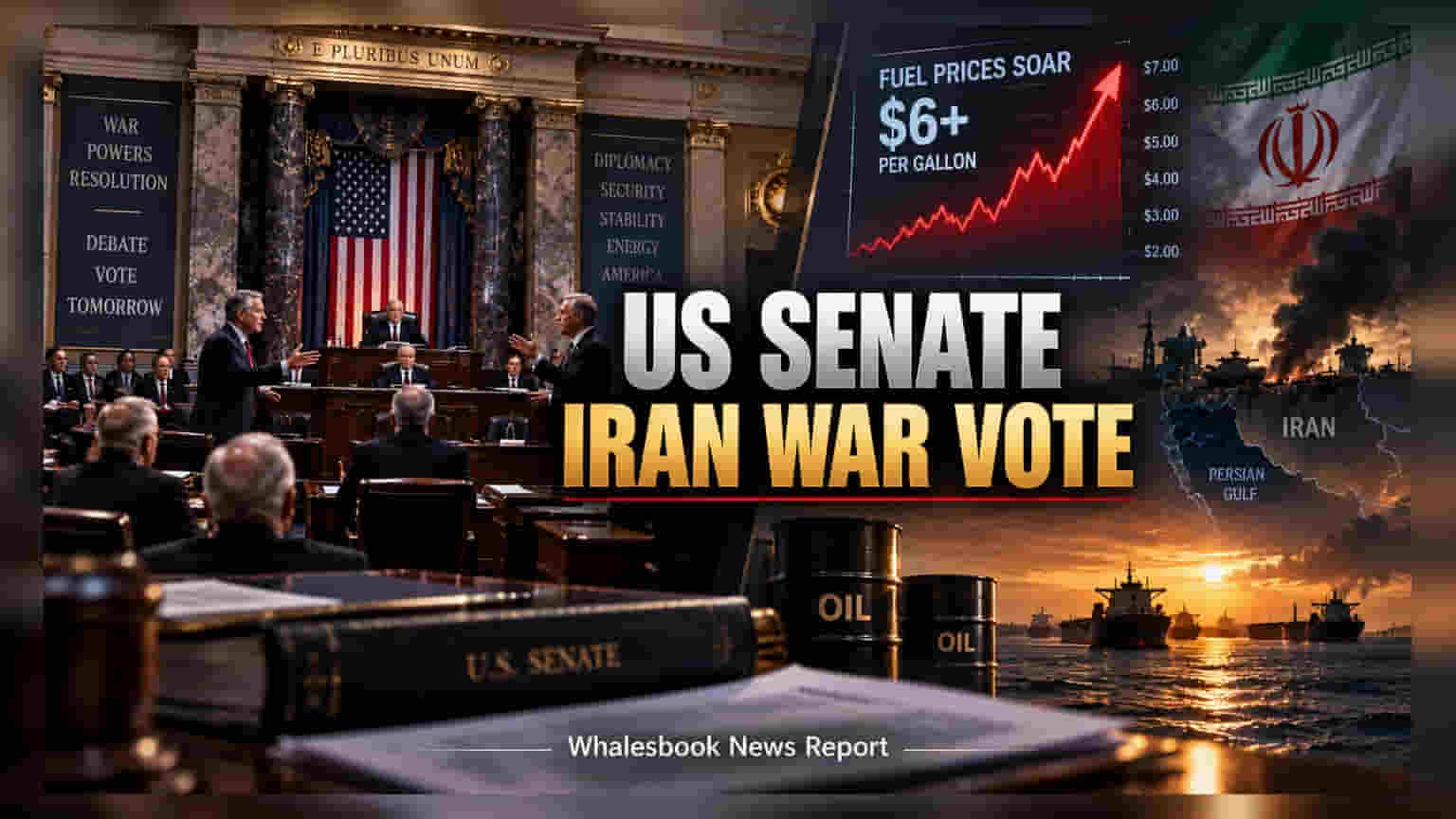
The US Senate is set to vote on a war powers resolution to limit military action in Iran amid high fuel costs. For Indian investors, this geopolitical tension is critical as it keeps global oil prices elevated, which directly impacts the rupee, inflation, and the profitability of domestic oil marketing companies.
The US Senate is scheduled to hold a vote this Thursday on a war powers resolution aimed at restricting military maneuvers in Iran. While the resolution itself is largely a signal of congressional disapproval rather than a binding law, the development highlights deep-seated political friction surrounding the seven-month-long conflict that began in February 2026. For investors globally, and specifically in India, the primary concern lies in the geopolitical uncertainty and its direct influence on global oil markets.
Energy prices in the United States have become a major political flashpoint, with fuel costs exceeding $6 per gallon, driving voter anxiety ahead of midterm elections. This surge in energy prices reflects broader global concerns regarding supply stability in the Middle East. When geopolitical tensions escalate in oil-producing regions, global oil prices often react with volatility due to fears of potential supply disruptions in critical shipping routes like the Persian Gulf.
For Indian markets, the connection is direct and significant. India imports approximately 85% of its crude oil requirements, making the economy highly sensitive to fluctuations in global oil prices. A sustained increase in crude prices, driven by geopolitical unrest, often leads to a wider trade deficit and puts downward pressure on the Indian Rupee. When the import bill rises, it can lead to inflationary pressure within the Indian economy, as higher fuel costs increase transportation and logistics expenses for businesses across various sectors.
Investors in India often monitor these developments through the lens of Oil Marketing Companies (OMCs). Companies like Indian Oil Corporation, Bharat Petroleum, and Hindustan Petroleum are particularly sensitive to crude price swings. If global oil prices remain high or volatile, these companies may face pressure on their profit margins unless they can pass the costs on to consumers through retail price hikes. Conversely, sharp spikes in oil prices can weigh on market sentiment as they complicate the Reserve Bank of India’s inflation management efforts.
According to reports, the fiscal cost of the ongoing conflict has already reached $43.5 billion, with an additional request for $87.6 billion currently under review by US lawmakers. This level of spending and the continued military engagement underscore that the geopolitical landscape remains unstable. As the US moves toward this vote, the market's attention will be on whether the legislative push creates a path toward de-escalation or signals a period of prolonged military and economic uncertainty. Investors may continue to track global crude oil benchmarks, the movement of the Indian Rupee against the US Dollar, and management commentary from domestic energy and transport-reliant sectors for any signs of cost-related pressure.