

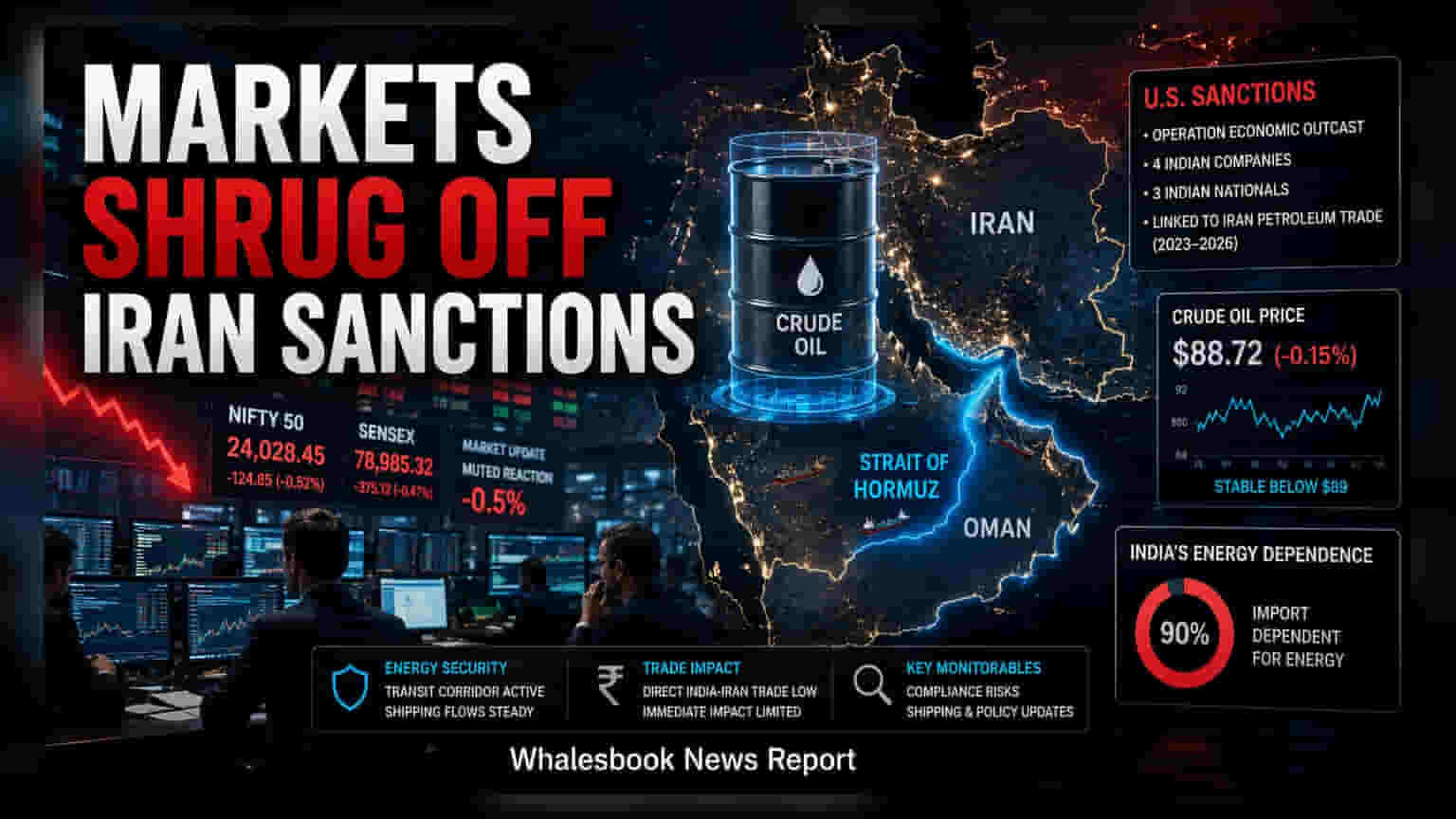
The US has launched 'Operation Economic Outcast,' sanctioning four Indian companies and three individuals for alleged Iranian petroleum trade. While Indian markets remain resilient, investors are closely monitoring potential compliance hurdles and broader trade implications.
The United States has initiated a new round of sanctions under 'Operation Economic Outcast,' which includes specific measures against four Indian companies and three Indian nationals. These sanctions are linked to the alleged import and trade of Iranian petroleum and petrochemical products between 2023 and 2026. While the news marks a significant shift in diplomatic enforcement, the Indian equity market reaction has been muted, with benchmark indices recording only a minor dip of approximately 0.5%.
Compliance and Financial Risks
The most direct impact of these sanctions involves compliance and legal risks for the firms named in the US Treasury filing. Investors are currently assessing whether these entities have significant exposure to the broader financial system or if these measures will lead to difficulties in international settlements. Historical data shows that India's direct trade with Iran has declined sharply in recent years, with exports falling to $1.2 billion and imports dropping to less than $375 million by FY2026. This reduction in direct trade volume may limit the immediate systemic shock to the Indian economy, but the heightened regulatory scrutiny could still pose challenges for companies with ongoing international business ties.
Energy Security and Market Stability
Energy remains a primary concern for the Indian market, as the nation relies on imports for nearly 90% of its energy needs. Despite the geopolitical friction, crude oil prices are currently hovering below $89 per barrel. This stability is partly attributed to a temporary transit corridor established between Iran and Oman in the Strait of Hormuz, which has helped keep shipping volumes steady. As long as this energy corridor remains functional, the impact on domestic inflation and the current account deficit is expected to remain contained. Investors are, however, watching for any sign of shipping disruptions in the Strait, which would immediately increase energy costs and pressure the rupee.
Trade Relations and Future Monitorables
Beyond the specific sanctions, a key area for investors is the potential for broader US-India trade friction. If the current situation leads to increased pressure on New Delhi to align more strictly with US enforcement regimes regarding Iran and Russia, it could complicate existing trade agreements. The primary monitorable for shareholders is not just the immediate market index movement, but rather how individual firms navigate these new compliance hurdles. Clarity from the affected companies regarding their future business operations and any potential regulatory response from the Indian government will be the next important updates for the market.