

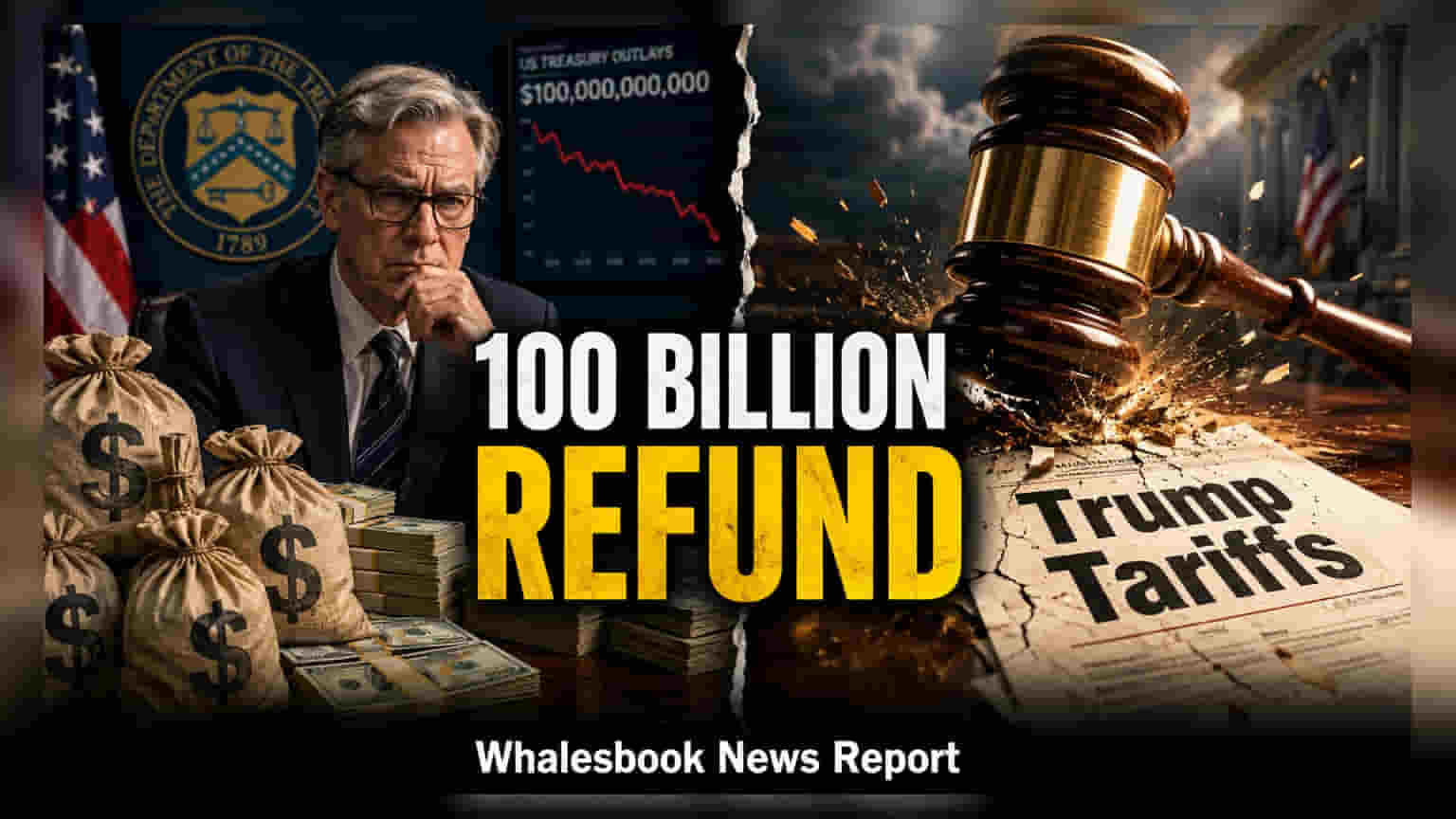
The U.S. government has returned $100 billion to importers after the Supreme Court ruled that previous trade tariffs were legally invalid. This refund covers 60% of the total duties collected, but new trade measures are already facing legal challenges. For investors, this adds significant uncertainty to global trade policy and future tariff costs.
The U.S. government has returned approximately $100 billion in tariff payments to importers as of early August 2026. This major refund process follows a February 2026 Supreme Court decision that struck down trade duties collected under the International Emergency Economic Powers Act. The court ruled that the administration had overstepped its authority by using this law—which is intended for national security emergencies—to impose broad tariffs on international goods.
As of now, the government has processed about 60% of the $165 billion to $166 billion in total duties originally collected under that order. Official filings from U.S. Customs and Border Protection indicate that over $128 billion in refund claims have already been accepted for processing. While this provides relief to importers who paid the duties, it represents a massive financial shift for the U.S. federal budget.
Despite these refunds, trade policy uncertainty persists. The administration has introduced new temporary tariffs, ranging from 10% to 12.5%, using Section 301 of the Trade Act of 1974. This provision is typically reserved for addressing unfair trade practices by foreign governments. However, these new measures are already facing stiff opposition. A coalition of 25 U.S. states has launched legal challenges against these new tariffs, arguing against their implementation.
For investors, the primary concern is the potential for ongoing trade friction. The return of $100 billion puts pressure on the federal budget deficit, which has already seen growth this fiscal year. Furthermore, the legal battle between the administration and state coalitions creates a volatile environment for global trade. Indian investors with interests in export-heavy sectors—such as textiles, pharmaceuticals, and manufacturing—should track how these legal disputes unfold. Any change in US trade policy can directly impact demand, supply chain costs, and the profitability of companies that export to the United States. The core monitorable remains the outcome of the Section 301 tariff litigation, as it will determine whether these new duties remain in place or face similar legal invalidation in the coming months.