

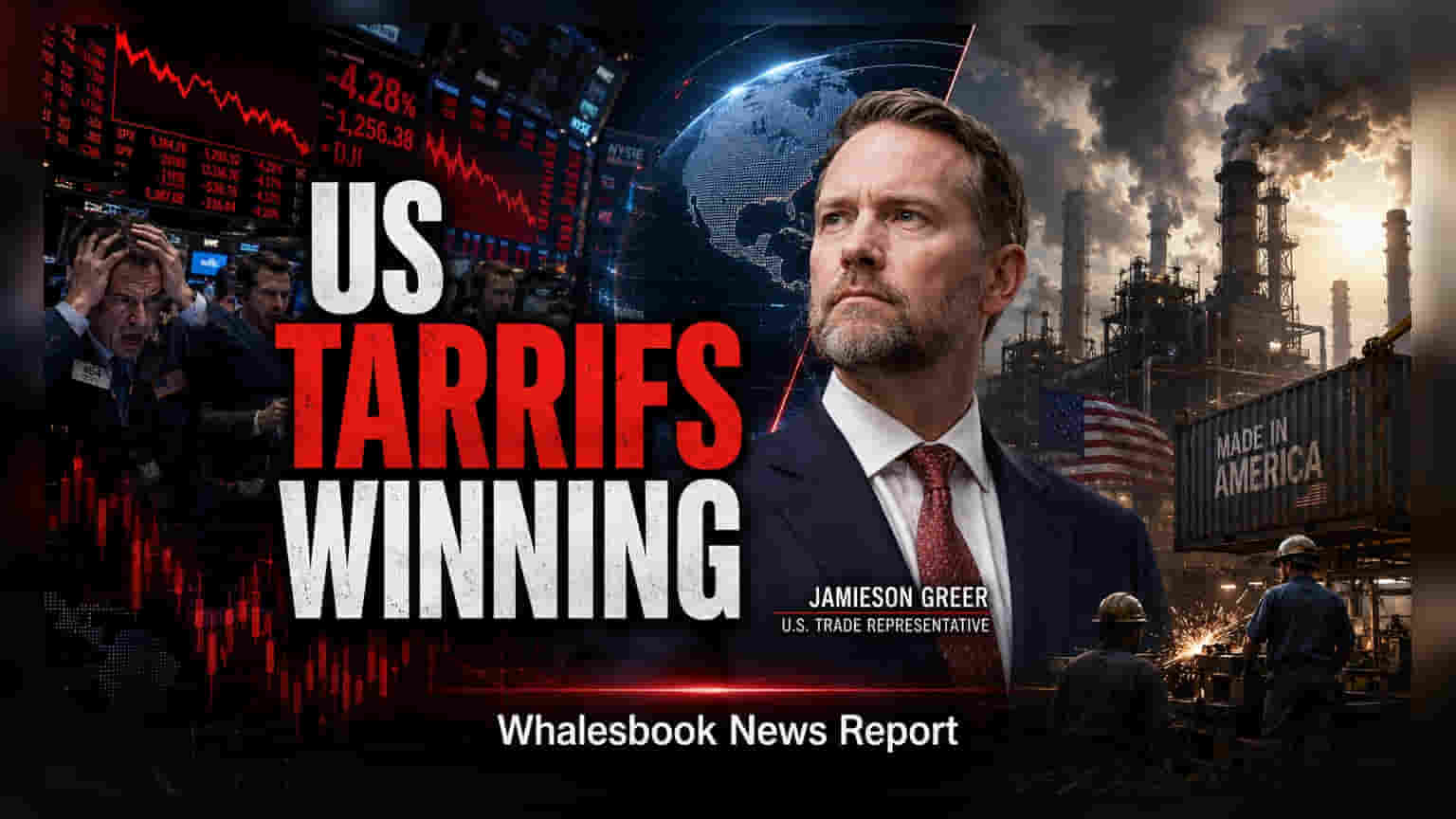
US Trade Representative Jamieson Greer has announced plans to implement new tariff measures following the administration's assessment of its existing trade policy as successful. These upcoming actions target specific manufacturing practices and aim to further reduce trade deficits with major global partners, including India. Investors should monitor how these shifts in international trade terms may impact export-oriented Indian sectors.
Detailed Coverage
US Trade Representative Jamieson Greer recently stated that the current administration considers its tariff-led trade strategy successful in addressing long-term trade imbalances. According to the official, this approach has contributed to a reduction in the trade deficit and has encouraged companies to shift operations back to the United States. Following these assessments, the administration is now developing new regulatory measures to replace previous tariffs that were previously set aside by the Supreme Court.
Strategic Focus on Trade Terms
The administration is reportedly focusing its upcoming trade policy on economic considerations rather than broad foreign policy goals. The proposed measures are expected to target nations where manufacturing involves forced labor or significant surplus production. By leveraging these new authorities, the US aims to renegotiate trade terms with several major economies, specifically naming the United Kingdom, the European Union, Indonesia, Japan, and India. The core objective, as stated by the trade office, is to reshape the terms of global trade to favor American economic interests.
Impact on Global Trade Dynamics
For Indian investors, this development signals a shift in the global trade environment that could influence various export-reliant industries. The US administration’s emphasis on changing trade terms suggests that existing agreements may face re-evaluation. While the US maintains that these actions are not explicitly targeted at any single nation, the shift toward a more aggressive, economics-driven trade approach may create uncertainty regarding export costs and market access for Indian manufacturers.
Monitoring Future Trade Developments
The implementation of these new measures will be a critical monitorable for the Indian market. The primary concern for investors will be whether these tariffs affect specific high-export sectors such as textiles, pharmaceuticals, or engineering goods. As the administration explores new legal pathways to enforce its trade agenda, the specific industries impacted and the timeline for these new levies remain the key factors for businesses to track. The final economic impact will depend on the specific products identified for these new measures and whether the negotiations lead to mutually adjusted trade terms or increased trade friction.