

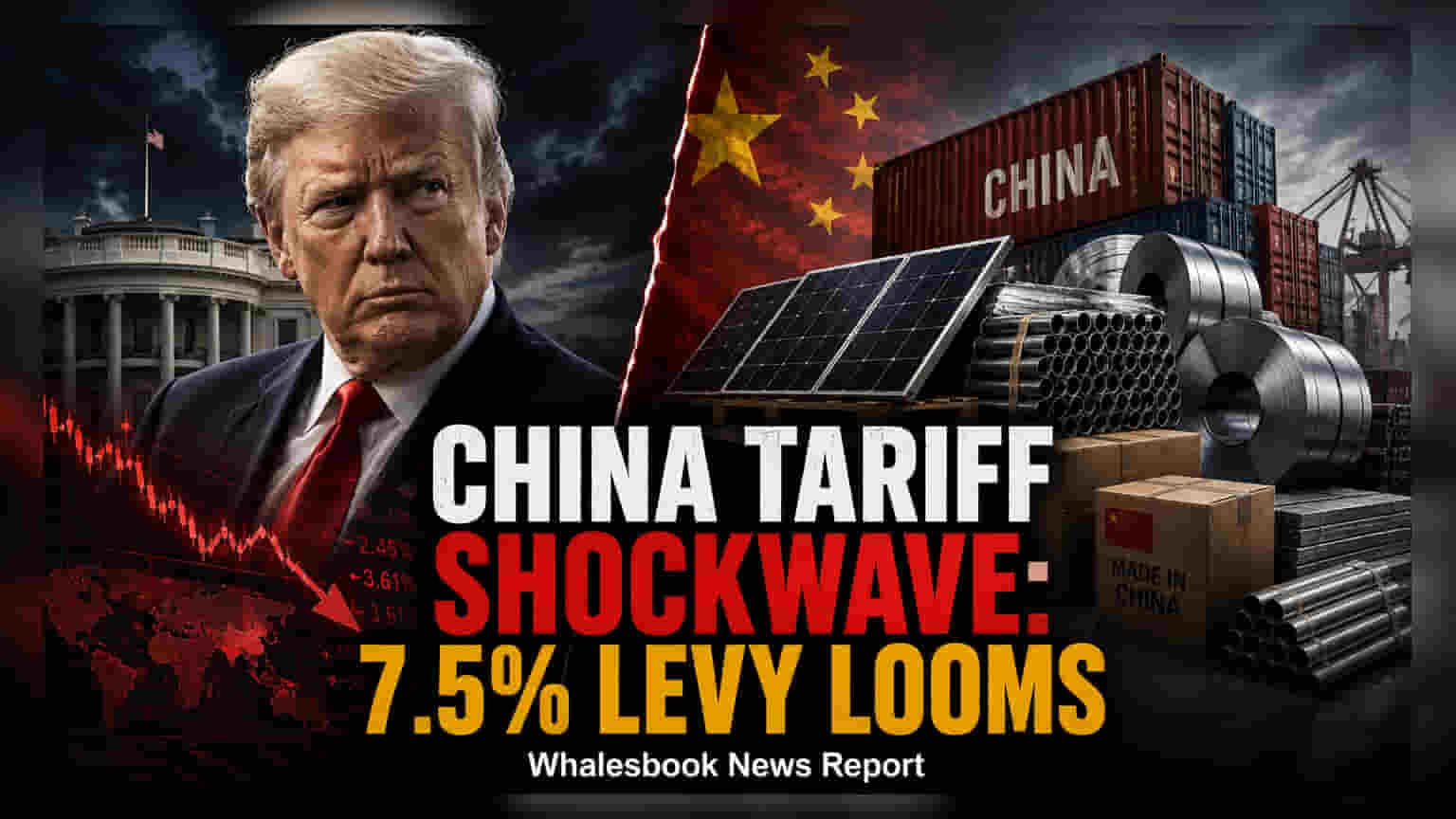
President Donald Trump is weighing a 7.5% tariff on Chinese imports to combat industrial overcapacity. The move, utilizing Section 301 of the Trade Act, aims to lift total duties on Chinese goods to roughly 20%. For investors, this increases global trade uncertainty, potentially affecting supply chains and intensifying competition for manufacturers in markets like India.
President Donald Trump’s administration is considering a new 7.5% tariff on Chinese goods as part of an effort to address concerns over industrial overcapacity. The proposed levy is designed to discourage the influx of underpriced goods into the global market. If enacted, this measure would effectively raise the total duties on Chinese imports to approximately 20%.
The legal basis for this potential action is Section 301 of the Trade Act of 1974. This follows a Supreme Court decision earlier this year that struck down a previous, more expansive tariff plan. The administration is reportedly timing this move carefully to avoid disrupting a trade truce, with officials aiming to reach a decision ahead of a scheduled summit with Chinese President Xi Jinping in late September 2026.
Impact on Global Supply Chains
For investors, the primary concern lies in how these tariffs may reshape global supply chains. When the U.S. restricts Chinese imports, multinational companies often accelerate efforts to diversify their manufacturing bases to avoid high duties. This so-called China+1 strategy has been a point of interest for Indian manufacturing companies in sectors like electronics, textiles, and auto components, as they attempt to capture a larger share of global demand.
However, the situation brings risks. If Chinese manufacturers are unable to sell excess production to the United States, there is a risk that these companies might divert that inventory to other global markets at lower prices. This practice, known as dumping, could put pressure on profit margins for manufacturers in India and other countries, particularly in capital-intensive sectors like steel, cement, solar panels, and automobiles.
Economic Risks and Sector Pressure
Beyond manufacturing, these trade measures can influence broader economic conditions. Trade barriers often lead to higher costs for raw materials or finished goods, which may feed into inflationary pressure. Investors typically watch these developments to assess if higher input costs will impact the profitability of Indian firms that rely on global supply chains or export-oriented business models.
While the administration is focusing on excess capacity, it has also recently implemented separate tariffs ranging from 10% to 12.5% on 60 economies regarding forced labor issues. The simultaneous handling of multiple trade investigations means that global trade policy will likely remain volatile in the coming months.
Market participants are now tracking the upcoming summit in late September 2026. The outcome of these discussions will be a key signal for how trade relations between the two largest economies will evolve for the remainder of the year. Investors may monitor whether this 7.5% tariff is implemented as a flat rate or if the administration chooses a flexible structure to manage the impact on domestic price levels.