 Whalesbook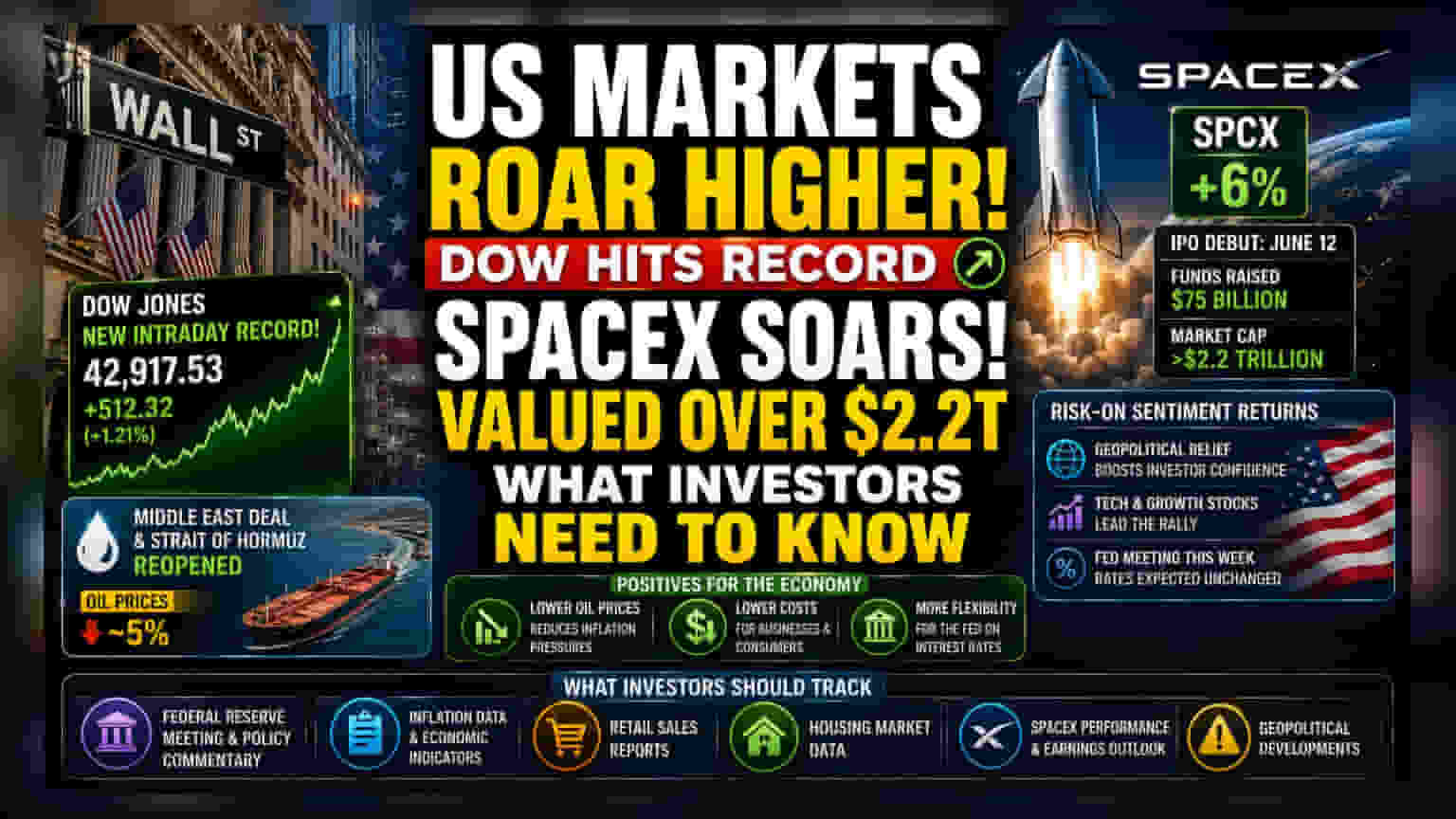


US stocks rallied to record highs on Monday, supported by lower oil prices and easing geopolitical tensions. Meanwhile, the massive SpaceX IPO continues to attract significant investor attention.
What Happened
US stock markets saw a strong rally on Monday, with the Dow Jones Industrial Average reaching a new intraday record level. The market surge was driven by two major factors: positive developments in the Middle East and the continued strong performance of the recently public SpaceX. Shares of SpaceX, trading under the ticker SPCX, rose another 6% on Monday following a significant jump during its IPO debut on June 12. The company, which raised $75 billion, is now valued by the market at over $2.2 trillion.
Why This Matters For Investors
The market rally reflects a shift in investor confidence. Concerns regarding geopolitical stability have been a key pressure point for global markets in recent months. The announcement regarding a diplomatic agreement with Iran and the decision to reopen the Strait of Hormuz—a vital route for global oil shipments—helped bring down oil prices by approximately 5%. For the broader economy, lower oil prices are generally seen as a positive, as they help reduce inflation and lower operational costs for businesses, potentially giving the Federal Reserve more flexibility with interest rates.
The SpaceX Valuation Question
SpaceX's massive entry into the public markets has captured significant attention. With a valuation surpassing $2.2 trillion, it has become one of the most valuable companies globally. For investors, this creates a unique context. While the strong initial performance signals high demand for technology and space-sector companies, a market cap of this size brings the company into the same territory as the world's largest tech giants. Investors often look at the risk-reward balance for such large IPOs. Companies of this scale attract significant interest from institutional investors and index funds, which can support the share price. However, massive valuations also come with high expectations for future revenue and profit growth. Investors should be aware that newly public companies often experience higher price volatility in the weeks and months following their listing.
How Investors May Read This
The current market environment is displaying a classic 'risk-on' mood, where investors are moving back toward growth-oriented and technology stocks. The combination of lower energy costs and reduced geopolitical tension provides a better backdrop for corporate earnings. However, the market remains sensitive to macroeconomic news. With a Federal Reserve meeting scheduled for this week, market participants are looking for signals on the future path of interest rates. Current expectations, reflected in futures markets, lean toward interest rates remaining unchanged, but the central bank's commentary will be closely watched for any shifts in policy direction.
What Could Go Wrong
While the current market sentiment is positive, there are inherent risks to consider. The rally is partly based on geopolitical relief; should those tensions re-escalate, the market could quickly reverse its gains. Additionally, while SpaceX’s market debut has been successful, its high valuation means that any future operational delays or financial performance that does not meet the high expectations of public market investors could lead to share price corrections. Investors should also note that market rallies based on specific news events can sometimes be short-lived if the underlying economic fundamentals, such as inflation or interest rate concerns, return to the forefront.
What Investors Should Track
Moving forward, investors will likely track the consistency of the current market rally to see if it sustains beyond the initial optimism. Key monitorables include the upcoming Federal Reserve meeting notes, which will provide insight into the central bank's view on inflation. For the space and technology sectors, the focus will be on whether the current enthusiasm for SpaceX can be maintained. Investors should also keep an eye on upcoming economic data, specifically retail sales and housing figures, which act as important indicators for the health of the US economy.