

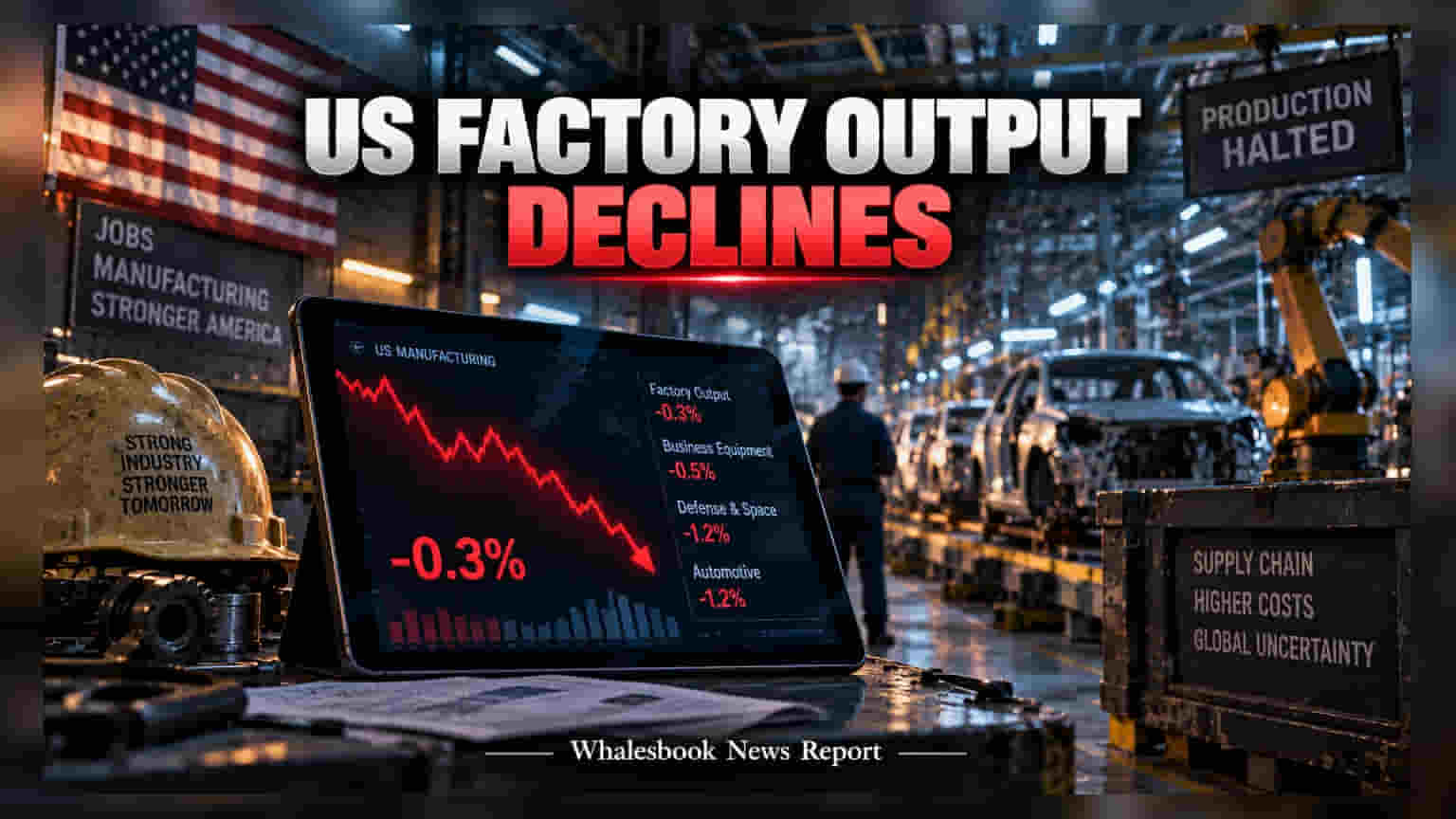
US manufacturing production unexpectedly dropped by 0.3% in August, the first decline this year. Driven by rising costs and supply chain volatility, the cooling industrial sector in the US may impact global demand, potentially affecting Indian exporters and IT firms with US clients.
The United States manufacturing sector witnessed an unexpected slowdown in August, with production volumes contracting by 0.3%. This result missed market expectations, which had predicted a modest growth of 0.3%. This decline is notable as it marks the first monthly contraction in the US manufacturing sector for 2026, signaling a potential shift in industrial activity.
Data from the Federal Reserve indicates that manufacturers are struggling with the combined pressure of higher input costs and supply chain disruptions caused by ongoing geopolitical tensions. This has led to a cooling across several critical segments. Production of business equipment fell by 0.5%, while the defense and space manufacturing sectors retreated by 1.2% following months of steady growth. The automotive industry, often viewed as a key indicator of consumer-driven industrial health, also saw a 1.2% decline in output.
The capacity utilization rate, a measure of how efficiently companies are using their factory space and resources, slipped to 75.7%, the lowest level seen since March. While utility production grew by 1.8% due to higher electricity demand, it was insufficient to offset the drop in factory output, causing overall industrial production to remain stagnant.
For Indian investors, this development is significant because the US is a major destination for Indian exports, including engineering goods, auto components, and pharmaceuticals. A slowdown in US manufacturing activity could indicate weaker demand for these industrial inputs from India. Furthermore, many large Indian information technology companies derive a significant portion of their revenue from clients in the US industrial and manufacturing sectors. If American manufacturing activity continues to decline, it may lead to reduced spending on technology services and digital transformation projects, which are essential for manufacturing operations.
Additionally, the US economy is a primary driver of global investor sentiment. When the US industrial sector cools, it often influences global risk appetite, which can affect foreign institutional investment flows into emerging markets like India. The primary challenges identified by analysts include persistent logistical friction and rising material prices. Investors may monitor future data points, including upcoming producer price indices and management commentary from US-based multinational firms, to gauge if this is a temporary blip or the start of a prolonged industrial slowdown.