

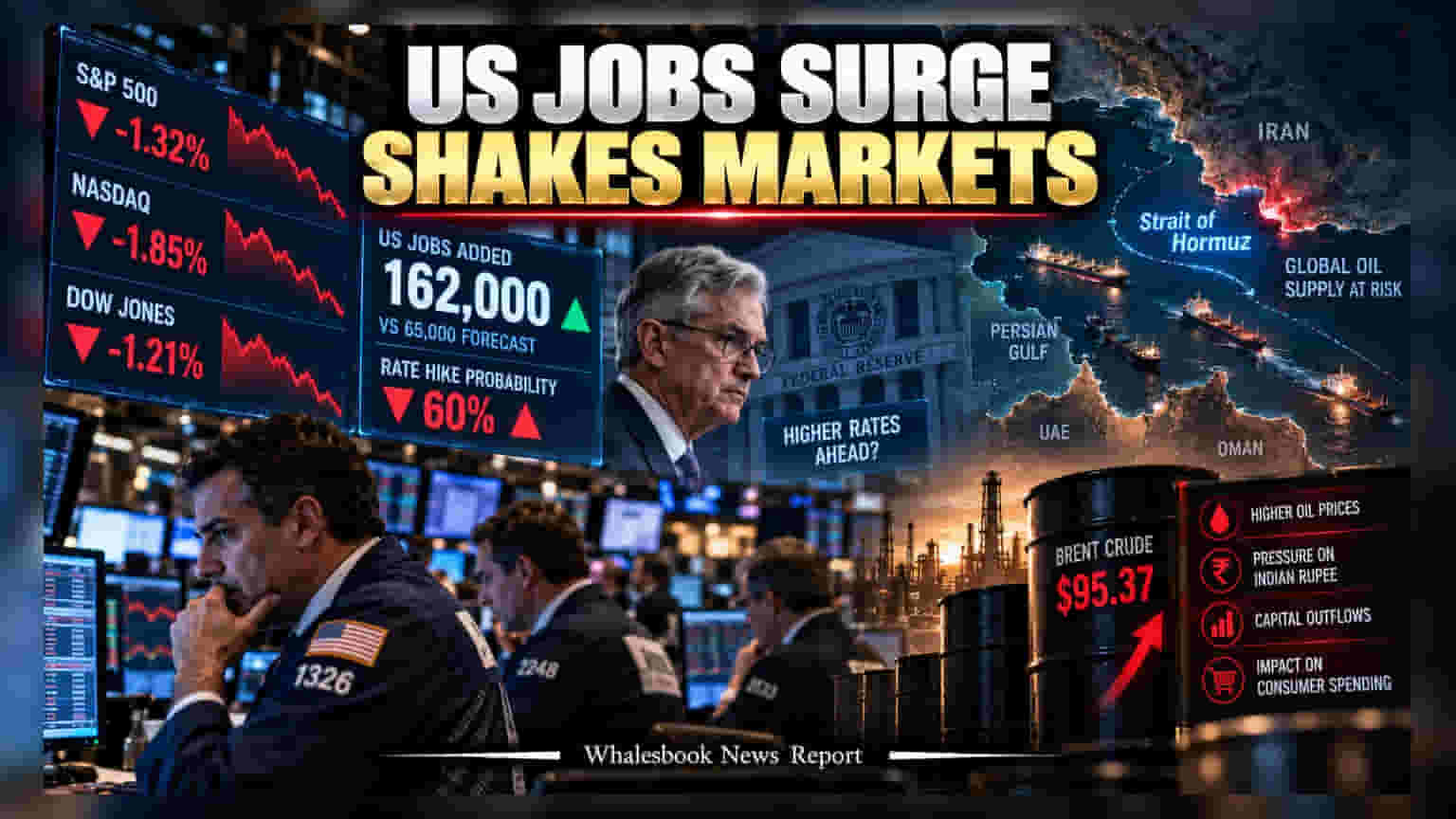
The US economy added 162,000 jobs in August, beating forecasts and increasing the probability of a Federal Reserve rate hike. This shift has raised global market anxiety, with rising oil prices and potential interest rate pressure influencing investor sentiment in India. Market participants are now monitoring how these global factors affect the rupee and capital flows.
The US labor market remains surprisingly strong, with employers adding 162,000 jobs in August. This figure, reported by the US Labor Department, significantly outperformed the market forecast of 65,000. When combined with revisions to previous months that added another 55,000 jobs, the data suggests the US economy is growing faster than many economists anticipated.
For global investors, this economic strength presents a complex scenario. While job growth signals resilience, it also increases the risk of persistent inflation. This has caused a sharp rise in the market-implied probability of a Federal Reserve interest rate hike during the September 16 policy meeting, with expectations now climbing to approximately 60%.
Why this matters for Indian investors. Higher interest rates in the United States generally make the dollar more attractive, which can lead to foreign institutional investors pulling capital out of emerging markets, including India, to chase safer yields. Additionally, a stronger dollar often puts downward pressure on the Indian Rupee. Because India is a major net importer of oil, a weaker rupee combined with high global energy prices makes imports more expensive, potentially fueling domestic inflation.
Energy markets are a significant concern. Brent crude prices are trading near $95.37 per barrel, largely driven by supply chain disruptions in the Strait of Hormuz amid the ongoing conflict between the US and Iran. Since India relies heavily on oil imports to meet its energy needs, sustained high prices at these levels can squeeze profit margins for Indian companies, particularly in the logistics, manufacturing, and consumer goods sectors.
Market reactions to the jobs report have been mixed. US equity indices faced selling pressure on Friday, reflecting concerns about the cost of borrowing. However, the technology sector showed some resilience, with companies like Nvidia and Advanced Micro Devices recording gains. In contrast, retail-focused companies are feeling the heat. Lululemon Athletica shares, for instance, fell roughly 17% after the company missed revenue targets and lowered its full-year guidance. This divergence highlights that while some tech segments remain in demand, higher costs are starting to noticeably impact consumer spending and retail earnings.
Moving forward, the primary monitorable for investors will be the upcoming August inflation figures. If inflation remains high, it will likely pressure the Federal Reserve to hold interest rates at elevated levels for longer. Indian investors may keep a close watch on foreign fund flows and the impact of global energy prices on domestic inflation and corporate profitability in the coming weeks.