

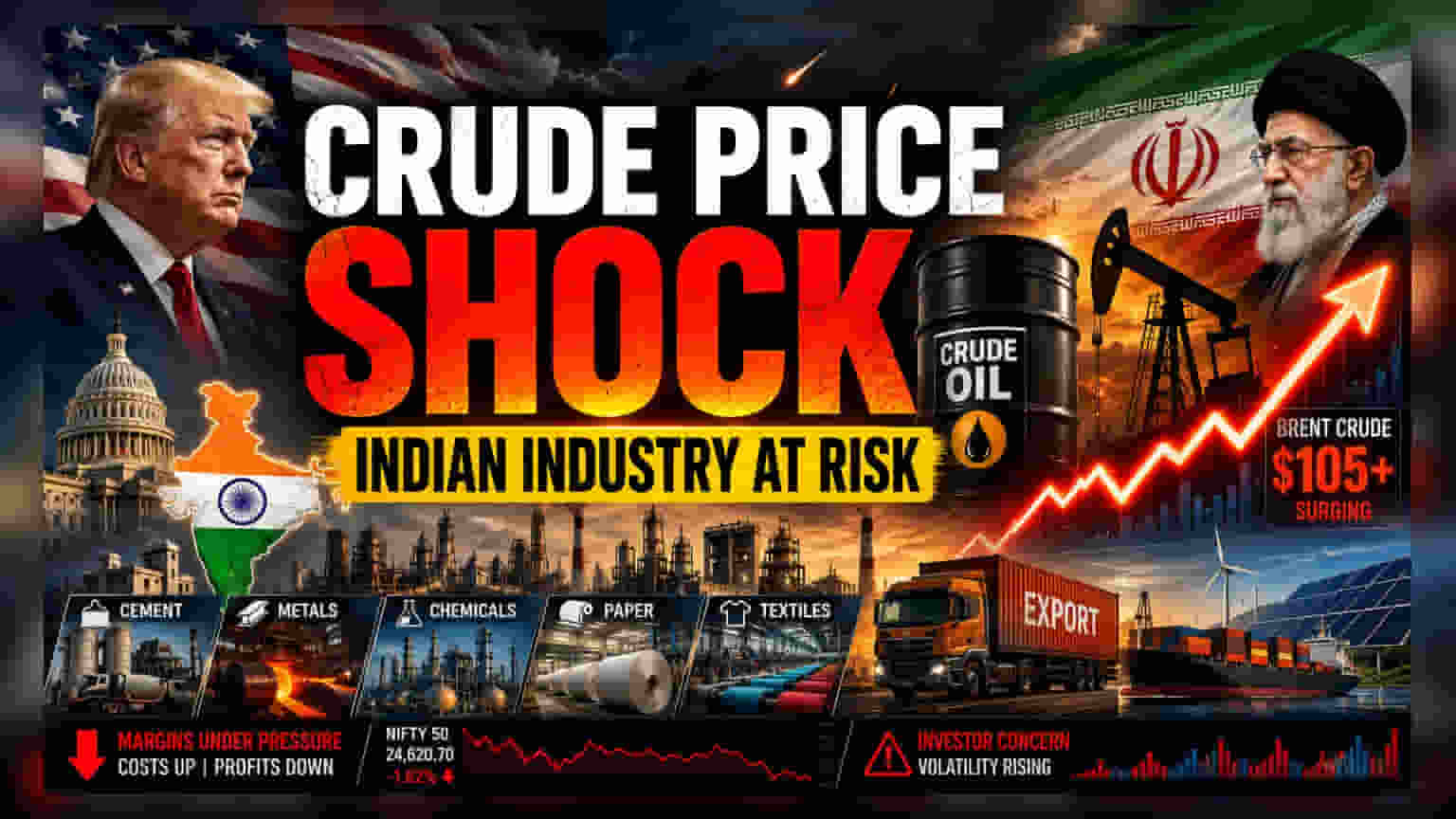
Renewed geopolitical tensions have pushed global crude oil prices higher, increasing input costs for Indian businesses. For investors, the focus shifts to how energy-intensive sectors like cement, metals, and chemicals manage margin pressure amid rising fuel expenses and the ongoing push for renewable energy transition.
What Happened
Geopolitical tensions between the US and Iran have led to a sharp increase in global crude oil prices. As India remains heavily dependent on imports to meet its oil demand, this price surge creates immediate pressure on the economy. Higher fuel costs typically ripple through the supply chain, increasing transportation expenses and the cost of raw materials for various industries. This situation serves as a fresh reminder of the volatility associated with global energy markets.
Why It Matters For Investors
For investors, the primary concern when oil prices rise is the impact on company profit margins. Many industries rely heavily on fossil fuels to run factories, process raw materials, and transport finished goods. When energy costs spike, companies face a choice: either absorb the extra cost, which lowers their profit, or pass the cost on to customers by raising prices.
Investors typically watch how management teams navigate this challenge. Companies that have already invested in energy-efficient technology or have a diversified fuel mix are often better equipped to handle these periods of volatility. Conversely, businesses that cannot pass on these higher costs to their customers may see their earnings decline.
The Energy Intensity Risk
While fuel price spikes are often temporary, there is a structural challenge for Indian industry: rising energy intensity. According to Reserve Bank of India data, the amount of energy consumed per unit of economic output has been trending upward in several sectors since 2010. This means industries are using more energy than before to produce the same value of goods.
Sectors like cement, metals, chemicals, paper, and textiles are identified as high-energy consumers. If these industries do not improve their energy efficiency, they remain highly vulnerable to every rise in global energy prices. For investors, this makes operational efficiency—how effectively a company uses power and fuel—a critical metric to evaluate when looking at manufacturing stocks.
Renewables And Long-Term Strategy
To reduce dependence on imported fossil fuels, India is aggressively pursuing a transition to renewable energy. With commitments to reach 500 GW of renewable capacity by 2030 and significant targets for reducing carbon intensity, the long-term goal is energy independence. While this is a positive shift for the economy, it is a gradual process. In the interim, companies will continue to operate under the influence of global energy price swings.
What Investors Should Track
Investors may want to monitor how companies manage their power and fuel costs in the coming quarters. Important indicators include:
- Operating Margins: Check if companies are reporting margin pressure due to higher power and fuel expenses.
- Efficiency Measures: Look for management commentary on investments in energy-saving technology or shifts toward captive solar and wind power.
- Policy Updates: Follow government mandates on carbon trading and renewable energy adoption, as these will influence future compliance costs for heavy industries.
- Global Oil Trends: While investors cannot predict geopolitical events, tracking crude oil price trends helps in understanding the broader cost environment for Indian manufacturers.