

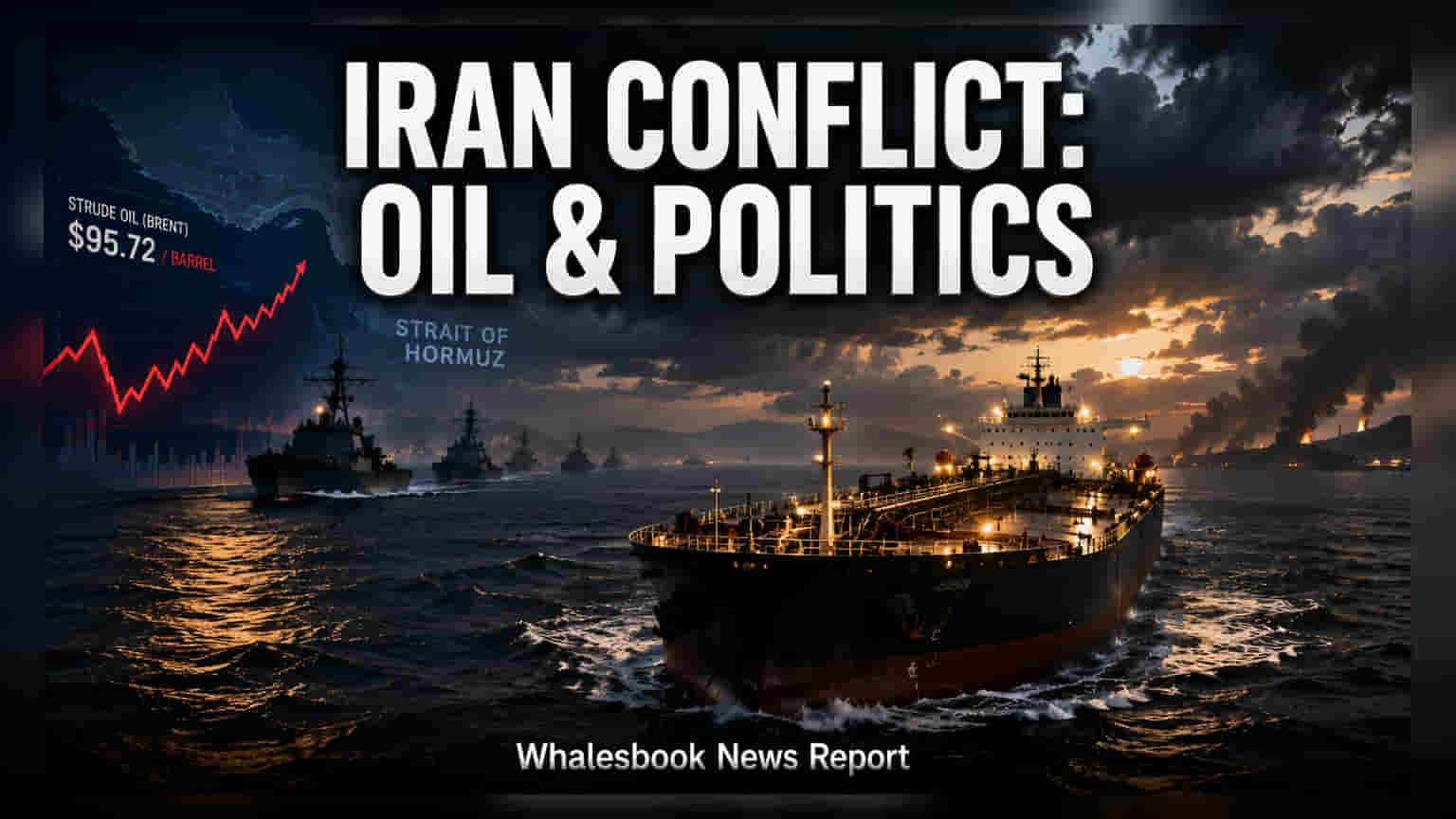
US Vice President JD Vance has declined to term the ongoing standoff with Iran as a 'war' as the administration faces pressure before the November 2026 midterm elections. With oil prices hovering above $95 a barrel, investors are closely watching how the administration manages energy supply security through the critical Strait of Hormuz.
US Vice President JD Vance stated on September 3, 2026, that he would not categorize the six-month standoff with Iran as a 'war.' During a press briefing, he argued that there are currently no major active combat operations. This official stance comes as the administration attempts to manage public perception and political stability ahead of the critical midterm elections scheduled for November 3, 2026.
Impact on Global Energy Prices
The political messaging arrives during a period of high energy costs. Global crude oil prices have remained elevated, frequently trading above $95 per barrel. The primary concern for global energy markets remains the Strait of Hormuz, a vital shipping lane for oil transit. Persistent tensions in this region have created uncertainty regarding the security of supply chains, which directly influences global energy prices.
For Indian investors, the situation in the Strait of Hormuz is a key factor to monitor. As India is a major importer of crude oil, sustained high prices directly impact the country’s import bill, inflation levels, and the trade deficit. Any disruption to the flow of oil through this choke point can lead to rapid price swings in global commodity markets, affecting Indian energy companies and consumer goods businesses.
Discrepancies in Supply Data
There is a notable difference between official administration reports and independent energy data. While US officials have maintained that the Navy is successfully managing the transit of roughly 15 million barrels of oil daily, independent tanker trackers have reported lower traffic volumes compared to pre-conflict norms. This gap creates uncertainty for market participants, as official data and private energy assessments provide different views on the actual impact of the conflict on global supply.
Strategic Outlook and Risks
The US administration, including Treasury Secretary Scott Bessent, has discussed long-term strategies to bypass reliance on the Strait of Hormuz, such as developing new land pipelines and port projects. However, these are long-term solutions that do not immediately address current risks. The current strategy of economic pressure, rather than full-scale diplomatic engagement, suggests that the market may remain in a state of uncertainty for the near term.
The key risks for investors include the potential for sudden escalations in regional hostilities, which could trigger supply shocks, and the broader economic effect of prolonged high oil prices on global inflation. Monitoring future updates on energy transit volumes through the Strait of Hormuz and any changes in US-Iran diplomatic or military posture will be essential for assessing the stability of global energy markets.