 Whalesbook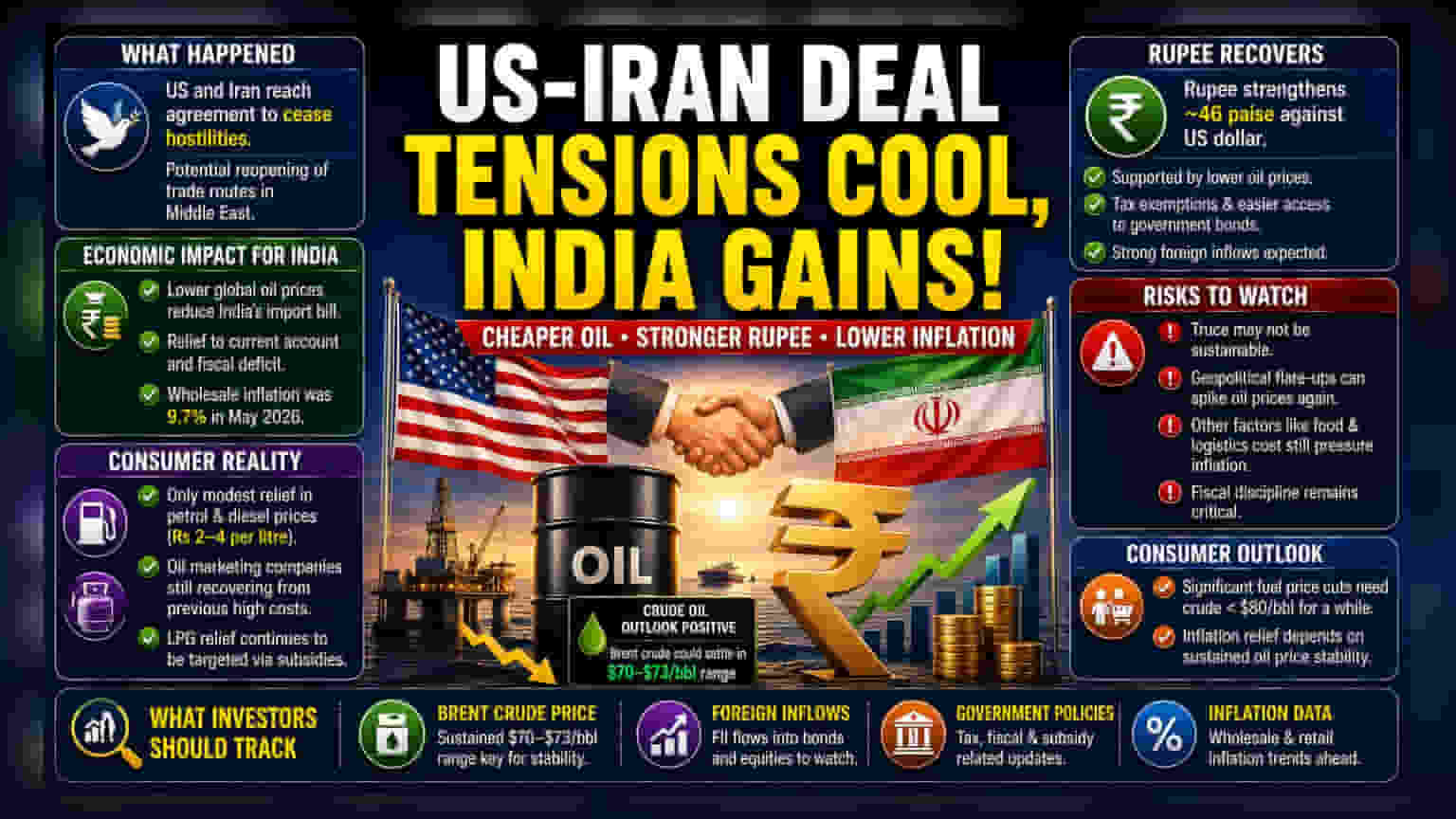


A reported peace deal between the US and Iran is sparking hope for lower crude oil prices, which could offer relief to India's economy by easing inflation and supporting the rupee. While the development is positive for the macro environment, consumers may see limited fuel price cuts as oil companies focus on stabilizing their finances. The ultimate benefit for the economy will depend on how long these lower oil prices last and the stability of the region.
What Happened
A reported agreement between the United States and Iran to cease hostilities has emerged, signaling a potential cooling of geopolitical tensions in the Middle East. For India, a major importer of crude oil, this development is significant because prolonged conflict had previously driven energy costs higher, contributing to an increase in wholesale inflation to 9.7% in May 2026. The potential reopening of trade routes and the expected cooling of global oil prices are being viewed as a potential turning point for the Indian economy.
Why This Matters For The Economy
India relies heavily on imports to meet its energy needs. When global oil prices rise, the country's import bill increases, which puts pressure on the Indian rupee and widens the government's fiscal deficit—the gap between what the government spends and what it earns. A sustainable decline in crude oil prices could act as a buffer. By spending less on energy imports, India can potentially reduce its current account pressure and control inflation, which has been a concern for the broader market. The stability brought by such a deal is essential for maintaining investor confidence and strengthening macroeconomic fundamentals.
How The Rupee Is Reacting
The Indian rupee has responded to the news with signs of strength, recovering approximately 46 paise against the US dollar. This move is supported by a combination of the improved outlook for oil prices and proactive measures by the government and the Reserve Bank of India to attract foreign capital. By offering tax exemptions and easing access to government bonds, the authorities have aimed to encourage foreign investment, which helps stabilize the currency. Market estimates suggest significant inflows could be in the pipeline, which would further bolster the rupee’s position.
The Consumer And Price Reality
While lower crude prices are generally good news, Indian consumers should not expect an immediate or large reduction in petrol and diesel prices at the pump. Oil marketing companies are still in a recovery phase from previous periods of high costs. For significant retail price cuts to occur, crude oil prices typically need to remain below the $80 per barrel mark for an extended period. Any immediate relief is likely to be modest, potentially ranging between Rs 2-4 per litre, depending on the fiscal priorities of the government and the financial health of the oil companies. Relief for cooking gas consumers will also remain targeted, continuing the focus on subsidy schemes for specific beneficiaries.
What Could Go Wrong
The positive economic impact of this peace deal is not guaranteed. The primary risk remains the sustainability of the agreement itself. If the truce fails or geopolitical tensions flare up again, global oil prices could quickly reverse their course, negating the benefits seen so far. Additionally, while lower energy costs are helpful, the overall inflation story for Indian households and businesses is also influenced by other factors, including food prices and logistics costs. The government’s ability to maintain fiscal discipline will remain a crucial part of the economic outlook regardless of oil price trends.
What Investors Should Track
Investors will be closely monitoring the longevity of the peace deal, as any sign of renewed conflict could lead to renewed volatility in oil prices. The key monitorable will be the Brent crude price; if it settles consistently in the $70-$73 per barrel range, it could provide a more stable foundation for the economy. Additionally, market participants will watch for upcoming government policy updates, foreign institutional investment flows, and data on whether the cooling oil prices successfully bring down broader wholesale and retail inflation in the coming months.