

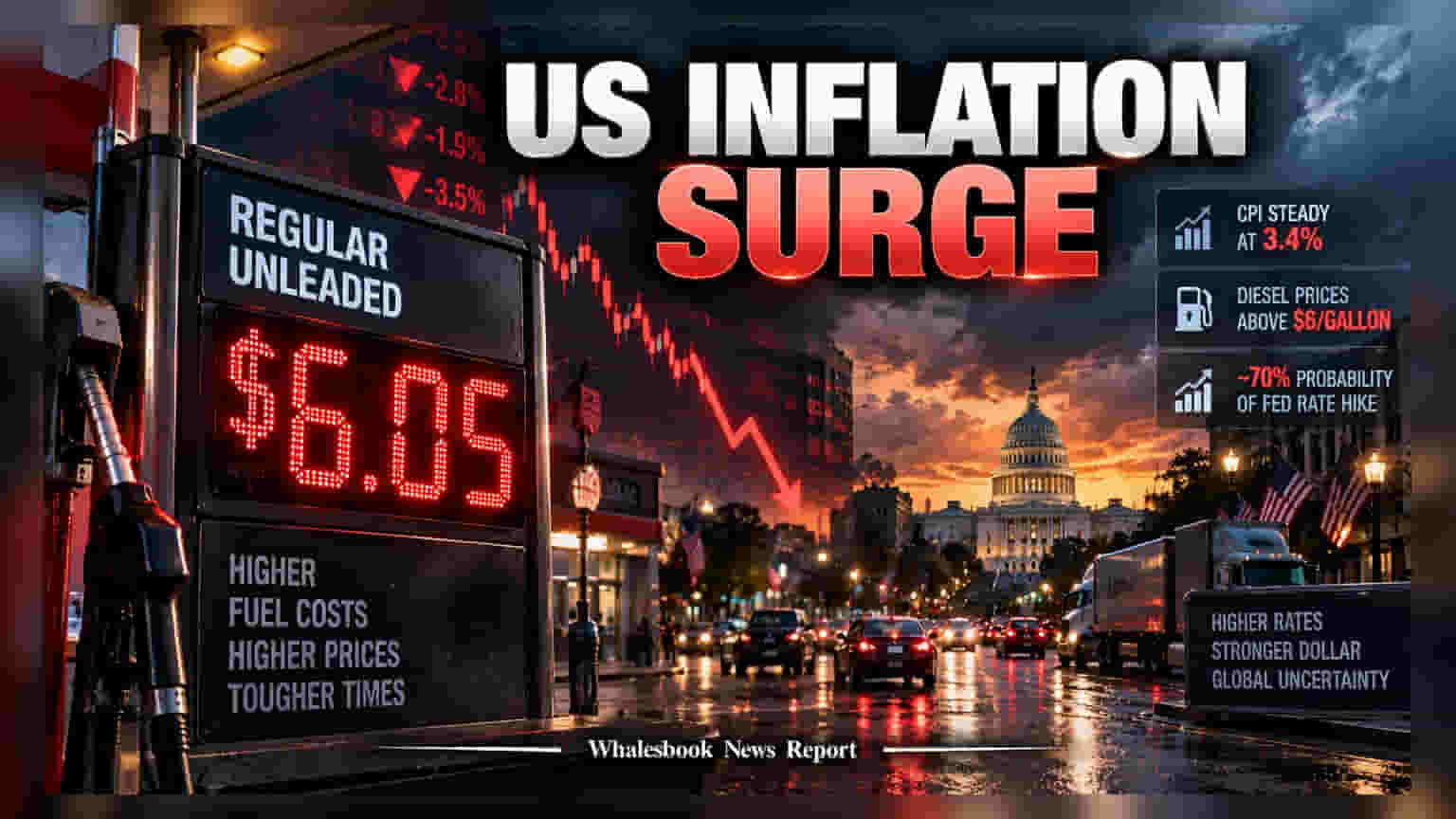
US inflation remained sticky at 3.4% in August, while diesel prices exceeded $6 per gallon due to geopolitical tensions. With the Federal Reserve now expected to hike interest rates next week, Indian investors should track potential volatility in FII flows and the impact of elevated global oil prices on the domestic economy.
The United States is grappling with persistent inflationary pressure, with the Consumer Price Index data for August holding steady at 3.4% annually, matching the levels seen in July. A monthly increase of 0.4% suggests that price growth remains aggressive, complicating the economic outlook. A significant driver of this trend is the energy sector, where US national average diesel prices have surpassed the $6 per gallon mark, a direct consequence of ongoing geopolitical tensions and supply chain disruptions.
The Fed Interest Rate Dilemma
These price pressures are forcing a hawkish stance from the Federal Reserve. Financial markets are currently pricing in a roughly 70% probability of an interest rate hike during the upcoming meeting on September 16, 2026. The central bank is attempting to curb demand to bring inflation under control, but the rising cost of fuel—a fundamental component of the freight and logistics industry—is keeping prices elevated for consumers and businesses alike.
Impact on Indian Investors
For Indian market participants, these global developments carry significant weight. When the US Federal Reserve raises interest rates, it typically leads to a stronger US Dollar and higher yields on US Treasury bonds. This environment often triggers a move by Foreign Institutional Investors (FIIs) to pull capital from emerging markets like India to seek safer, higher-yielding assets in the US.
Furthermore, the surge in global energy costs, evidenced by Brent Crude prices hovering around $104 per barrel, is a direct concern for India's macroeconomic stability. As a major importer of oil, India faces dual pressure from higher fuel import bills, which can widen the current account deficit and put depreciation pressure on the Indian Rupee. This, in turn, can contribute to imported inflation within the domestic economy.
Economic Risks and Monitoring
Beyond the immediate financial impact, the sustained high-cost environment poses a risk to global growth. If the US economy slows down due to restrictive monetary policy, demand for Indian exports—particularly in sectors like IT services and pharmaceuticals—could face headwinds. The logistics sector is also feeling the strain, as companies globally pass on the increased cost of diesel to the end consumer, which keeps global inflation elevated.
The most critical update to watch will be the official Federal Reserve decision scheduled for next week. Investors should also monitor the movement of Brent Crude prices and the subsequent impact on the Indian Rupee, as these factors will likely influence market sentiment in the short term.