

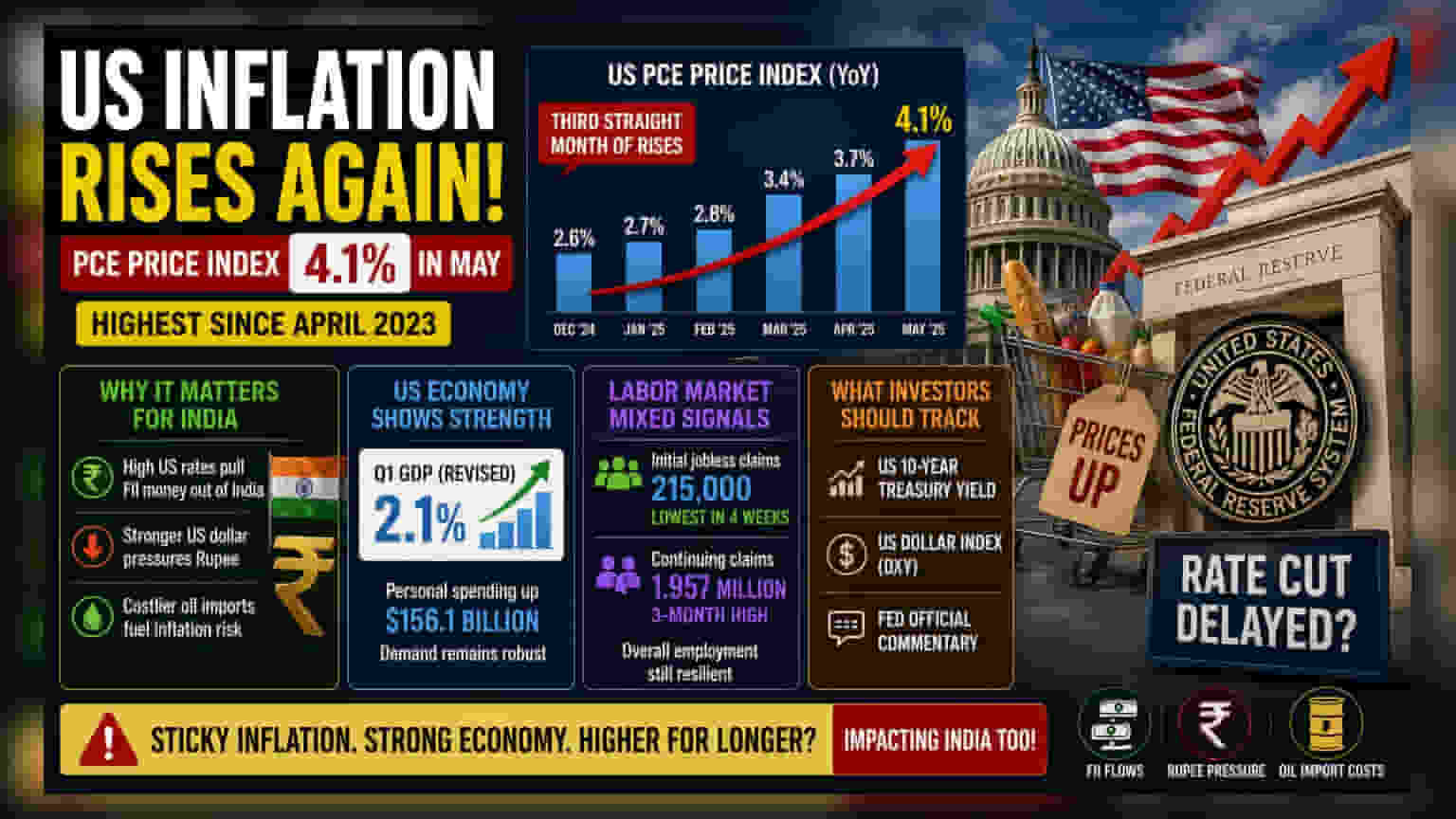
US inflation rose to 4.1% in May, signaling that the Federal Reserve may delay interest rate cuts. This environment of higher rates for longer can impact Indian markets by influencing foreign capital flows and putting pressure on the Rupee-Dollar exchange rate.
What Happened
Consumer prices in the United States, measured by the Personal Consumption Expenditures (PCE) price index, climbed 4.1% in May. This is the third consecutive month of increases and represents the highest level since April 2023. This data, released by the Bureau of Economic Analysis, shows that inflation remains stubborn. Because the Federal Reserve relies on this index to make decisions about interest rates, the persistent rise suggests that a rate cut may not happen as soon as many investors had hoped.
Why This Matters For Indian Investors
The US Federal Reserve's interest rate policy has a direct effect on global markets, including India. When the US keeps interest rates high, global investors often prefer keeping their money in US dollars, which are considered safer and offer competitive returns. This can lead to Foreign Institutional Investors (FIIs) pulling capital out of emerging markets like India.
Furthermore, when the US dollar remains strong due to high interest rates, it typically creates pressure on the Indian Rupee. A weaker Rupee can make imports like crude oil more expensive for India, potentially affecting the trade balance and inflation within the country.
Economic Strength And The Fed
The US economy is showing surprising resilience, which gives the Federal Reserve more room to keep interest rates high. First-quarter GDP figures were revised upward to 2.1%. Additionally, personal spending rose by $156.1 billion, showing that demand remains robust. While a strong economy is generally positive, in the current context, it means the Fed does not feel an immediate need to stimulate the economy by lowering interest rates.
Labor Market Signals
There are mixed signals regarding the US labor market. Initial jobless claims fell to 215,000 for the week ending in June, which is the lowest level in four weeks. However, continuing claims rose to a three-month high. While this suggests some pockets of weakness, the overall employment situation remains strong enough that it does not force the central bank to intervene with rate cuts to save jobs.
What Investors Should Track
For Indian investors, the focus remains on how the US economic data impacts global liquidity. Key monitorables include the US 10-year Treasury yield, which often moves in line with rate expectations, and the US Dollar Index (DXY). If these rise, it may increase the volatility for FII flows into Indian equities. Additionally, watch for any commentary from the Federal Reserve officials regarding their future policy path, as this will provide the next signal for global market direction.