

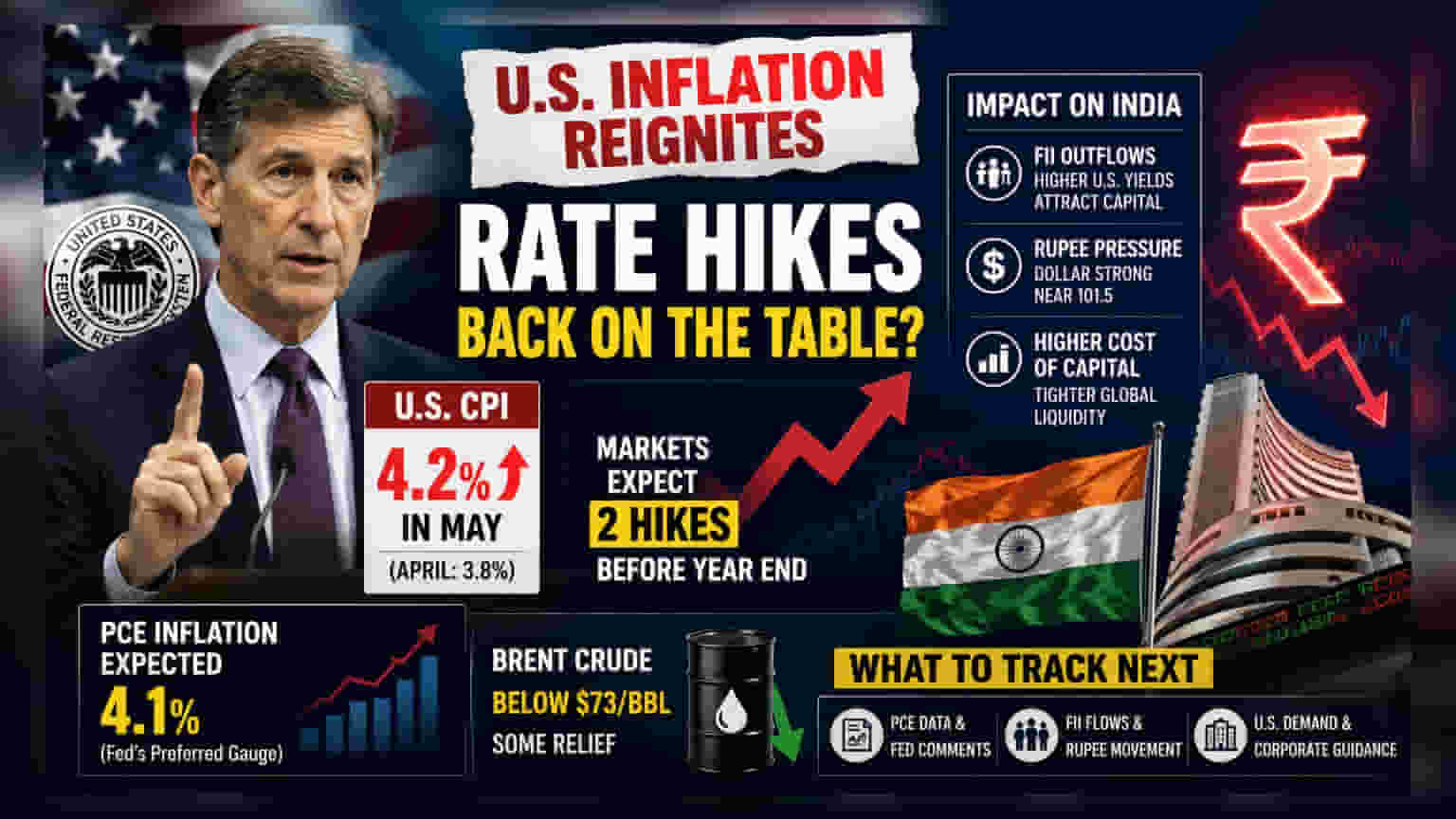
US inflation has climbed to 4.2% in May, with expectations of further pressure ahead. For Indian investors, this trend may influence FII flows, pressure the Rupee, and impact export-oriented sectors. Understanding how the Federal Reserve's potential rate decisions affect emerging markets is now essential.
What Happened
Inflationary pressures in the United States have reignited, with the Consumer Price Index (CPI) rising to 4.2% in May, up from 3.8% in April. The upcoming Personal Consumption Expenditures (PCE) Price Index report—the Federal Reserve’s preferred inflation gauge—is also expected to hit 4.1% annually. Under the leadership of Fed Chair Kevin Warsh, the central bank has placed a primary focus on maintaining price stability. Market expectations are now shifting toward the possibility of at least two interest rate hikes before the end of the year, a move intended to cool the economy.
The Global Rate Dilemma
The U.S. Federal Reserve faces a challenging environment where previous declines in inflation, which had touched 2.5% after peaking at 9.1% in 2022, are now reversing. Factors such as tariffs and geopolitical tensions are contributing to this sticky inflation. While falling Brent crude prices—now below $73 per barrel due to potential shifts in global energy supply—offer some relief, the broad price index continues to climb. This creates a "higher for longer" interest rate environment, which impacts global capital flows.
Impact On Indian Investors
For Indian investors, the U.S. interest rate trajectory is a critical monitorable for three main reasons:
FII Flows: Foreign Institutional Investors (FIIs) often prefer U.S. markets when interest rates rise, as government bonds become safer and more attractive. A higher-rate scenario can lead to FIIs pulling capital from emerging markets like India to allocate it toward U.S. fixed-income assets.
Currency Pressure: The U.S. Dollar Index (DXY) has strengthened, hovering near 101.5. A stronger dollar typically puts downward pressure on the Indian Rupee. While this can benefit export-heavy sectors like IT and Pharmaceuticals by boosting rupee-denominated earnings, it makes imports more expensive, which can contribute to domestic inflation.
Cost Of Capital: Global liquidity is often driven by U.S. dollar supply. If the Federal Reserve tightens monetary policy, it can lead to tighter global liquidity. Indian companies with significant dollar-denominated debt may face higher interest costs, which could impact their profit margins.
Sector Context
Investors in export-oriented sectors like IT services should be cautious. While a weaker rupee aids profitability, the primary demand for these companies comes from U.S. clients. If high interest rates lead to a slowdown in U.S. corporate spending or an economic contraction, Indian IT companies could face delays in deal closures or budget cuts from their clients. Similarly, while pharma companies gain from dollar strength, global pricing pressure remains a constant factor in that sector.
What To Track Next
The market’s focus will remain on the actual release of the PCE Price Index and any subsequent commentary from Federal Reserve officials. Investors should track FII movement data, the stability of the Indian Rupee against the Dollar, and any guidance from Indian companies regarding their U.S. client demand. The Fed's decision-making process will be data-dependent, meaning every upcoming economic report from the U.S. will likely influence volatility in Indian markets.