 Whalesbook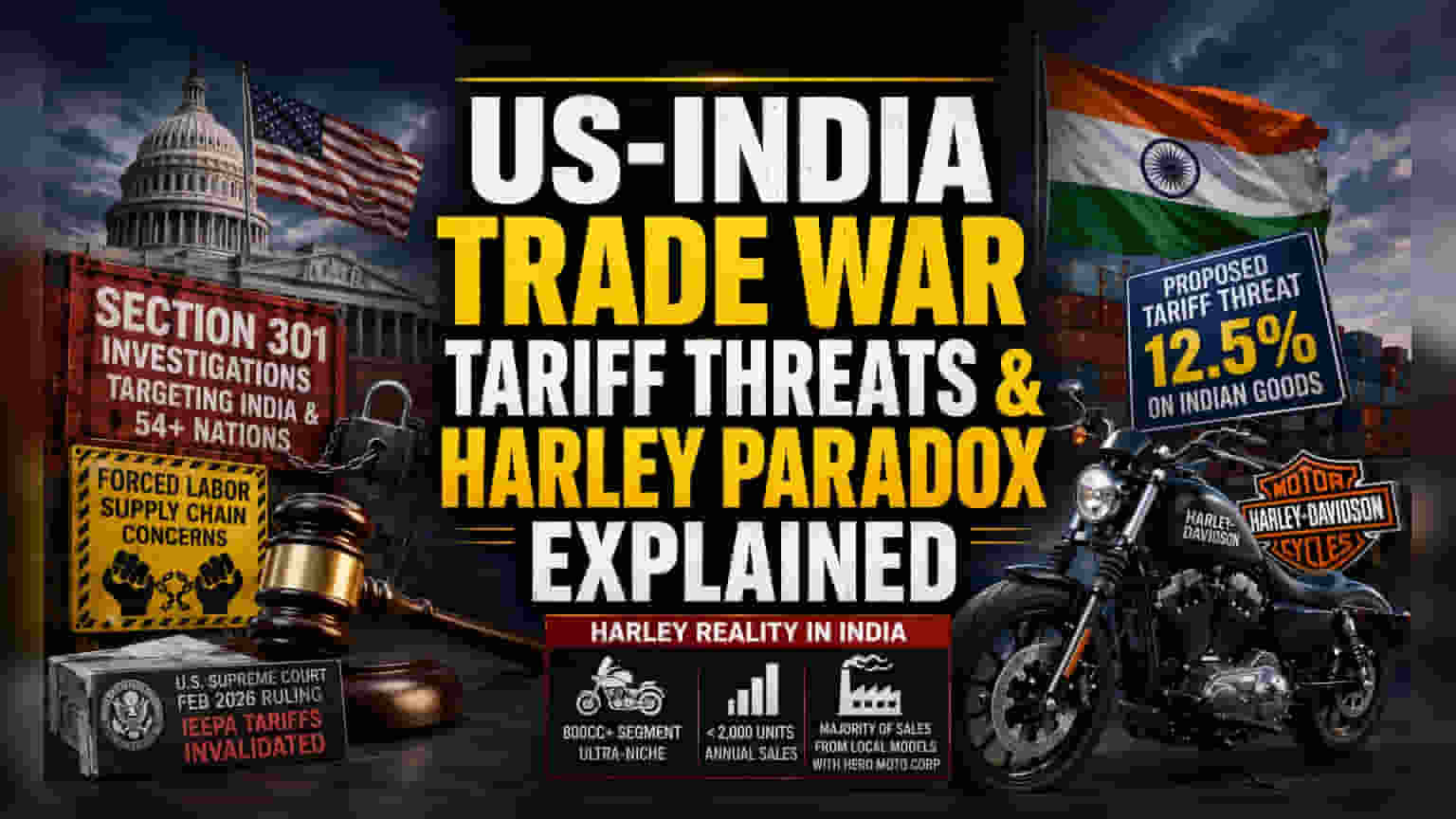


The Geopolitical Bottleneck
While the White House continues to project confidence regarding a bilateral trade agreement with India, the underlying reality has shifted from optimistic rhetoric to aggressive protectionist maneuvering. Following the February 2026 framework that aimed to normalize reciprocal trade, the momentum has been disrupted by fresh investigations under Section 301 of the Trade Act of 1974. These probes, which target India alongside approximately 54 other nations, explicitly link market access to allegations of forced labor in supply chains and concerns over industrial excess capacity. This pivot creates a high-stakes "carrot-and-stick" dynamic, where the promise of tariff relief is now being leveraged against immediate compliance demands.
The Legal and Regulatory Mire
This friction is exacerbated by the broader volatility in US trade policy following the Supreme Court’s February 2026 ruling that invalidated tariff measures under the International Emergency Economic Powers Act (IEEPA). By dismantling the legal basis for previous reciprocal tariffs, the court forced the administration to seek alternative pathways for protectionism. The current proposal to impose a 12.5% tariff on Indian goods is seen by analysts as an attempt to maintain leverage without relying on the now-defunct IEEPA authorities. The result is a legally precarious environment where corporations face shifting duty structures, making long-term planning for cross-border operations increasingly difficult.
The Harley-Davidson Paradox
Central to the discourse is the status of iconic American exporters like Harley-Davidson. The interim framework had promised zero-duty access for motorcycles in the 800cc-1,600cc range, a concession designed to address President Trump’s long-standing complaints about Indian import barriers. However, the commercial impact of this duty-free status remains largely symbolic. Data from the Society of Indian Automobile Manufacturers reveals that the segment for 800cc+ motorcycles in India is extremely niche, with annual sales often totaling fewer than 2,000 units. Furthermore, much of Harley-Davidson’s Indian volume is driven by locally manufactured, smaller-displacement models produced in partnership with Hero MotoCorp—models that fall outside the scope of the proposed tariff concessions. Consequently, even a successful trade deal may provide little material boost to the company’s bottom line in the region.
Structural Weaknesses and Risk Factors
From an institutional perspective, the risks associated with this trade negotiation are structural and persistent. The USTR’s focus on labor standards and supply chain transparency introduces indefinite regulatory hurdles that could delay finalization well beyond current political projections. Unlike competitors that operate with localized, diversified supply chains, firms relying on direct imports into India remain highly exposed to the potential 12.5% tariff surge. Management at both governmental and corporate levels must now navigate a landscape where trade policy is dictated by reactive emergency investigations rather than stable, negotiated long-term frameworks, increasing the probability of margin compression for any entity heavily invested in the India-US export corridor.