 Whalesbook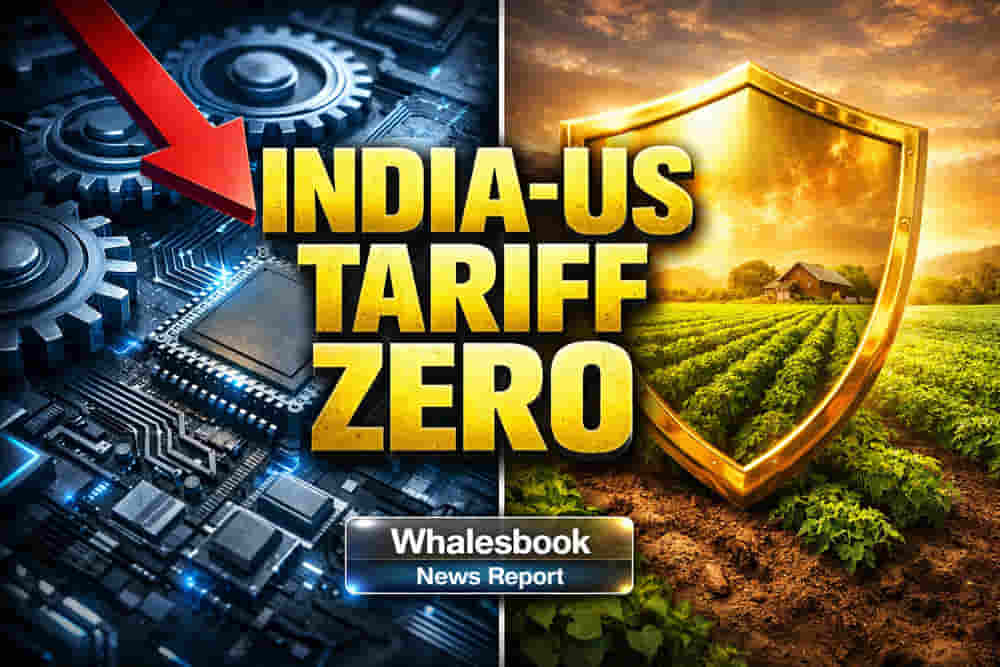
The finalized trade agreement between the United States and India signals a profound realignment of bilateral commerce, primarily driven by the impending zero-tariff regime for a substantial array of US industrial goods entering the Indian market. This development is expected to unlock significant export potential for American manufacturers, including those in machinery, automotive components, and electronics, potentially expanding their market access by up to 15% in the initial phase. The SPDR S&P Industrial Select Sector ETF (XLI) trades with a price-to-earnings ratio of approximately 22x, with a market capitalization of $50 billion, indicating investor attention to global trade dynamics that could influence such sectors. Conversely, India’s ability to maintain existing safeguards around sensitive agricultural products, such as rice, wheat, and dairy, represents a critical concession for New Delhi, aiming to mitigate potential disruptions for its vast farming population. This delicate balance between industrial liberalization and agricultural protection underscores the strategic negotiations undertaken. Furthermore, US officials are actively monitoring India’s evolving energy trade patterns, particularly its reduction in Russian oil purchases, viewing it as a strategic opening for diversification and increased US energy product exports.
Industrial Sector Advantage
The pact's cornerstone is the planned elimination of tariffs on US industrial goods, a move poised to offer American manufacturers a significant competitive edge. Sectors previously facing levies as high as 13.5% will now transition towards duty-free access, potentially stimulating export volumes. This opening could reshape supply chains and manufacturing strategies for US-based firms targeting the rapidly growing Indian market. The iShares MSCI India ETF (INDA), currently trading at a P/E of approximately 28x with a $30 billion market cap, reflects strong underlying growth expectations for the Indian economy, though the impact of reduced industrial tariffs on domestic Indian industries that compete with these imports warrants close observation.
Agricultural Protections and Risks
India's success in safeguarding its agricultural sector is a testament to the political imperative of supporting its vast farming base. While these protections are designed to shield domestic producers from immediate import surges, analysts caution that prolonged reliance on these measures without parallel domestic reforms could still leave Indian farmers vulnerable to long-term cost disadvantages compared to international competitors. The fundamental P/E for India's market, reflected in INDA, already suggests premium valuations, implying growth is priced in, but this deal's agricultural component requires careful management to prevent unintended consequences.
Strategic Energy Realignment
The geopolitical undertones of the energy trade discussion are pronounced. India’s strategic shift away from Russian oil aligns with global efforts to diversify energy supplies and reduce reliance on single sources. This presents a clear opportunity for US Liquefied Natural Gas (LNG) and other energy product exports, capitalizing on India's growing energy demands. The monitoring of these patterns suggests a broader US strategy to secure greater market share in a critical global energy market, potentially influencing global energy flows and pricing dynamics.
Analyst sentiment indicates a generally positive outlook for the US-India trade relationship, anticipating increased bilateral commerce. For US industrial exporters, the elimination of tariffs presents a clear growth pathway, provided market access is fully realized and domestic demand in India remains robust. However, the long-term impact on India's agricultural sector remains contingent on implementation and complementary domestic policies. In the energy sphere, continued diversification by India is likely to sustain opportunities for US energy producers, aligning with broader global trends toward securing resilient energy supplies.