 Whalesbook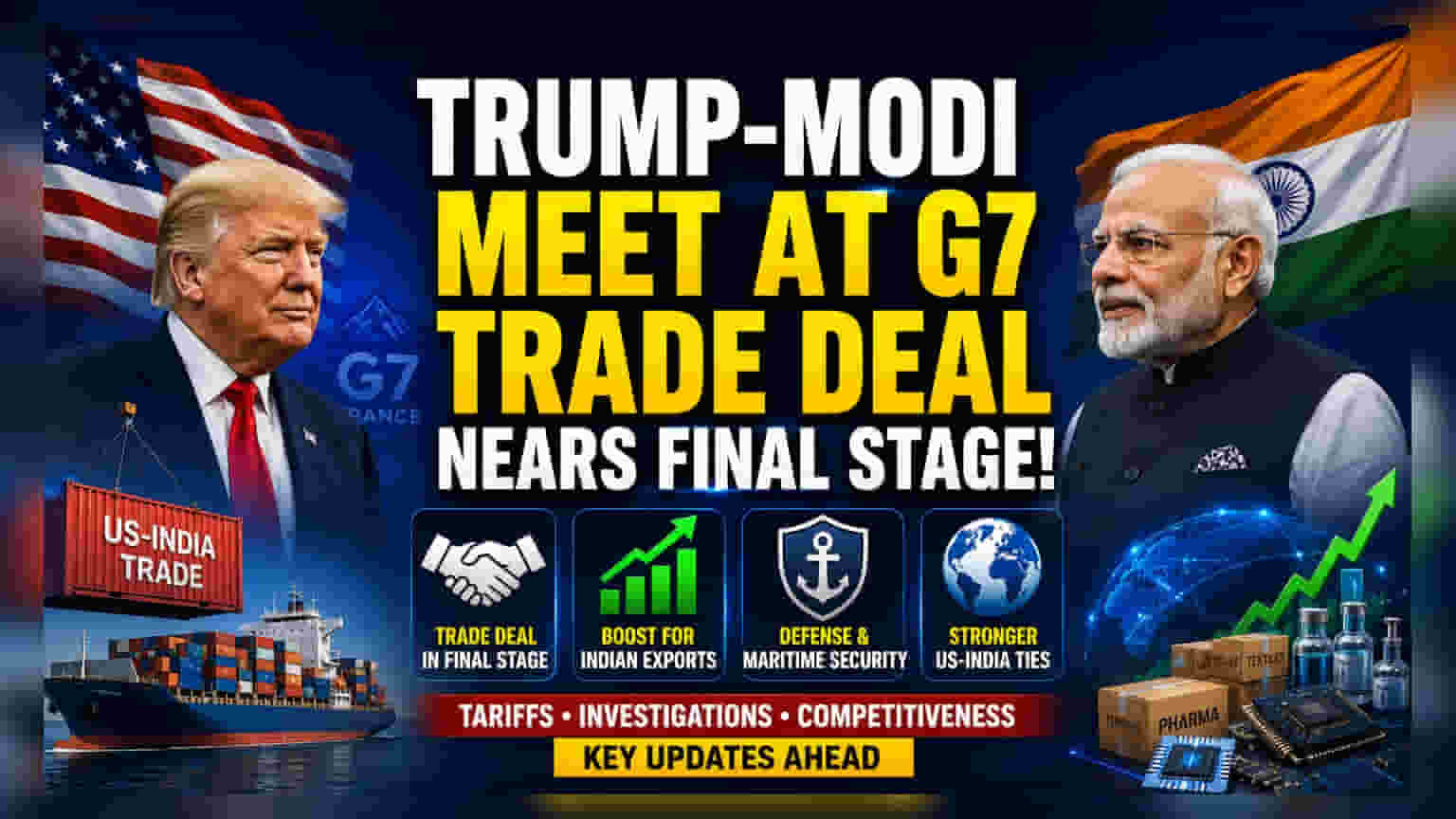


US President Donald Trump and Prime Minister Narendra Modi have indicated that a trade agreement between the two nations is nearing completion. Following their discussions at the G7 summit, the focus for investors now turns to the potential impact on export-oriented sectors, tariff policies, and competitive positioning against rival manufacturing hubs. Upcoming trade discussions in New Delhi will be crucial for determining the final terms.
What Happened
US President Donald Trump and Prime Minister Narendra Modi met on the sidelines of the G7 summit in France, marking their first bilateral discussion in 16 months. During the interaction, President Trump noted that a trade deal between the United States and India is in the final stages of negotiation. The discussions also addressed broader geopolitical themes, including maritime security, following recent incidents involving Indian mariners off the coast of Oman. The two leaders also reaffirmed the strength of US-India defense ties.
Why This Matters For Investors
Trade deals are significant for the stock market because they provide certainty regarding tariffs, market access, and regulatory standards. For Indian investors, this development signals a potential reduction in trade friction, which is generally viewed as supportive for export-oriented industries. However, the description of the Prime Minister as a 'tough negotiator' highlights that the discussions are complex. This suggests that while a deal may be near, the final terms—specifically regarding tariff structures and market access—are being carefully balanced to protect domestic interests.
The Trade Dynamics and Competition
A critical part of these negotiations is India's push to secure a competitive edge over other manufacturing hubs like Vietnam and Bangladesh. Investors often track this because the US is a major destination for Indian exports, particularly in sectors like textiles, pharmaceuticals, and technology. If the final agreement provides better tariff terms or regulatory alignment than what competing nations currently enjoy, it could potentially support growth for Indian exporters in these specific segments.
The Section 301 Context
Investors should be aware that the US has ongoing Section 301 investigations involving India. These investigations are typically used by the US to address trade practices it considers unfair, which can sometimes lead to the imposition of retaliatory tariffs or penalties. The fact that these investigations remain ongoing adds a layer of complexity to the negotiation process. The outcome of these proceedings, which are expected to be discussed during the upcoming visit of USTR Jamieson Greer to New Delhi, will be a vital indicator of whether trade tensions will ease or persist.
What Investors Should Track
The next steps in this process will be important for market participants to monitor. The visit of US Trade Representative Jamieson Greer to India later this month is the primary near-term event. Investors should look for updates on three main areas: the timeline for the final agreement, clarity on tariff reductions for specific sectors, and any developments regarding the ongoing trade investigations. Additionally, any official commentary on how the deal addresses manufacturing competitiveness against other global peers will be essential to understanding the long-term impact on Indian companies.