 Whalesbook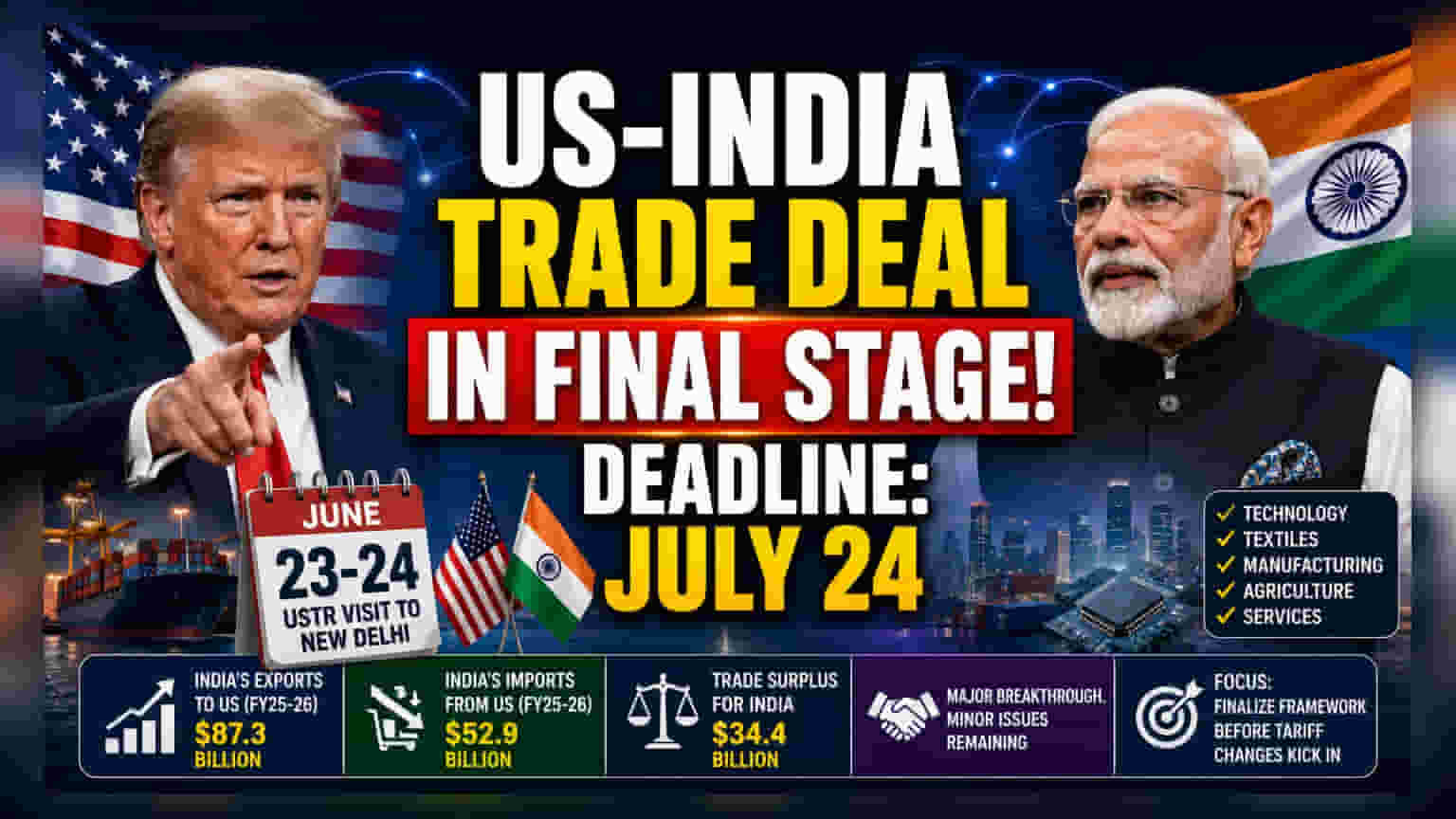


President Donald Trump has signaled that a bilateral trade deal with India is nearing finalization. U.S. officials are set to visit New Delhi this month to wrap up negotiations ahead of a critical July 24 tariff deadline. This development is significant for investors as it aims to provide stability in trade relations with India’s second-largest trading partner, where India currently maintains a substantial trade surplus.
What Happened
President Donald Trump has indicated that a trade agreement between the United States and India is in its final stages. Following talks at the G7 Summit, the President stated that both nations are very close to reaching a deal. To turn this progress into a final agreement, U.S. Trade Representative Jamieson Greer is scheduled to visit New Delhi on June 23 and 24. During this visit, he will meet with India's Commerce and Industry Minister Piyush Goyal to finalize the framework and terms of the proposed bilateral trade agreement.
Why This Matters For Investors
The United States remains one of India's most important economic partners, making any development in trade policy highly relevant for market stability. For the fiscal year 2025-26, India recorded exports of $87.3 billion to the U.S. against imports of $52.9 billion, resulting in a significant trade surplus for India. A formalized trade deal can help reduce uncertainty regarding tariffs and market access for Indian exporters, which is often a key concern for investors tracking companies with high exposure to the U.S. market.
The Deadline Pressure
The timing of these negotiations is linked to an upcoming change in U.S. trade policy. Both nations are aiming to secure an interim agreement before July 24. This date is important because the U.S. administration’s current temporary 10% tariff regime is set to expire then. This deadline was brought into focus after a U.S. Supreme Court ruling concerning reciprocal tariffs necessitated adjustments to the American tariff structure. Finalizing a deal by this date could prevent potential disruption in trade flows that might arise if the tariff regime changes unexpectedly.
Business And Economic Context
Negotiations have been intensive for several months. Earlier in June, Indian government officials noted that the majority of the agreement’s elements were already settled, with only minor points remaining to be ironed out. The current phase of talks is focused on putting the finishing touches on the framework deal. For investors, this suggests that the primary hurdles in the negotiation process may have already been cleared, and the focus is now on the legal and technical aspects of the final pact.
What Investors Should Track
As negotiations move into the final phase, investors may want to monitor a few key developments. The immediate monitorable is the outcome of the upcoming meetings in New Delhi, specifically regarding whether the two sides can meet the July 24 deadline. Any official announcement regarding the specific sectors covered under the interim agreement will also be important, as this could impact businesses in areas such as technology, textiles, and manufacturing. The final text of the agreement will provide clarity on tariff rates and market access, which will likely influence sentiment for companies heavily reliant on U.S.-bound trade.