

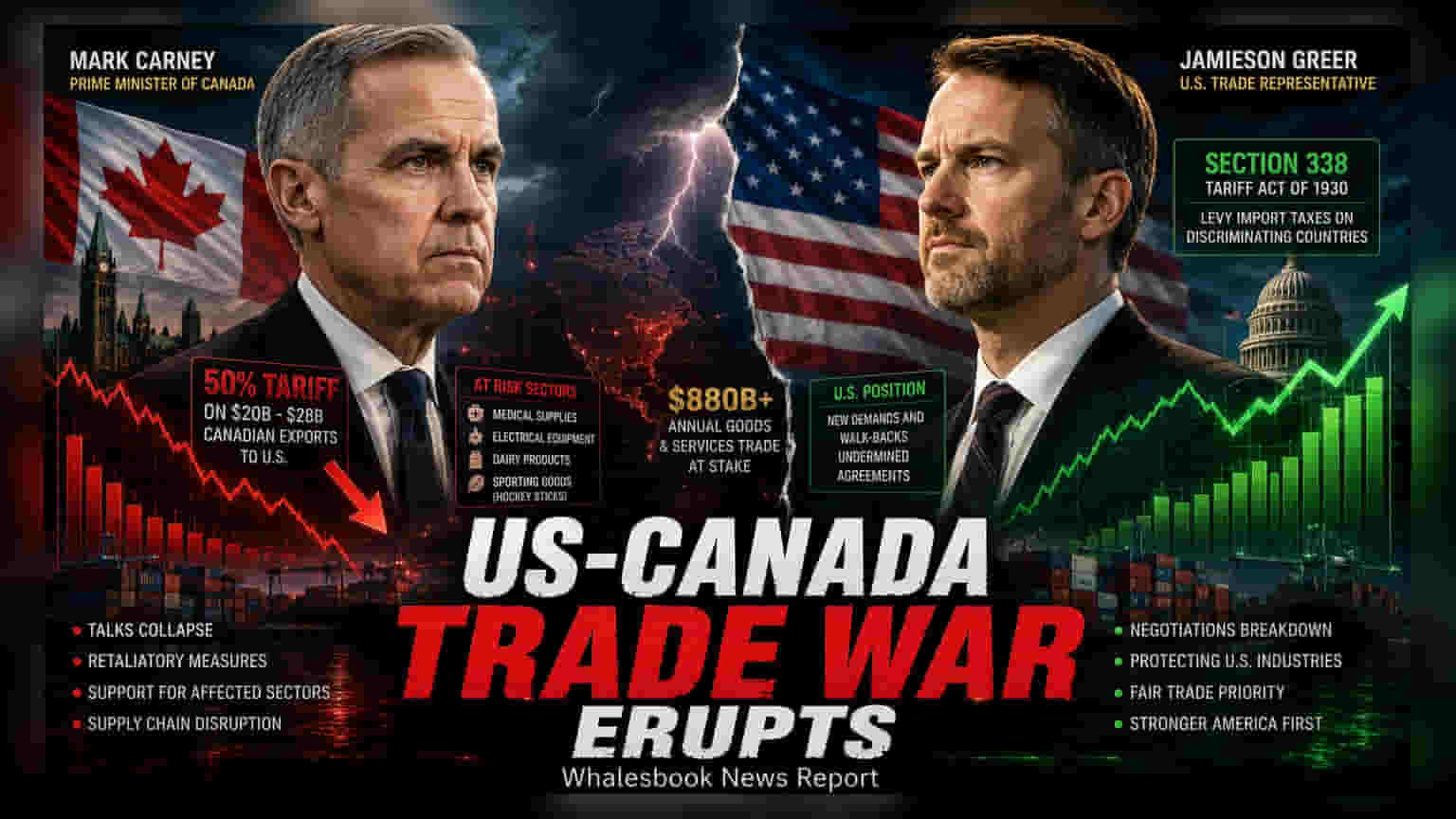
The United States has enacted a 50% tariff on $20 billion to $28 billion of Canadian goods following the collapse of bilateral trade negotiations. Canadian Prime Minister Mark Carney has pledged dollar-for-dollar retaliatory tariffs, raising risks for cross-border supply chains. The conflict stems from a failure to agree on terms for existing trade duties, affecting sectors from manufacturing to consumer goods.
The United States has implemented a significant 50% tariff on approximately $20 billion to $28 billion worth of Canadian exports, a move that marks a sharp escalation in trade tensions between the two nations. The tariffs, which became effective early Saturday, cover roughly 5% of Canada's annual exports to the U.S. and span a wide range of goods, including medical supplies, electrical equipment, dairy products, and sporting goods like hockey sticks.
Collapse of Trade Negotiations
The imposition of these tariffs follows the breakdown of last-minute negotiations aimed at resolving bilateral trade disputes. While officials had previously suggested that a compromise was within reach, the talks failed to produce an agreement even after a three-day extension of the initial August 19 deadline. Canadian Prime Minister Mark Carney responded to the news by announcing that Canada would implement dollar-for-dollar retaliatory measures to protect its domestic workers and industries. The government has also signaled that additional support for affected sectors is under consideration, while the Canadian delegation has been recalled from the talks.
Both sides have publicly blamed one another for the breakdown. The U.S. Trade Representative, Jamieson Greer, cited "new demands and walk-backs of other commitments" from the Canadian side, which he stated undermined earlier progress. Conversely, Prime Minister Carney described the U.S. proposals as "unfair" and "uneconomic," stating that they made a reliable agreement impossible to achieve. Washington invoked Section 338 of the Tariff Act of 1930, a historical provision that allows the president to levy import taxes on countries deemed to be discriminating against U.S. business interests, without requiring a formal prior investigation.
Impact on Supply Chains and Sectors
The economic implications of this dispute extend beyond the specific goods taxed. The U.S. and Canada share a highly integrated trade relationship, with annual trade in goods and services exceeding $880 billion. Industries such as automotive manufacturing, steel, and aluminum, which rely on complex, cross-border supply chains, face potential disruption. Increased costs for raw materials or finished components could pressure profit margins for companies operating across the border, creating uncertainty for investors monitoring these sectors.
The broader dispute also casts a shadow over the future of the North American trade pact, as negotiations with Canada remain stalled. While the U.S. has proceeded with separate discussions with Mexico, the hardening stance between Washington and Ottawa introduces significant volatility for North American trade relations. Investors may monitor the upcoming details regarding the specific Canadian retaliatory measures and any further government aid packages, which will indicate the duration and severity of this conflict.