

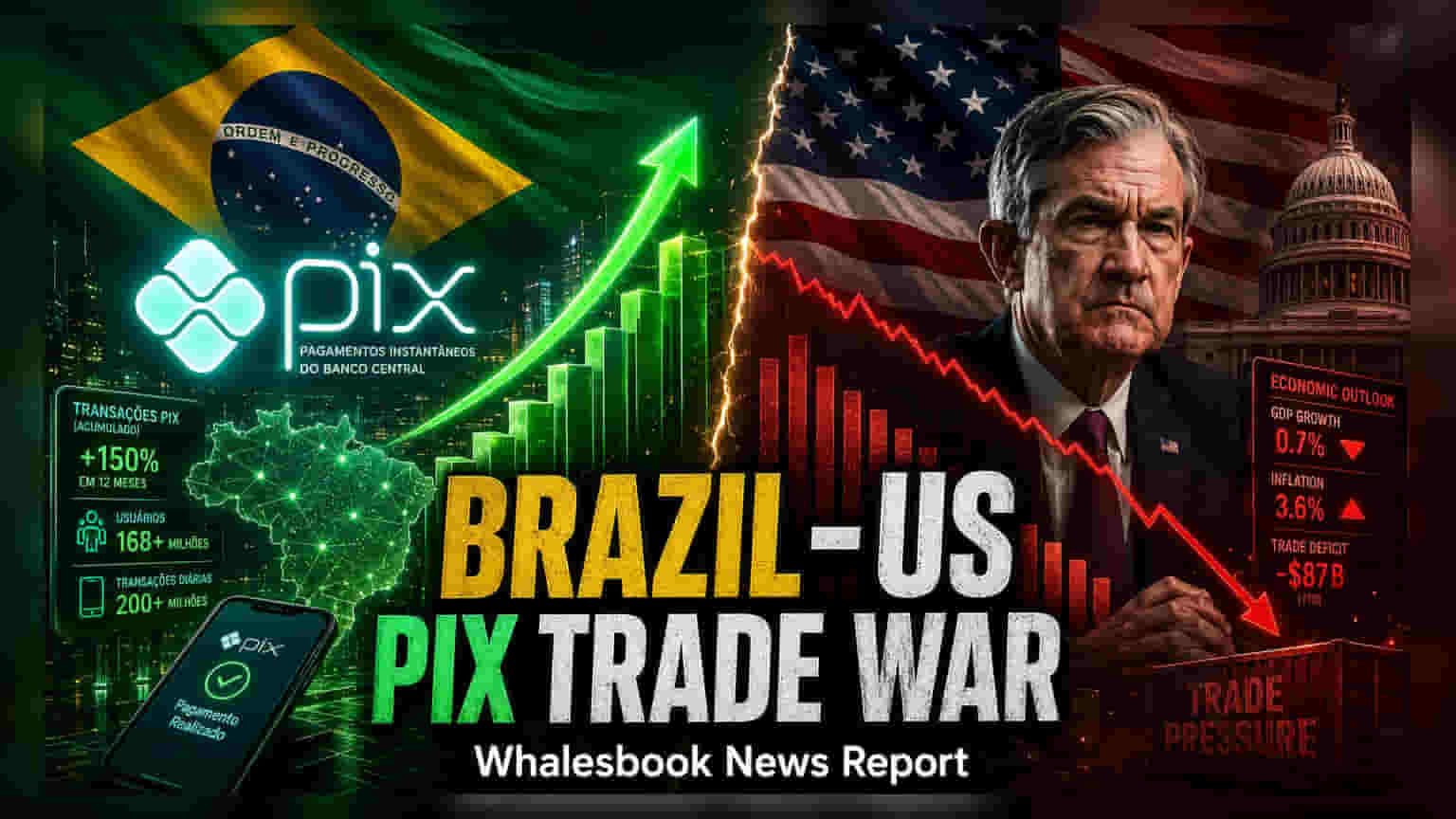
The United States has introduced 25% tariffs on Brazilian imports, citing the government-backed Pix instant-payment system as a trade barrier. Washington claims the system unfairly disadvantages U.S. credit card companies, while Brazil defends Pix as a public service essential for financial inclusion. Investors may monitor potential impacts on trade relations and the global expansion of similar payment technologies.
Detailed Coverage
The trade relationship between Brazil and the United States has faced a sharp escalation this week following the U.S. decision to impose 25% tariffs on Brazilian imports. The move stems from a deepening dispute over Pix, the instant-payment infrastructure operated by the Central Bank of Brazil. The U.S. Trade Representative, Jamieson Greer, labeled the system a trade barrier, arguing that it provides preferential treatment to a state-owned platform at the expense of American credit card firms.
Impact on Traditional Payment Models
At the heart of the conflict is the rapid shift in consumer behavior caused by Pix. Since its launch in 2020, the system has transformed Brazil’s financial landscape by enabling real-time, low-cost transfers that bypass traditional payment networks. Because Pix operates with minimal transaction fees for merchants, it directly challenges the fee-based revenue models long maintained by global giants such as Mastercard and Visa. Industry filings from these companies have previously highlighted the risk that government-run, low-cost payment rails pose to their market dominance.
While U.S. authorities insist they are seeking a more neutral regulatory framework rather than the removal of Pix, Brazilian officials have strongly rejected these claims. Central bank head Gabriel Galipolo described the trade action as unfounded, emphasizing that Pix has expanded the total addressable market for financial services by bringing millions of unbanked citizens into the formal economy. Brazilian leadership, including President Luiz Inácio Lula da Silva, has reaffirmed that the platform will remain a free, public service, signaling that the current policy stance is unlikely to change despite the new trade levies.
Global Context and Similar Infrastructure
The dispute highlights a growing global tension between traditional financial incumbents and emerging public-sector digital payment initiatives. Similar to India’s Unified Payments Interface (UPI) and the U.S. Federal Reserve’s FedNow service, Pix represents a move toward instant, digitized national payment rails. However, Pix’s adoption rate remains distinct, with current data indicating it serves approximately 170 million users—roughly 80% of Brazil’s population—and now handles more than half of all domestic transactions by volume.
For investors, this trade conflict underscores the geopolitical and regulatory risks associated with digital infrastructure that disrupts legacy financial services. The long-term impact on trade flows between the two nations remains a key uncertainty. Market participants may track whether the U.S. continues to utilize trade policy to address concerns over digital payment systems and how other nations with similar infrastructure, such as India, navigate potential scrutiny regarding their own government-backed payment systems.