

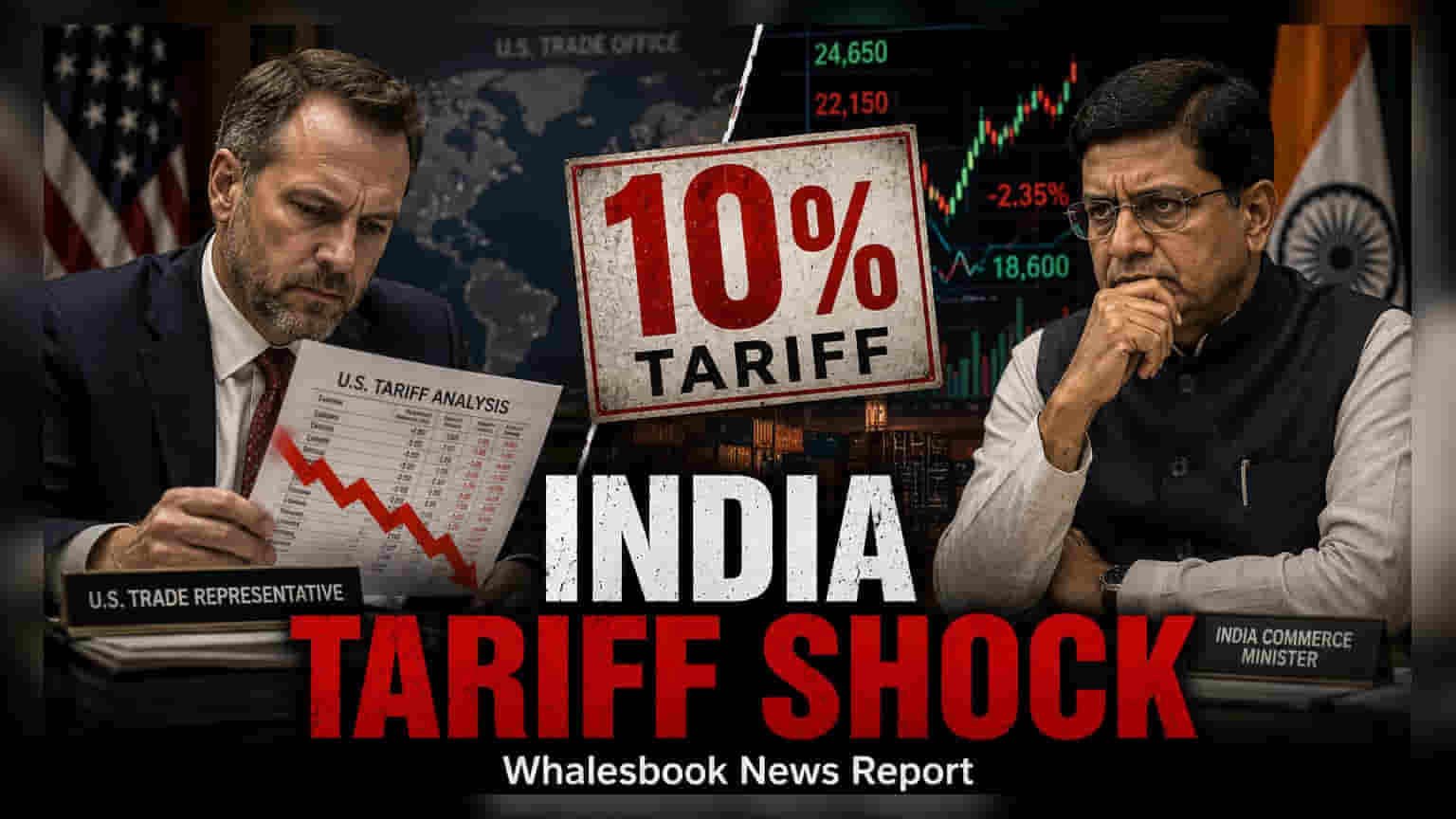
The United States has finalized a 10% additional import duty on select Indian goods under Section 301. While this move creates cost pressure for some exporters, approximately $87.31 billion in shipments, including pharmaceuticals and smartphones, remain exempt. Indian authorities are currently negotiating a bilateral trade agreement to secure more favorable long-term terms.
Detailed Coverage
The United States Trade Representative has officially finalized its decision to apply a 10% additional import duty on specific Indian exports under its Section 301 trade measures. This action comes after an investigation into various industrial practices. For Indian businesses, the outcome is mixed, as the final tariff level remains lower than what has been imposed on several other economies currently under U.S. investigation.
Impact on Key Export Sectors
The most significant relief for Indian investors and manufacturers is the wide scope of exemptions. Exports valued at $87.31 billion for the 2025-26 fiscal year are excluded from this 10% levy. This list includes major revenue generators such as generic pharmaceuticals and smartphones, which continue to enjoy zero additional duty status. Furthermore, products already under the U.S. Section 232 trade measures, such as steel, aluminum, and certain automotive components, are also not affected by this new 10% tax.
However, the textile industry faces a more complex situation. Unlike competitors such as Bangladesh, Indonesia, and Malaysia, India has not yet secured specific tariff-rate quota exemptions that allow for preferential duty rates on apparel made with U.S.-origin cotton. With the U.S. market for Indian textiles and apparel valued at roughly $11 billion annually, this disparity could create a competitive disadvantage. Analysts are monitoring whether this regime encourages global buyers to shift sourcing toward countries that currently enjoy these specific quota benefits.
Strategic Trade Negotiations
The Indian government is actively working to resolve these trade hurdles through the ongoing India-U.S. Bilateral Trade Agreement negotiations. Securing a finalized agreement is the primary lever for normalizing trade relations and ensuring that Indian goods remain price-competitive against global peers. The U.S. government has acknowledged India’s recent updates to its Foreign Trade Policy, which now prohibits the import of goods produced using forced labor, a development that factored into the final decision on the tariff tier.
Investor Monitorables
The immediate financial impact will be limited to companies exporting goods that fall outside the current list of exemptions. Investors should track the progress of the Bilateral Trade Agreement, as any breakthrough could stabilize export costs and improve long-term margins for affected sectors. Additionally, the ability of textile manufacturers to maintain export volumes to the U.S. despite the absence of tariff-rate quotas remains a key area for shareholders to monitor in upcoming quarterly earnings reports.