

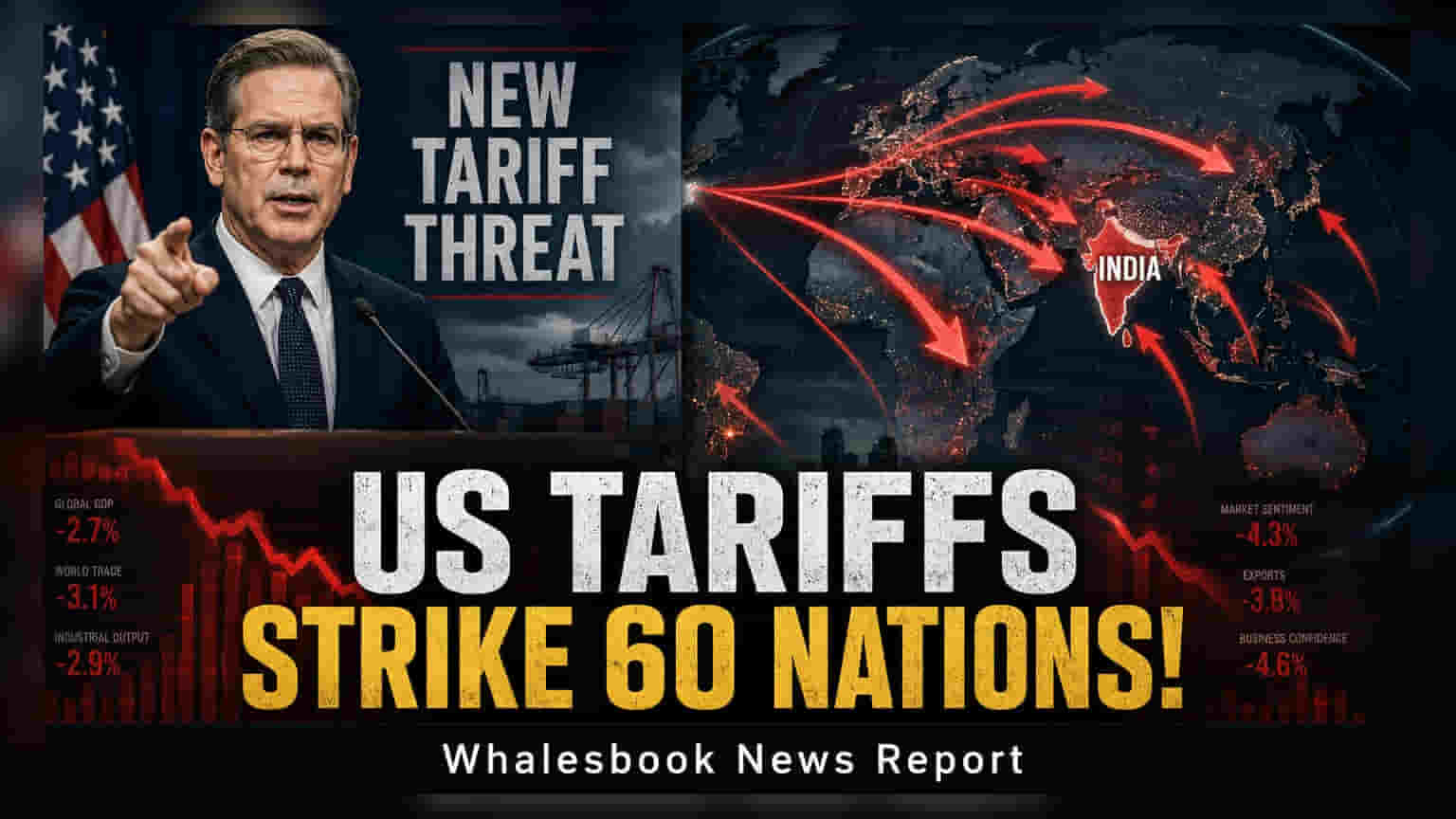
The United States has introduced new tariffs of 10% on Indian goods, citing concerns over forced labor enforcement. This policy, effective this Friday, aims to standardize international trade practices. India secured the lower 10% rate due to recent domestic policy updates, while nations with weaker safeguards face higher 12.5% duties.
Detailed Coverage
The United States government has announced a new tariff structure impacting imports from 60 economies, including India, to address concerns regarding forced labor in global supply chains. Under the new rules, India will face a 10% tariff on goods entering the U.S. market. This measure is being implemented under Section 301 of the Trade Act of 1974 and is scheduled to take effect starting Friday.
The U.S. administration, through Trade Representative Jamieson Greer, stated that existing international efforts to address forced labor have been insufficient. The new policy is designed to compel trading partners to align their import standards with U.S. requirements. By categorizing countries based on their existing labor enforcement mechanisms, the U.S. intends to eliminate what it describes as an unfair trade advantage held by countries with less stringent regulations.
Impact of the Tiered Duty Structure
The tariff framework is split into two tiers. Nations that have already implemented or are actively committing to robust bans on goods made with forced labor are subject to a 10% tariff. India falls into this category, as officials successfully highlighted recent policy enhancements aimed at curbing such practices. Conversely, countries that are found to have inadequate safeguards against forced labor will face a steeper 12.5% tariff. This tiered approach also impacts key trading partners including the European Union, Japan, South Korea, Taiwan, and Switzerland.
Exemptions and Parallel Investigations
Not all imports will be affected by these changes. The U.S. has provided exemptions for essential commodities, including oil, gas, and fertilizers, as well as certain food items. Additionally, goods already subject to specific national security tariffs—such as those on steel, aluminum, copper, and automobiles—will remain under their existing duty regimes. Furthermore, products covered under the US-Mexico-Canada Agreement continue to benefit from duty-free treatment.
Separately, the Office of the U.S. Trade Representative has launched a new Section 301 investigation into 16 economies. This probe centers on allegations of industrial overproduction, which the U.S. claims suppresses global market prices and negatively affects domestic manufacturers. If these investigations confirm trade distortions, further tariff actions could be considered in the future. Investors and exporters in sectors sensitive to U.S. trade policy may want to monitor the specific product categories impacted by these tariffs and how the U.S. trade office evaluates further compliance reports from Indian regulatory bodies.