

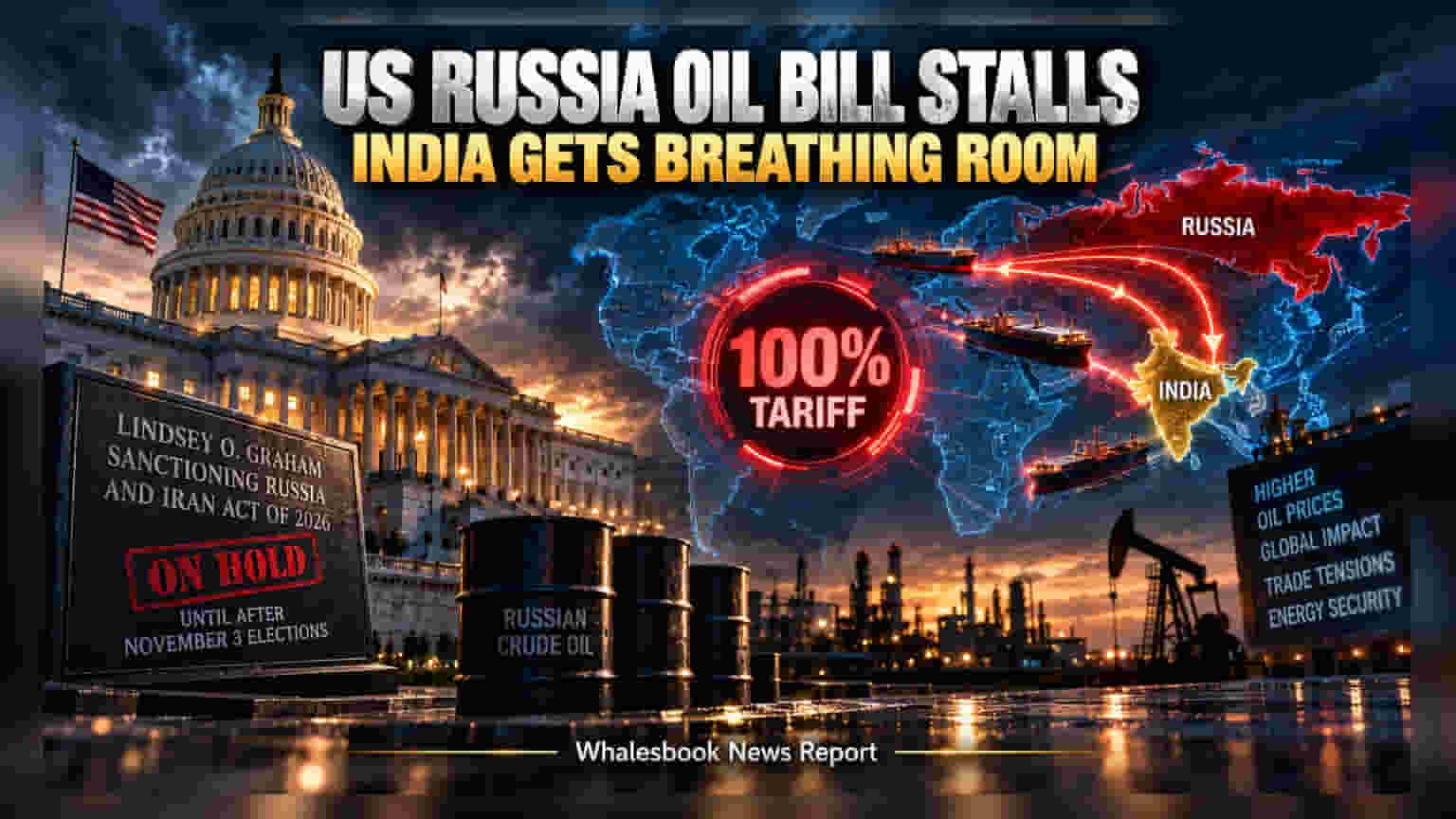
A controversial US bill proposing 100% tariffs on Russian crude imports has been delayed in the House of Representatives until after the November elections. This provides immediate relief for India, which imported over $40 billion of Russian oil in FY2026. Investors should monitor energy prices and future trade policy shifts closely.
The 'Lindsey O. Graham Sanctioning Russia and Iran Act of 2026' has hit a legislative roadblock in the United States. Although the bill passed the US Senate with an overwhelming 86-11 vote in August, the US House of Representatives has effectively shelved the measure until after the November 3 midterm elections. The proposed legislation sought to grant the US administration authority to impose up to 100% tariffs on the world's top five importers of Russian crude oil and natural gas.
For India, this administrative pause serves as a critical breathing room. India’s current energy procurement strategy has heavily relied on discounted Russian supplies to manage domestic inflation and meet the energy requirements of its 1.4 billion citizens. According to recent trade data, India imported $40.8 billion worth of Russian crude in FY2026, which accounts for more than 30% of the nation’s total oil import basket. A rapid shift in sourcing, as the bill previously threatened, could have forced an immediate increase in import costs for the country.
The delay in the House is driven by significant internal disagreement regarding the policy's implementation. While the bill’s sponsors have pushed for immediate action, House leadership, including Speaker Mike Johnson, has opted not to prioritize the bill for a floor vote. Lawmakers and industry groups in the US have raised concerns that the bill's broad, discretionary tariff authority could lead to unpredictable volatility in global energy markets. There is also a fear among some legislators that forcing nations like India and others to abandon Russian crude could trigger upward pressure on global oil prices, impacting the US economy as well.
India has maintained a clear diplomatic stance throughout this development. External Affairs Minister S. Jaishankar has repeatedly defended India’s energy procurement as a matter of strategic necessity rather than geopolitical alignment. During recent international engagements, the Minister reiterated that ensuring affordable and reliable energy access for the population remains the government's primary responsibility.
While the immediate threat of punitive tariffs has receded, the policy remains a significant variable for global energy trade. Investors monitoring energy stocks, inflation, and trade-dependent sectors should note that the bill’s status could change significantly once the US midterm elections conclude. The potential for future trade tensions, or a re-emergence of this legislative push, will remain a key monitorable factor for global supply chains and commodity prices in the coming months.