

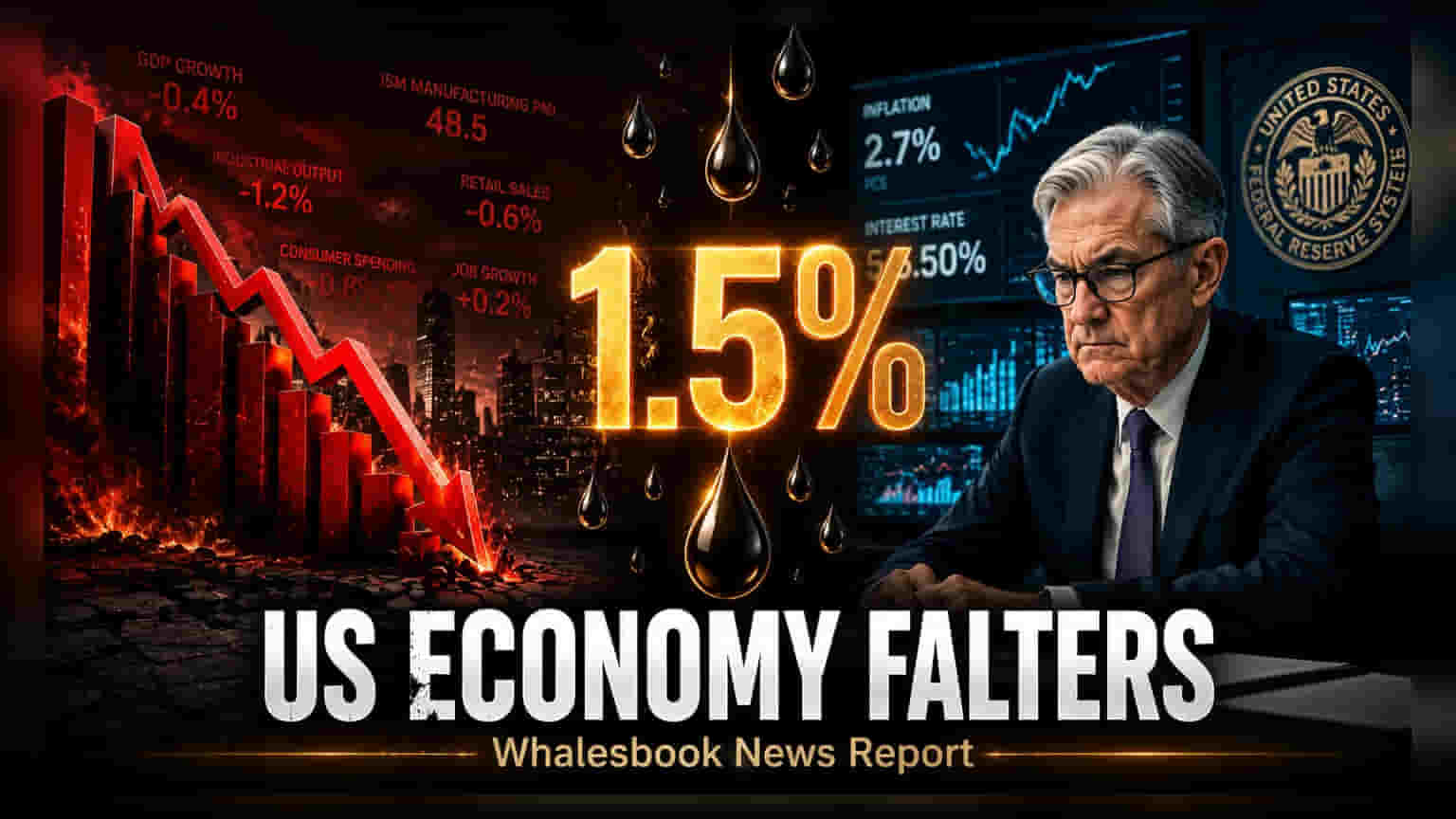
The US economy expanded at an annual rate of 1.5% in the second quarter of 2026, missing the 2.1% growth forecast. Higher energy costs and lower government spending slowed activity, even as consumer spending and AI-related business investments remained strong. The Federal Reserve has kept interest rates steady at 3.5%-3.75% as it monitors inflation and geopolitical risks.
The United States economy saw a deceleration in the second quarter of 2026, with GDP data showing a 1.5% annual growth rate. This figure missed the 2.1% growth anticipated by economists, reflecting pressure from rising energy costs and a reduction in government expenditure. The data, which serves as a key indicator for global markets, highlights a period of mixed performance across different areas of the American economy.
Impact of Energy Costs and Government Policy
Rising oil prices, driven largely by ongoing conflict in West Asia and subsequent disruptions to shipping routes, have increased costs for both businesses and households. This energy price increase contributed to inflationary pressure, which often limits the amount of money consumers have for other spending. Simultaneously, the federal government reduced its spending during the quarter, further subtracting from the overall pace of economic growth.
Consumer Spending and AI Infrastructure Trends
Despite these problems, the American economy received support from consumer demand, which makes up more than two-thirds of total output. Consumer spending grew at an annual rate of 3.2% in the second quarter, a sharp increase from the 0.5% seen in the first quarter of the year. This resilience suggests that households have continued to purchase goods and services despite the higher cost of living.
Business investment also acted as a key pillar for the economy, particularly in the technology sector. Significant capital is being directed toward artificial intelligence, with companies increasing their spending on software and high-tech equipment. While this spending trend supports demand for semiconductors and other specialized hardware, it has also led to a higher volume of imports. Because imports are subtracted when calculating GDP, this surge in tech-related equipment purchases partially offset domestic production gains in the final calculation.
Federal Reserve Policy and Future Risks
Following the release of these figures, the Federal Reserve maintained its benchmark interest rate in the 3.5% to 3.75% range. Policymakers are currently balancing the need to manage inflation against the risks posed by global geopolitical instability. Fed Chair Kevin Warsh has noted that the economy continues to show resilience, specifically pointing to labor market stability and ongoing productivity improvements as positive signs. However, the future economic outlook remains sensitive to energy prices. If oil and gasoline costs remain elevated, inflation could stay higher for longer, potentially complicating the Federal Reserve’s future decisions regarding interest rate adjustments. Investors will likely watch upcoming monthly inflation reports and energy price trends to gauge whether consumer resilience can persist under these financial pressures.