

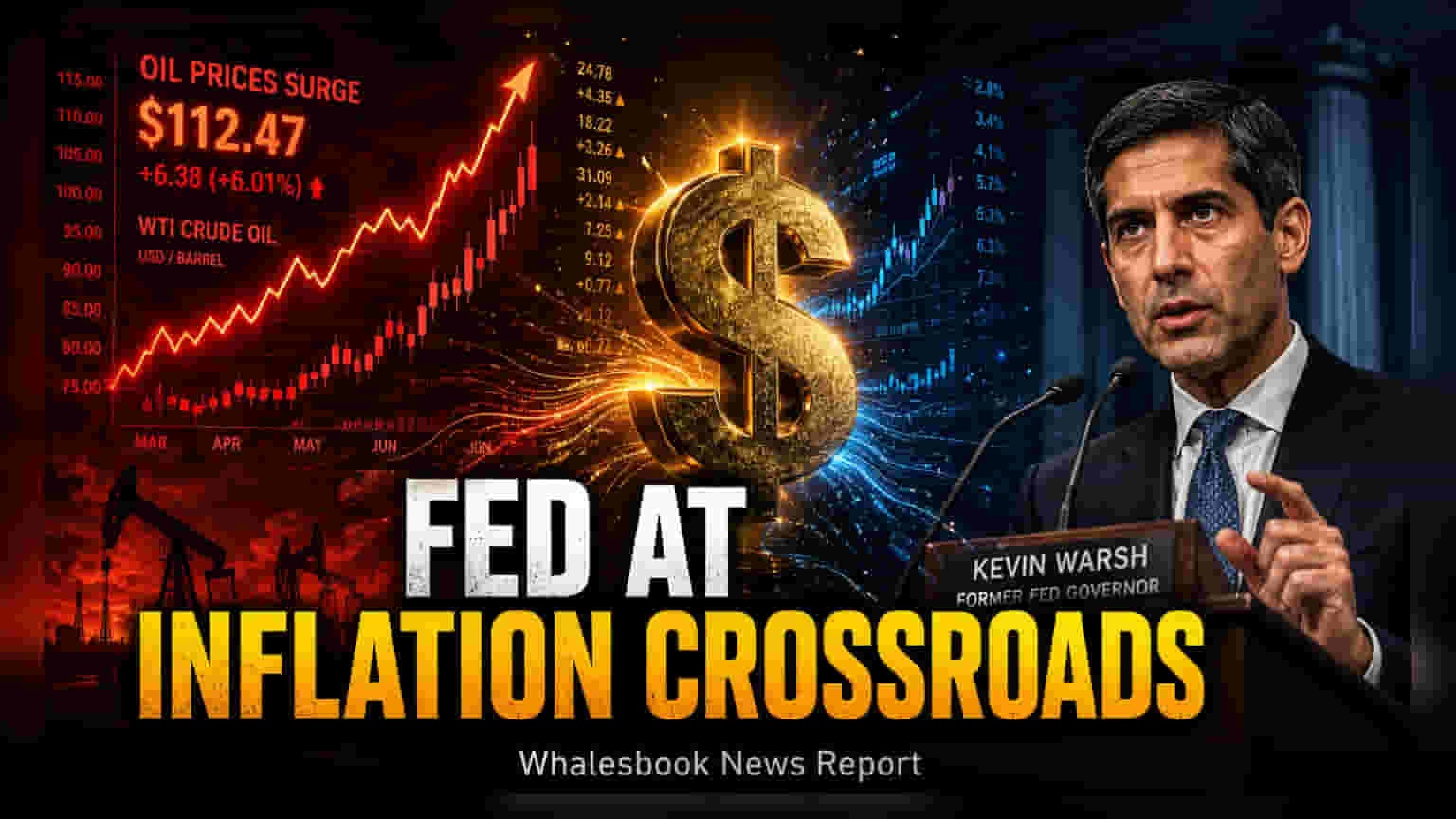
The U.S. Federal Reserve is expected to keep interest rates unchanged at 3.50-3.75% this week. Investors are focused on Chairman Kevin Warsh’s comments on inflation amid rising oil prices. For Indian markets, the Fed's future rate guidance may impact foreign investment flows and equity volatility.
The U.S. Federal Reserve meets this week to decide its benchmark interest rate, with most market expectations pointing toward a steady stance. The central bank is expected to maintain its current rate range of 3.50-3.75% for the fourth meeting in a row. This decision comes as the bank balances strong economic data, including resilient GDP growth and a stable labor market, against persistent inflationary pressure.
Inflation Risks and Oil Prices
The central focus for the Federal Reserve is the recent rise in oil prices, which complicates the goal of reaching a 2% inflation target. Chairman Kevin Warsh, known for prioritizing price stability, faces pressure to address whether these energy costs will lead to a more cautious approach to future interest rate changes. While the economy has shown resilience, the uncertainty surrounding energy prices remains a critical factor for the central bank's policy path.
Impact on Global and Indian Markets
For investors, the most significant outcome of this meeting will likely be the Fed's forward guidance rather than the expected rate hold. A shift toward a more hawkish tone, indicating that interest rates might stay higher for longer, could lead to increased Treasury yields. Higher yields often put pressure on growth-oriented assets and may cause volatility across global equities.
In the context of the Indian market, the Fed's decision is one of several factors. While domestic corporate earnings and crude oil price trends often have a more direct impact on local sentiments, a change in the Fed's interest rate trajectory can influence foreign portfolio investor flows. If the Fed signals that future rate cuts are less likely than previously anticipated, it could lead to reassessments of global equity valuations and potentially impact liquidity in Indian markets.
Outlook for Gold and Fixed Income
Gold investors are monitoring the meeting closely, as interest rate expectations often influence the metal's price. Higher interest rates typically increase the opportunity cost of holding non-yielding assets like gold, potentially leading to price pressure. Analysts suggest that the initial market reaction to the Fed's statement and the Chairman's subsequent press conference may be volatile. Market observers are advised to look beyond the immediate rate announcement and focus on the language used regarding the duration of current interest rate levels. The next important update for investors will be the official policy statement, which will provide clarity on the Fed’s economic outlook for the remainder of the year.