

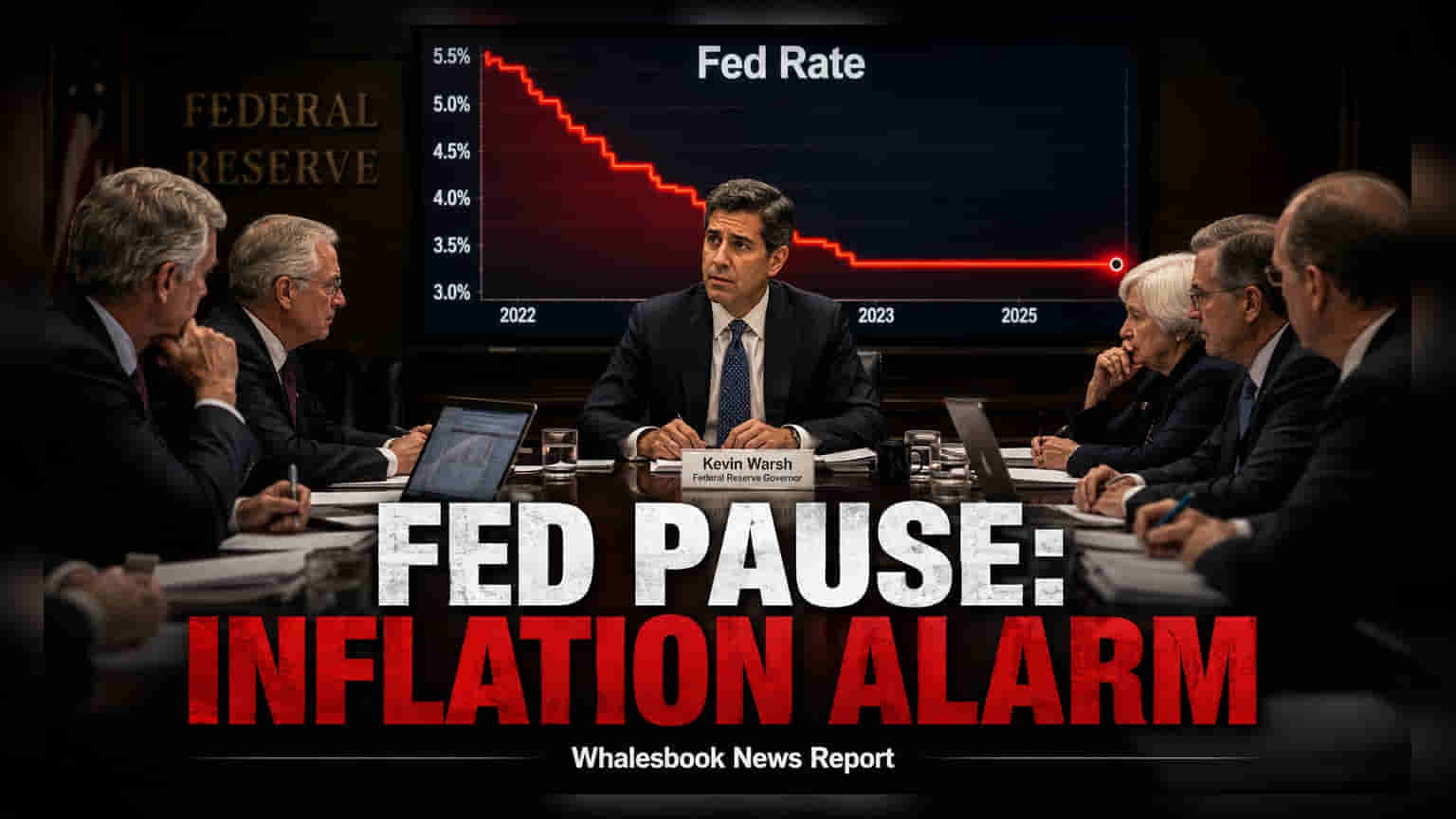
The US Federal Reserve has unexpectedly kept interest rates unchanged, pausing a anticipated hike despite inflation staying above its 2% target. For Indian investors, this decision eases pressure on the Reserve Bank of India, which meets this week to discuss domestic monetary policy amid fluctuating oil prices and currency concerns.
In a surprise move, the Federal Open Market Committee (FOMC) decided to hold the US benchmark interest rate steady at the 3.5-3.75% range. While economists had largely expected a 25 basis point hike, the central bank opted for a pause. This decision arrives at a time when US inflation remains elevated at 3.5% as of June, creating a difficult balancing act for Fed Chair Kevin Warsh, who must manage inflation control alongside concerns over economic growth and financial stability.
Impact on India’s Monetary Policy
For Indian market participants, the FOMC decision provides a critical, if temporary, buffer. The Reserve Bank of India’s (RBI) Monetary Policy Committee (MPC) is scheduled to meet this week. Had the US Fed proceeded with a rate hike, it would likely have strengthened the dollar, potentially causing capital outflows from emerging markets like India and adding pressure on the Indian rupee. With Brent crude oil prices rising by 22% in July due to heightened geopolitical tensions involving Iran, a stable dollar environment helps the RBI manage domestic import costs and inflation expectations more effectively.
Market Dynamics and Economic Context
The US economy is currently navigating mixed signals. The Bureau of Economic Analysis reported that Q2 GDP growth slowed to 1.5%, a decline from the 2.1% recorded in Q1. Furthermore, the US labor market is showing signs of stagnation, with employment figures supported primarily by individuals exiting the workforce. Investors are also watching the US equity markets closely, where the S&P 500 has climbed over 9% this year, fueled significantly by investments in artificial intelligence and technology.
There is a growing concern among analysts regarding the high use of borrowings to fund these technology-led investments. Any eventual move to increase interest rates could lead to a repricing of debt and assets, which might destabilize market sentiment. The recent volatility in South Korea's stock market, which has been linked to shifts in AI-related asset valuations, highlights the potential risks that global markets face from interconnected monetary policies.
What Investors Should Monitor
While the Fed has paused for now, the probability of a rate hike in September remains a key point of discussion, depending heavily on the evolution of geopolitical tensions and inflation data. For Indian investors, the focus will now shift to the outcome of the upcoming RBI MPC meeting. Investors may track whether the RBI maintains its current interest rate stance or signals a change in its approach to managing inflation and currency volatility in the face of rising global energy prices.