

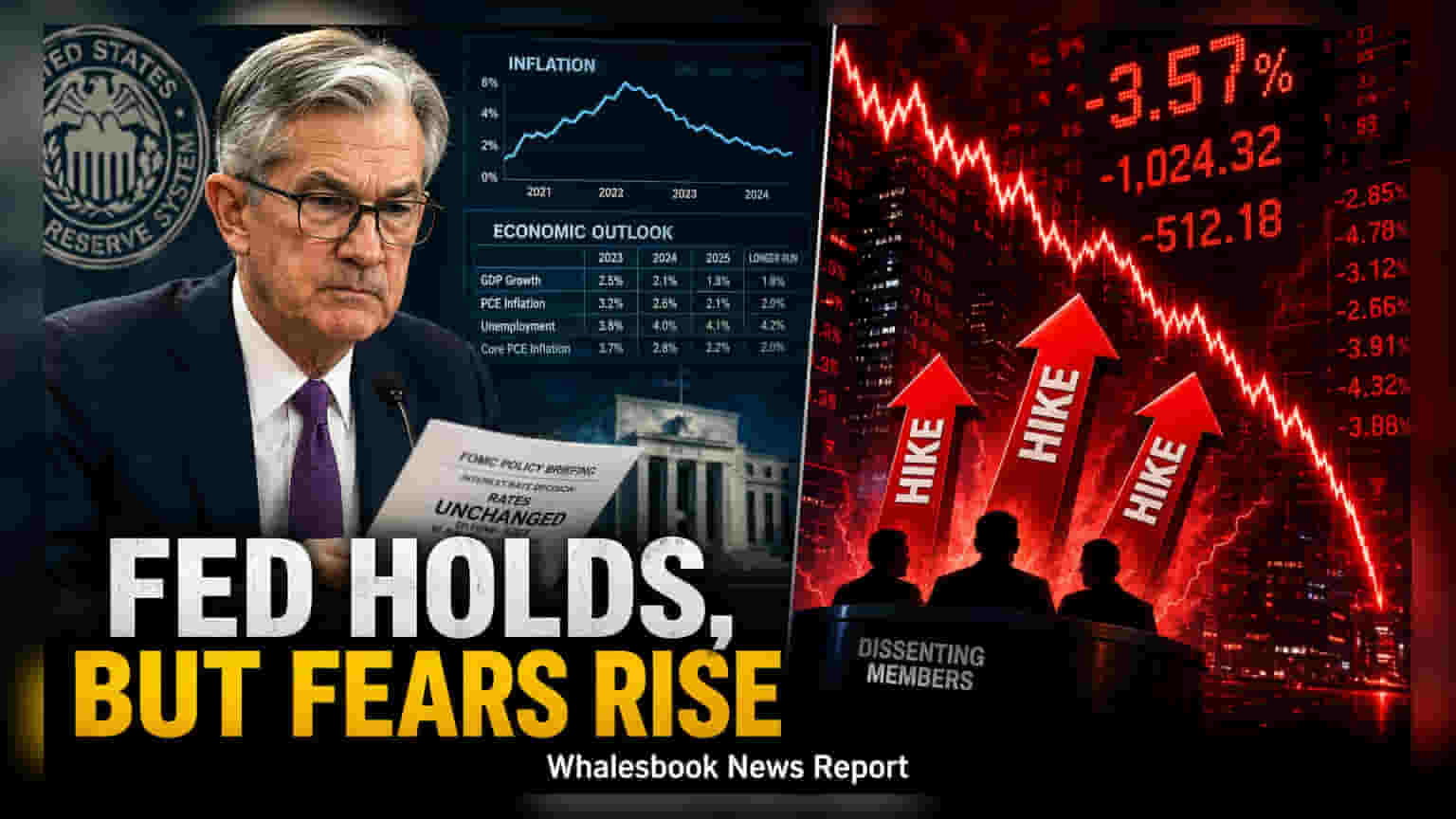
The US Federal Reserve maintained benchmark interest rates in its July meeting, though a 9-3 vote split suggests growing internal debate. Three members favored a rate hike due to inflation concerns fueled by volatile oil prices. This uncertainty caused a sharp decline in major US stock indices, reflecting investor anxiety over future monetary policy.
The US Federal Reserve kept its benchmark interest rate unchanged in the 3.5%-3.75% range following its July policy meeting. While the decision was widely expected by market analysts, the official minutes released after the meeting revealed a significant split within the Federal Open Market Committee. A 9-3 vote tally indicates that three policymakers, specifically Beth Hammack, Neel Kashkari, and Lorie Logan, pushed for a quarter-point interest rate increase.
Inflation Concerns and Oil Price Volatility
The dissent among committee members highlights ongoing anxiety regarding inflation. The primary driver for this concern appears to be the recent instability in crude oil prices, which have been affected by geopolitical tensions in West Asia. Rising energy costs often act as a hurdle for central banks aiming to stabilize prices, as higher fuel costs can quickly filter through to broader consumer and producer prices.
Impact on Market Sentiment
Global financial markets are highly sensitive to signals from the US Fed regarding interest rates, as these policies influence borrowing costs and investment flows worldwide. Following the news of the dissent, US equity markets saw a notable decline. The Dow Jones Industrial Average fell by approximately 650 points, or 1.24%, as investors reacted to the possibility that the Fed might reconsider its pause on rate hikes if inflation data remains stubborn.
Monitoring Future Policy Direction
Investors are currently looking to Federal Reserve Chair Kevin Warsh for clarity on the path forward. Warsh has maintained a data-dependent strategy, which means the central bank will likely adjust its policy based on incoming reports rather than committing to a fixed plan. This approach allows the Fed flexibility, but it also creates uncertainty for investors who prefer predictable policy guidance.
For Indian investors, this development matters because US monetary policy often influences the decisions of the Reserve Bank of India and impacts foreign institutional investment flows into the Indian stock market. When the US Fed considers raising rates, it often leads to a stronger dollar, which can pressure emerging market currencies and impact local market liquidity. The key monitorable for the coming months will be upcoming US inflation reports and any further commentary from Fed officials that might hint at whether the committee will shift toward more aggressive measures in its subsequent meetings.