 Whalesbook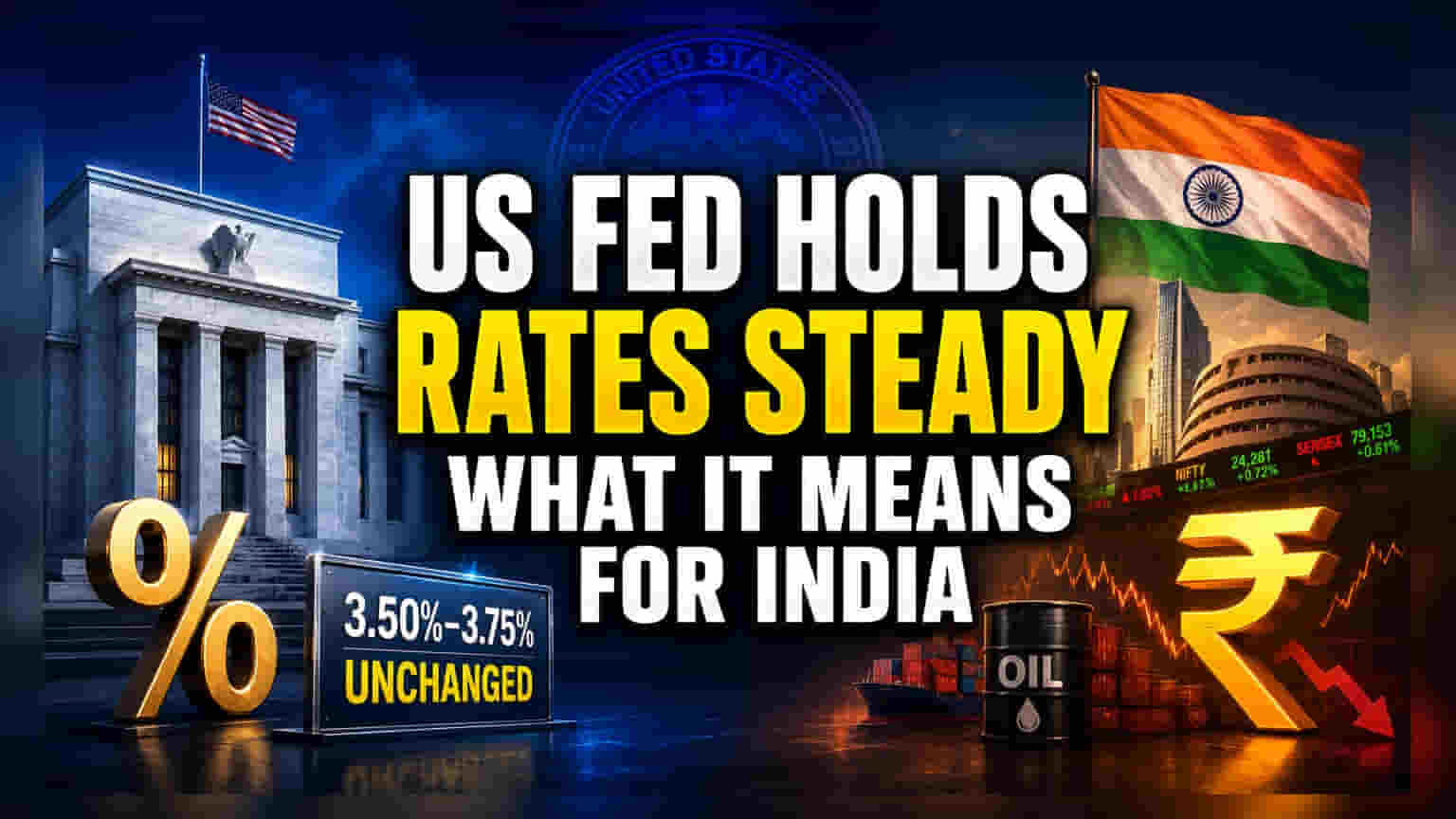
The US Federal Reserve has kept interest rates between 3.5% and 3.75%, while President Donald Trump signaled openness to future rate hikes under the new Fed Chair, Kevin Warsh. For Indian investors, this development is crucial. A sustained or high-rate environment in the US often influences Foreign Institutional Investor (FII) flows and impacts the value of the Indian Rupee. Investors should watch how these global policy shifts affect capital flows and local borrowing costs.
What Happened
The US Federal Reserve’s policy-setting body, the Federal Open Market Committee (FOMC), decided to keep benchmark interest rates unchanged in the 3.5% to 3.75% range. This decision was unanimous, with all 12 members voting to hold the current rates steady. Alongside this news, US President Donald Trump has notably shifted his stance, expressing a willingness to accept potential interest rate hikes under the leadership of the new Federal Reserve Chair, Kevin Warsh. This marks a clear change from his previous, long-standing demands for lower borrowing costs.
Why This Matters For Indian Investors
Indian stock markets are highly sensitive to US monetary policy. When US interest rates remain elevated, the dollar often strengthens, which can put pressure on the Indian Rupee. A weaker Rupee can increase the cost of imports for Indian companies, particularly those in sectors like oil and energy. Furthermore, global investors often seek higher returns in US government bonds when rates are high. This can lead to foreign money moving out of emerging markets like India and returning to the US, which may cause volatility in Indian equity prices. For Indian investors, this policy signals that the global environment of higher interest rates may persist longer than some expected.
The Shift in Policy Expectations
While the Fed chose to hold rates steady, the internal projections are far from uniform. Among the 18 participants at the committee meeting, nine members anticipate at least one interest rate hike in 2026. This lack of a solid consensus suggests that the path for future interest rates is not yet set in stone. This uncertainty is something market participants often dislike, as it can lead to unpredictable market swings until the Fed provides more clarity in subsequent meetings.
How Investors May Read This
For investors in India, this news brings two key themes into focus. First is the impact on liquidity. If US rates rise or stay high, the flow of foreign institutional capital into Indian stocks may slow down. Second is the impact on corporate debt. Many Indian companies have borrowed money in dollars or have global operations. Higher US rates increase the cost of servicing this debt, which can eventually impact profit margins if the companies are not well-hedged against currency fluctuations.
What Investors Should Track
Going forward, Indian investors should monitor three main areas. First, keep an eye on official commentary from the Federal Reserve regarding the timeline for any future rate changes. Second, watch the Foreign Institutional Investor (FII) flow data in India; consistent selling by foreign investors is often a reaction to tighter monetary conditions in developed markets like the US. Finally, track the movement of the Indian Rupee against the US dollar, as a depreciating currency remains a key risk factor for businesses that rely on imports or have significant foreign currency debt.

