

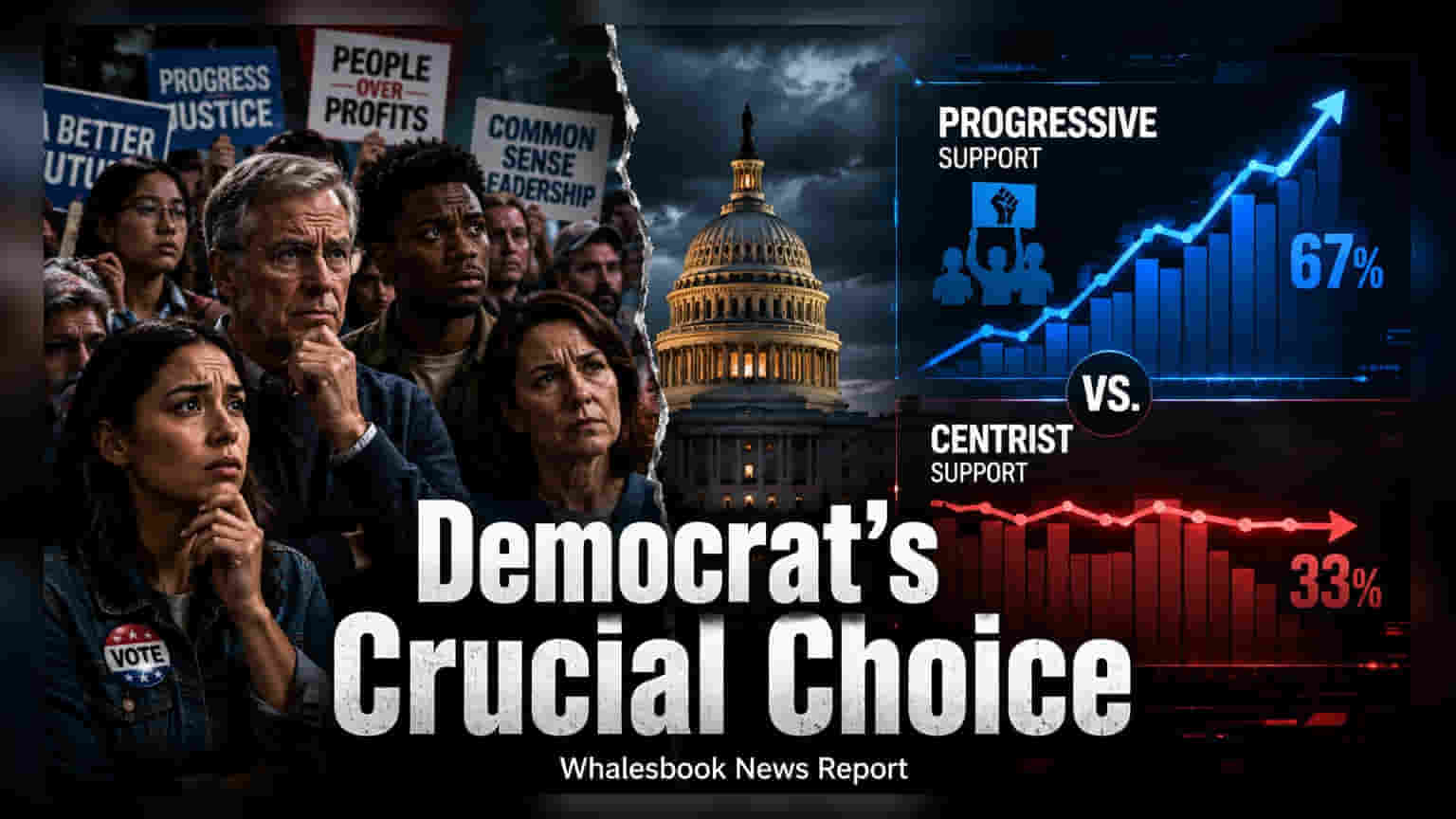
The Democratic Party is navigating an internal struggle between progressive and centrist ideologies in key 2026 midterm races. This divide creates potential policy uncertainty, which investors track closely as political instability in the US often triggers global market volatility.
The United States is currently witnessing a significant ideological shift within the Democratic Party, which is drawing attention from global financial markets. As the country approaches the crucial November 2026 midterm elections, the internal debate between progressive and centrist candidates is intensifying, creating a layer of uncertainty regarding future US economic policy.
Recent primary results have underscored this divide. In Minnesota, Peggy Flanagan secured a victory for the US Senate, effectively moving past centrist competition. Similarly, in Michigan, progressive candidate Abdul El-Sayed won his primary race. Meanwhile, the contest for the Wisconsin gubernatorial nomination remains tight and undecided, featuring a high-profile race between democratic socialist Francesca Hong and moderate David Crowley.
For investors, the primary concern lies in the potential for policy shifts. Midterm election years are historically periods of higher market volatility, as the outcome serves as a referendum on the administration's performance. When a party experiences significant internal friction, it raises questions about future fiscal policies, corporate regulation, trade agreements, and environmental mandates. Markets generally prefer policy stability, and a swing toward more extreme ideological platforms can create concern among investors regarding the predictability of the US business environment.
This ideological tug-of-war is particularly relevant in swing states like Michigan, Pennsylvania, and Wisconsin. These regions are often bellwethers for national sentiment. If the Democratic Party struggles to present a unified front, it could complicate the legislative process in Washington, potentially leading to gridlock or unpredictable policy changes.
From a global investment perspective, any instability in the world's largest economy is monitored closely. US policy decisions regarding interest rates, international trade, and foreign investment directly impact emerging markets, including India. Political uncertainty can lead to temporary shifts in currency valuations, foreign institutional investor flows, and commodity prices.
As the midterms approach, market analysts are keeping a close watch on the party's ability to consolidate its platform. The key monitorable for investors will be how candidate selection in these battleground states influences the broader electoral outcome in November. Investors should note that while this is a domestic political event, the economic ripple effects—such as changes in tax policy or regulatory pressure—are factors that typically influence corporate earnings and global market sentiment in the medium to long term.