

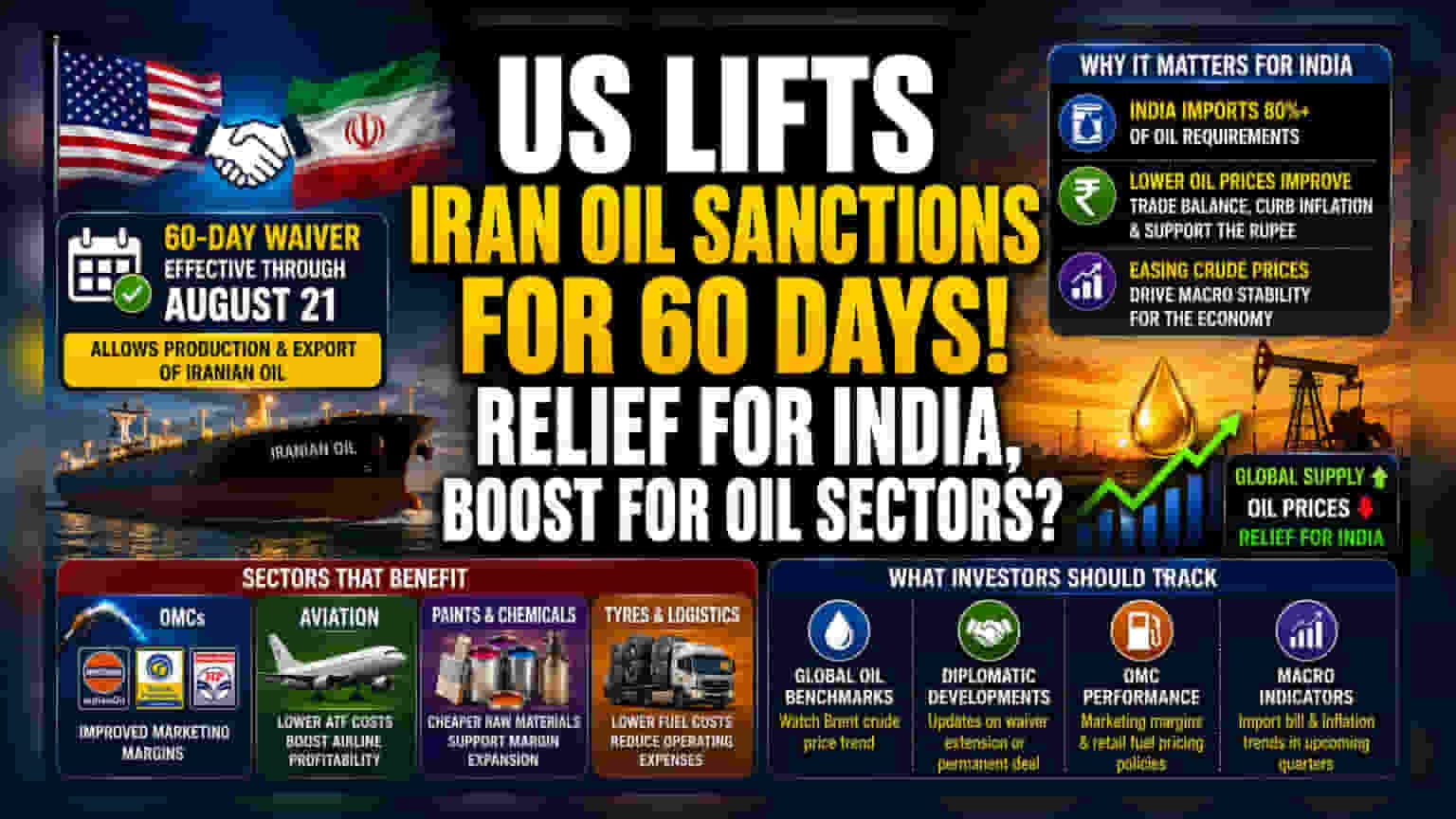
The United States has granted a 60-day waiver on sanctions for Iranian oil exports, aiming to stabilize global energy supplies. For Indian investors, this move could help ease inflation concerns and benefit oil-dependent sectors like aviation, paints, and oil marketing companies by lowering input costs.
What Happened
The United States has issued a temporary, 60-day license suspending sanctions on Iranian oil, effective through August 21. This decision is part of a diplomatic interim agreement intended to de-escalate regional tensions in West Asia. The waiver allows for the production and export of Iranian oil during this period, a move designed to alleviate global supply concerns and reduce volatility in energy markets.
Why It Matters For Indian Investors
For India, one of the world's largest importers of crude oil, global price stability is a critical macroeconomic factor. India imports over 80% of its oil requirements, making its trade balance, inflation, and currency (the Rupee) highly sensitive to international crude prices. When global oil supply increases, price pressure typically eases, which directly benefits India’s import bill and helps maintain economic stability.
Sector Impact: OMCs and Downstream Users
The development is being closely watched by investors tracking oil-sensitive sectors. State-run Oil Marketing Companies (OMCs) like Indian Oil Corporation (IOC), Bharat Petroleum (BPCL), and Hindustan Petroleum (HPCL) often see their marketing margins improve when crude oil prices soften or stabilize. While high crude prices have historically pressured OMC margins, a sustained period of lower import costs can provide much-needed breathing room.
Beyond OMCs, other sectors with heavy crude dependency stand to benefit from lower input costs. This includes:
- Aviation: Jet fuel (ATF) prices are a major cost component for airlines. Easing crude prices can support better profitability for carriers like InterGlobe Aviation (IndiGo).
- Paints and Chemicals: These companies use crude derivatives as raw materials. Lower oil prices may help expand their profit margins.
- Tyres and Logistics: Lower fuel costs can help reduce operating expenses for transport and manufacturing businesses.
The Duration and Geopolitical Risk
While the news provides short-term relief, investors should note the temporary nature of the waiver. The 60-day window is an interim diplomatic measure. The geopolitical landscape in West Asia remains complex, and any failure to reach a permanent settlement could reverse these gains in global supply. Investors often view such developments as volatile; therefore, tracking the sustainability of oil prices is more important than reacting to a single short-term policy change.
What Investors Should Track Next
Market participants will be monitoring the progress of diplomatic discussions throughout the 60-day period. Key monitorables include:
- Global Oil Benchmarks: Continued stabilization or decline in Brent crude prices.
- Official Commentary: Any updates on the extension of the waiver or the status of a permanent deal.
- OMC Performance: Updates from state-run retailers regarding their marketing margins and potential changes in retail fuel pricing policies.
- Macroeconomic Indicators: Trends in India's import bill and inflation figures in upcoming quarterly reports.