

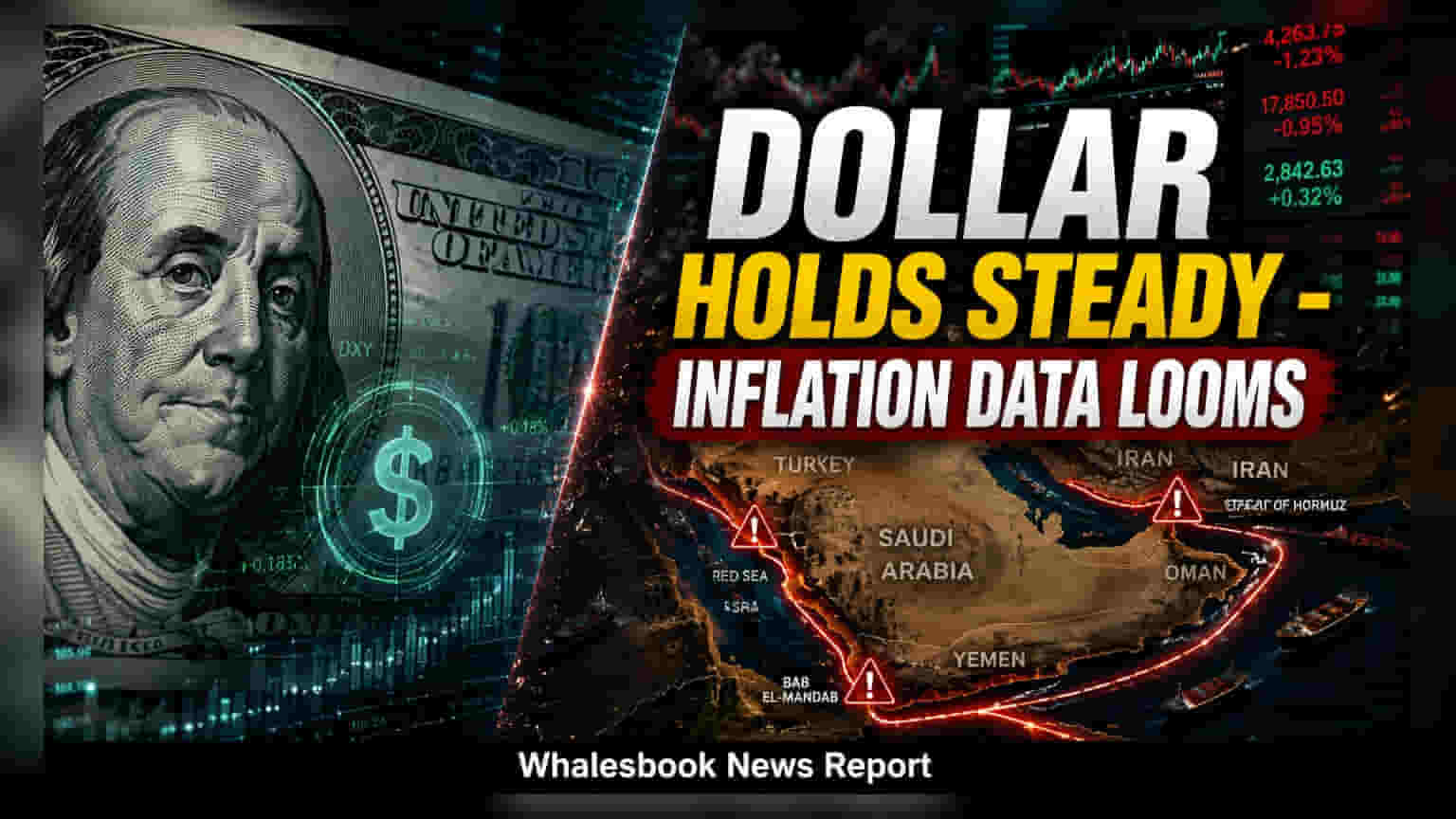
The US dollar remained steady in Asian trade on August 12 as investors await critical July inflation data. The report is expected to sway the Federal Reserve's next interest rate decision, which currently sees an even 50-50 split between a pause and a hike. Rising oil prices due to Middle East tensions are also providing support to the greenback.
The US dollar remained steady during Wednesday’s Asian trading session as financial markets braced for the release of key US inflation data. Investors are keenly focused on the July Consumer Price Index (CPI) report, which is expected to indicate inflation at 3.4% year-over-year. This report is viewed as a vital indicator that will help determine the Federal Reserve's future interest rate path.
Currently, there is significant uncertainty regarding the central bank's next move. While the Federal Reserve maintained interest rates at 3.50%–3.75% during its July meeting, there is an even split in market expectations. Half of the market anticipates rates will remain unchanged, while the other half expects a quarter-point increase. This uncertainty has kept the dollar in a tight range as traders await the fresh economic data to gauge the Fed's next decision.
Geopolitical Tensions and Oil Prices
Global energy markets have also influenced currency movements. Brent crude prices rose to around $89.69 a barrel, driven by concerns over shipping disruptions in the Middle East, particularly attacks near the Bab el-Mandeb strait. When oil prices rise, the US dollar often gains support as a safe-haven asset, as investors look for stability during times of geopolitical conflict.
These rising energy costs present a dual challenge. For the US, high oil prices can complicate the inflation outlook. For emerging markets like India, higher oil prices typically lead to a larger import bill, which can put downward pressure on the Indian Rupee.
Impact on Global Currencies
Other major currencies faced pressure against the US dollar. The Japanese yen continued to struggle, trading near 159.44 despite recent government intervention efforts. Investors are closely monitoring whether the dollar will weaken if the upcoming inflation data comes in lower than expected, or if it will strengthen further if the report shows that price pressures remain high.
For investors, the key monitorable will be the actual CPI figure released later today. A higher-than-expected inflation reading could signal that the Federal Reserve may need to remain aggressive with interest rates, which often boosts the dollar and leads to volatility in bond and equity markets. Conversely, a cooling inflation trend could calm rate hike expectations, potentially easing the pressure on other global currencies.