 Whalesbook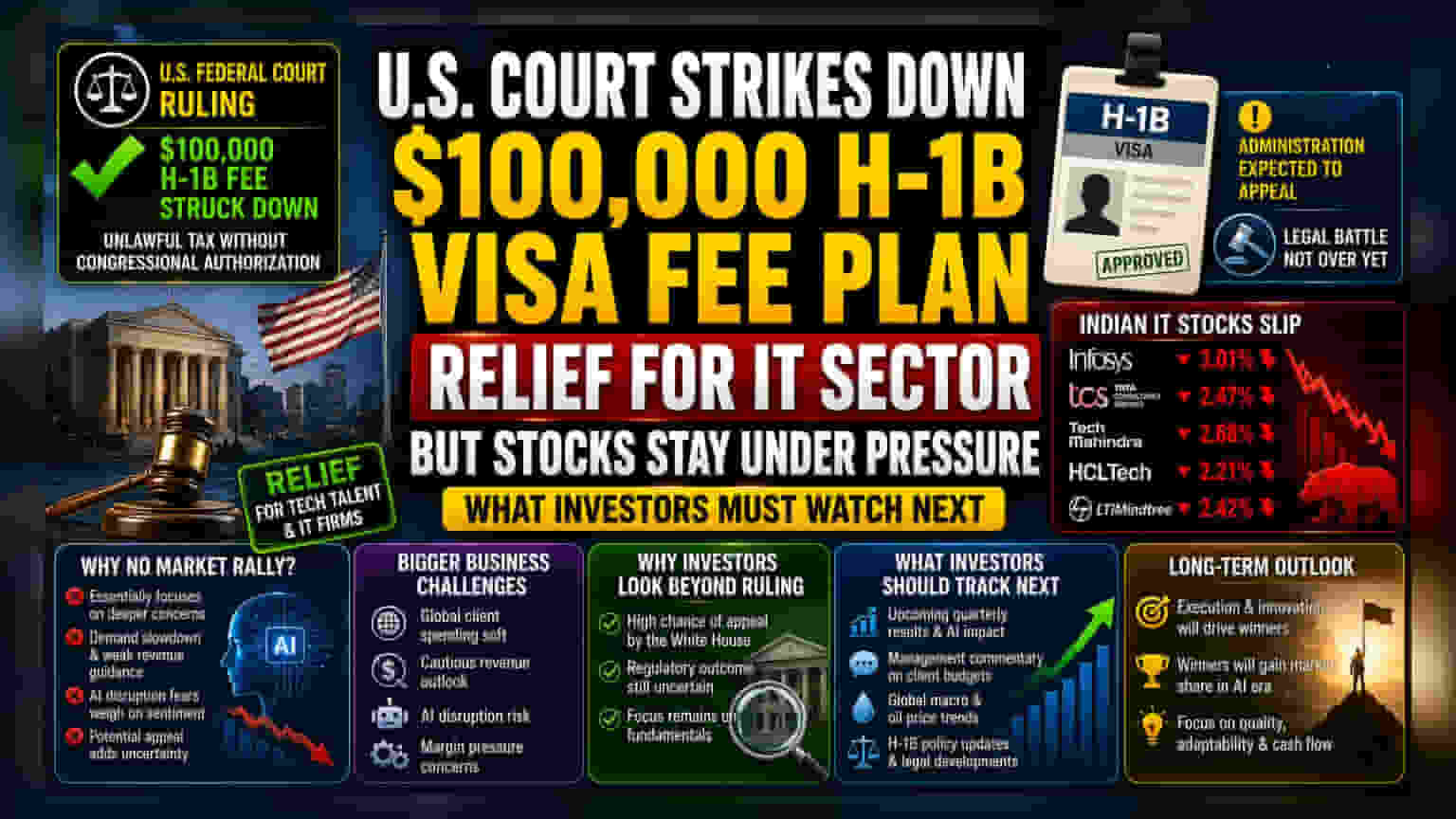


What Happened
In a significant legal development for the global technology industry, a U.S. federal court has struck down the Trump administration's proposed $100,000 annual fee on new H-1B visa applications. U.S. District Judge Leo Sorokin, presiding in Massachusetts, ruled on June 8, 2026, that the fee was an unlawful tax implemented without congressional authorization. The fee, which had been a major point of contention for technology firms reliant on skilled foreign talent, was intended to be a substantial increase from existing visa costs. While the ruling provides immediate relief, the U.S. administration is widely expected to appeal the decision, keeping the regulatory outlook uncertain.
Why The Market Reacted With Caution
Despite the positive nature of the ruling, Indian IT stocks did not rally on Tuesday. Instead, major companies like Infosys, Tata Consultancy Services (TCS), Tech Mahindra, HCLTech, and LTIMindtree saw their share prices slip during the trading session. This market reaction suggests that investors are currently more concerned with the sector’s internal and structural health than with specific regulatory developments.
The IT sector has been under pressure for several months. Recent performance data and management commentaries have highlighted a period of reassessment for the industry. Investors appear to be looking past the one-time regulatory relief, focusing instead on long-term growth sustainability.
The Bigger Business Context
The Indian IT sector is currently navigating several headwinds that have overshadowed positive news. Many large-cap firms have recently provided cautious revenue guidance for the coming year, signaling that global client spending on digital transformation remains soft.
Furthermore, the rapid rise of generative AI has created structural anxiety among investors. While companies are integrating AI into their service offerings, the market remains concerned about whether these technologies will eventually disrupt traditional outsourcing models, potentially compressing margins or reducing the volume of projects available for Indian IT firms. This shift in sentiment—from viewing IT firms as predictable, high-growth compounders to questioning their long-term growth trajectory in an AI-heavy world—is likely a primary reason for the persistent selling pressure.
Why Investors Are Looking Beyond The Ruling
The market’s muted reaction may also be tied to the high possibility of an appeal. Because the White House is expected to challenge the court’s decision, the removal of the fee is not necessarily a permanent victory. Institutional investors, who prioritize predictability, may be choosing to wait for a more definitive resolution rather than reacting to a single, potentially temporary legal win.
What Investors Should Track Next
Moving forward, the focus for investors will likely return to business fundamentals rather than regulatory news. Key monitorables include the upcoming quarterly results, which will shed more light on the actual impact of AI initiatives on revenue. Investors may also track management commentary regarding client budgets for the second half of the year, as this will be a clearer indicator of demand recovery. Additionally, the legal battle over the visa fee will remain a point of interest, as any further developments regarding a potential appeal or new legislative action could influence workforce costs in the medium term.