

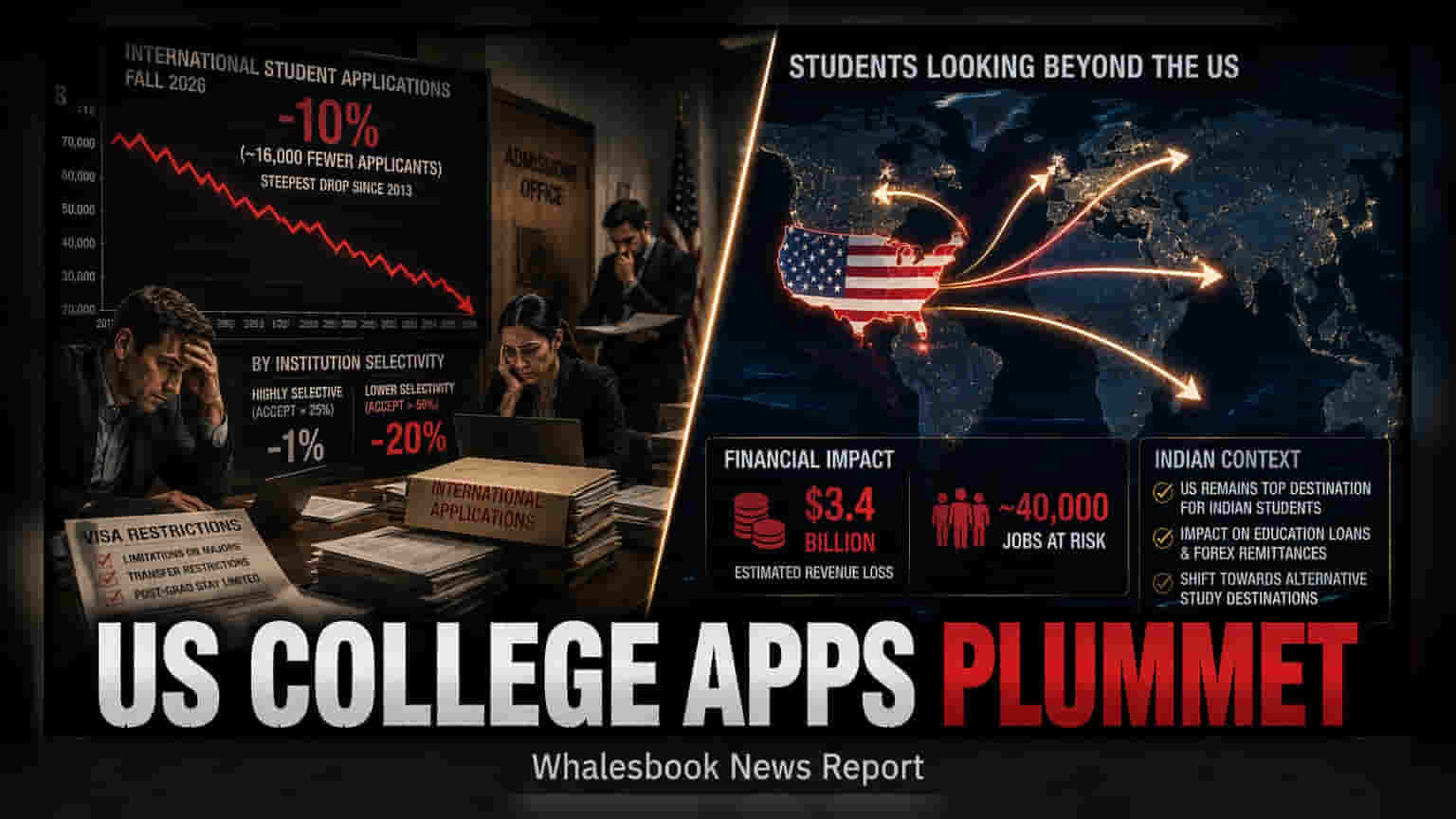
International student applications to US colleges have fallen by 10%, marking the sharpest decline in over a decade. The trend, driven by stricter visa policies, threatens $3.4 billion in university revenue and signals a shift in the global education landscape, impacting students and the financial ecosystem back home in India.
A significant shift is occurring in the United States higher education sector, with data from the Common App revealing a 10% drop in international student applications for the upcoming fall term. This decline, which translates to approximately 16,000 fewer foreign applicants, marks the steepest fall since digital tracking began in 2013.
The decline is largely attributed to the administration's intensified visa policies. Recent adjustments, including new limitations on majors, transfers, and the duration students can stay in the country post-graduation, have created an environment of uncertainty for prospective students worldwide. This tightening of entry regulations is increasingly viewed as a primary factor dissuading international applicants.
Disparities Among Institutions
The impact of this decline is not felt evenly across the board. The data highlights a distinct gap between different types of institutions. Highly selective universities, which accept fewer than 25% of applicants, have experienced a relatively minor 1% dip. In contrast, institutions with lower selectivity, defined as those accepting more than half of their applicants, have seen a massive 20% reduction in interest from foreign students. This divergence suggests that while top-tier US education remains a priority for many, mid-tier and smaller colleges may face the brunt of the enrollment slowdown.
Financial and Economic Implications
The ripple effects of this downturn extend well beyond campus borders. NAFSA and JB International have projected an overall international enrollment decline of 9.5% for Fall 2026. This trend carries substantial financial risks, with estimates suggesting a potential loss of $3.4 billion in revenue for the higher education sector and the risk of nearly 40,000 job losses nationwide. For American universities that rely on the higher tuition fees often paid by international students to subsidize broader operations, this revenue shortfall could lead to difficult decisions, such as program reductions or staffing cuts.
The Indian Context and Investor Angle
For Indian families and investors, these developments are particularly relevant. The US remains a top destination for Indian students pursuing higher education, particularly in STEM fields. A decline in US applications could signal a shift in student sentiment toward other countries with more flexible immigration policies.
From a financial perspective, this shift impacts the ecosystem of education finance in India. Banks and non-banking financial companies (NBFCs) have a significant exposure to education loans for students heading to the US. A sustained drop in enrollment numbers may influence the demand for such loans and the associated forex remittance business. Additionally, the tightening of visa rules adds an element of uncertainty for students who have already invested time and money into application processes. Investors and stakeholders in the Indian education-abroad consulting sector will likely monitor these enrollment trends closely, as they could dictate changes in student migration patterns and the demand for financing products in the coming academic cycles.