

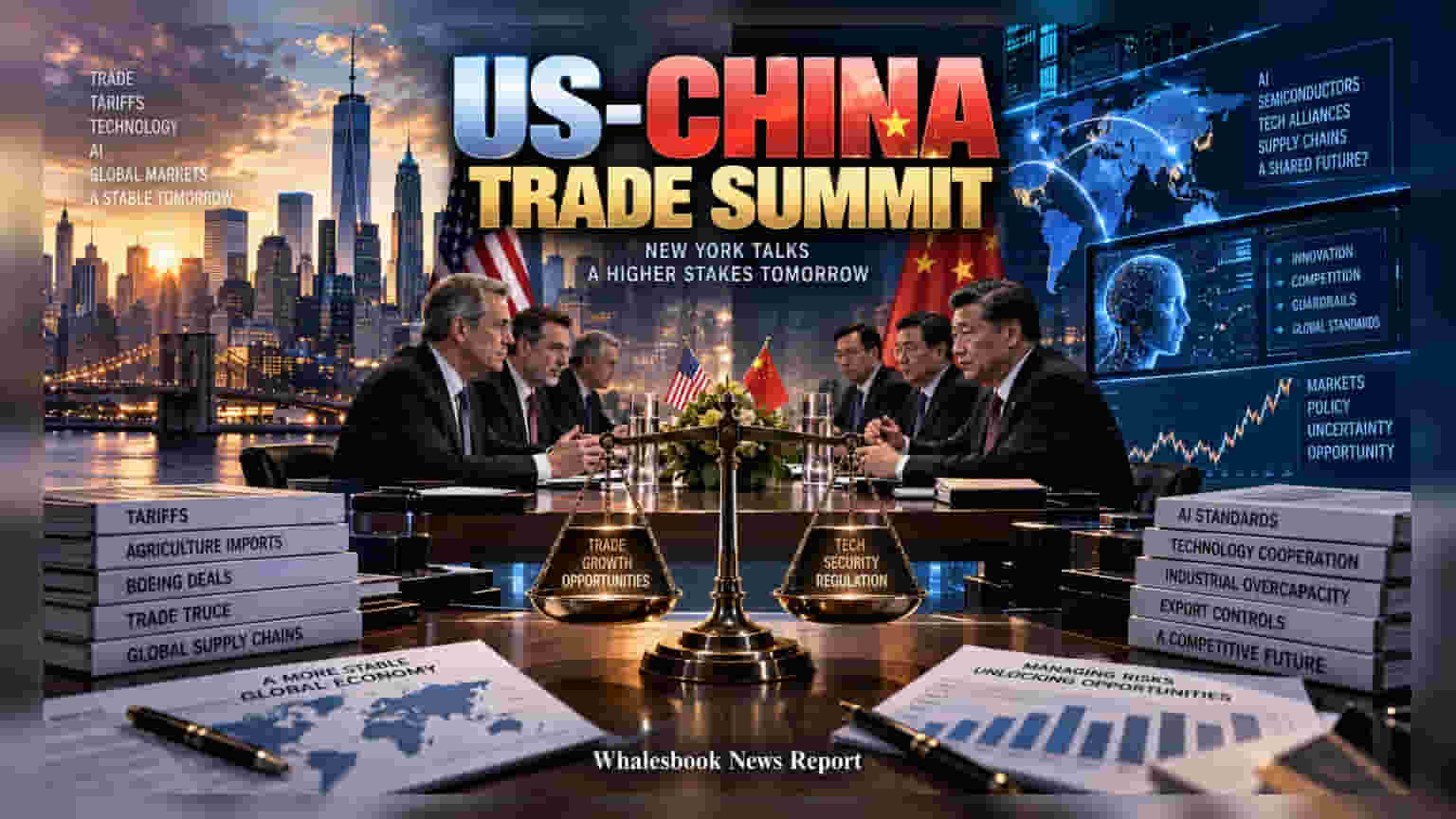
US Treasury Secretary Scott Bessent and Chinese Vice Premier He Lifeng are holding trade and tech negotiations in New York. The talks aim to address an expiring trade truce and AI regulations ahead of the Trump-Xi summit. Global investors are watching the outcome, as changes to tariff structures and tech policies may affect international supply chains.
US Treasury Secretary Scott Bessent and Chinese Vice Premier He Lifeng gathered at JPMorgan Chase’s New York headquarters this Sunday to hold trade and technology negotiations. Joined by US Trade Representative Jamieson Greer, the delegations are working to resolve key friction points before the upcoming presidential summit in Washington between President Donald Trump and President Xi Jinping.
Trade Truce and Tariff Pressure
The most immediate concern for the global market is the trade truce scheduled to expire on November 10. The current discussions are part of a 16-month negotiation cycle that began after the November 2025 Busan summit, which capped tariffs at approximately 20 per cent. Both nations are now seeking to narrow their differences before the upcoming presidential meeting. This process aims to give President Trump a clear set of options, thereby minimizing market uncertainty. The talks also address past commitments, including China's potential for increased agricultural imports valued at $17 billion annually and the procurement of over 200 Boeing aircraft.
Technology and AI Strategy
Beyond traditional trade, artificial intelligence has become a core element of the dialogue. The US is pushing for global standards on AI guardrails to prevent advanced models from being used by harmful actors. Secretary Bessent has stated the administration's goal of managing systemic risks while preventing a complete separation of the two nations' technology ecosystems. The discussions focus on the differences between open-weight models and closed-weight proprietary software, as both powers attempt to balance innovation with national security.
Regulatory and Market Risks
Investors are monitoring how these negotiations interact with broader US regulatory actions. Following a US Supreme Court decision that invalidated certain duties imposed under national emergency statutes, the administration has been exploring new legal avenues for trade protections, including a 12.5 per cent levy linked to forced labor allegations. Additionally, the US continues to prepare a separate investigation into China’s industrial overcapacity.
While the current talks aim to prevent immediate disruption, the structural competition between the two superpowers remains a defining factor. For global investors, the primary monitorables include the status of the trade truce after the November 10 deadline, any new tariff adjustments, and the official stance on AI development that emerges from the summit. Future updates will depend on the final agreements, if any, reached by the working-level delegations this week.