

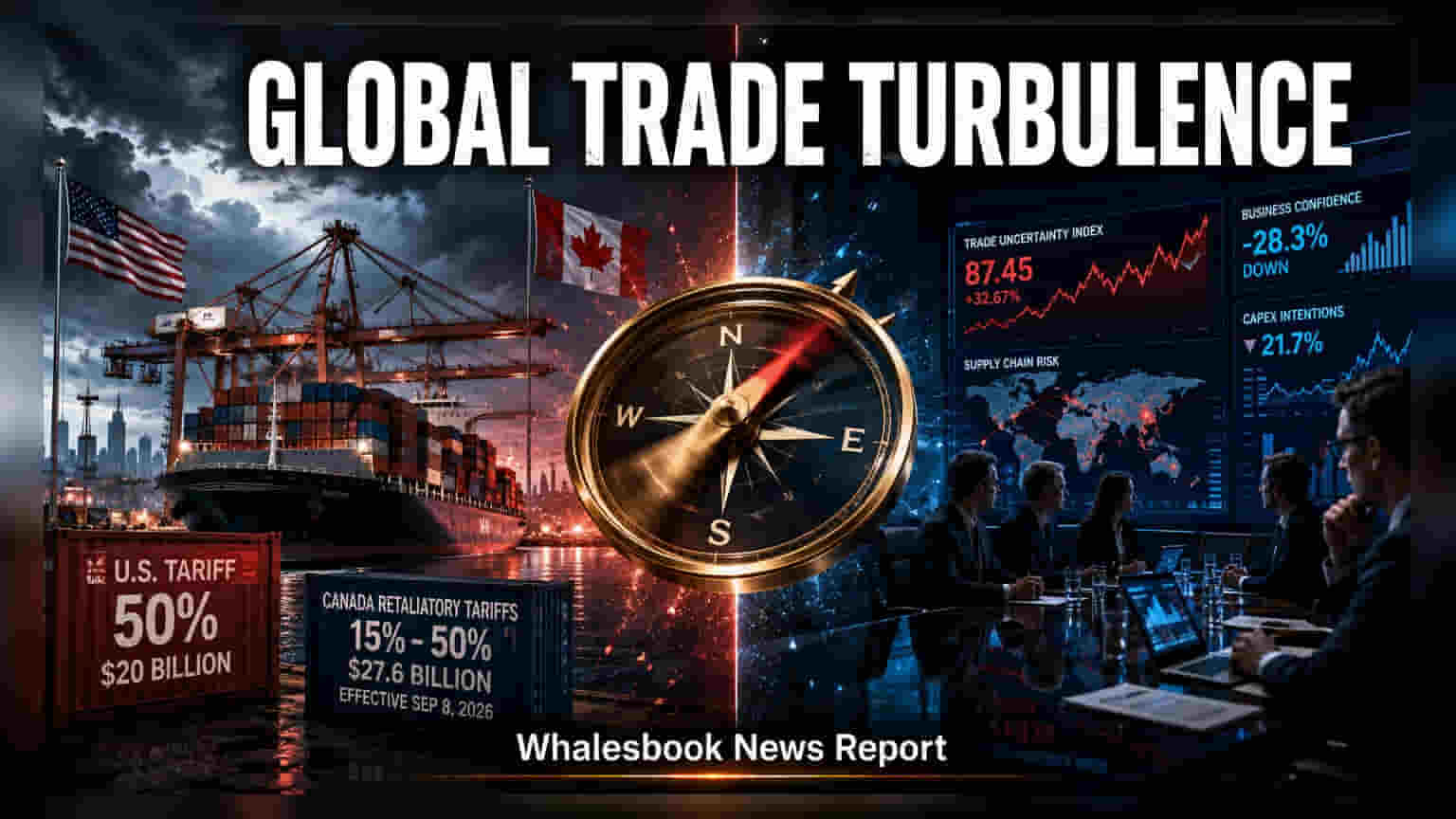
The US imposed 50% tariffs on $20 billion of Canadian goods after trade talks collapsed on August 21, 2026. Canada is now set to apply retaliatory tariffs of 15% to 50% on over 700 US products starting September 8, 2026. Investors face potential market volatility and increased supply chain risks as companies struggle with policy uncertainty.
The trade relationship between the United States and Canada has entered a period of intense conflict following the sudden collapse of trade negotiations on August 21, 2026. The breakdown of these talks has led to immediate protective measures from the US administration, which has imposed a 50% tariff on approximately $20 billion worth of Canadian goods, including steel, aluminum, and several consumer products.
In response to this action, the Canadian government has announced a series of retaliatory tariffs. These measures, which range from 15% to 50% on over 700 US products, are scheduled to take effect on September 8, 2026. The total value of these affected US goods is estimated at roughly $27.6 billion. This move signals a significant shift toward protectionist policies, reversing years of deeply integrated trade cooperation between the two nations.
A key driver of this tension is the US administration's explicit dissatisfaction with Canada's trade relations with China. This geopolitical pressure has created a complex situation where economic policy is being used to influence foreign relations. Canadian Prime Minister Mark Carney has stated that these responses are necessary to defend the country's trade sovereignty, effectively framing the tariff battle as a matter of national interest.
For investors and global businesses, this development creates immediate challenges. Supply chains that span North America are now facing significant disruption risks. Companies that rely on the free flow of goods across the border may see higher costs, which could potentially lead to inflationary pressures. When trade costs rise abruptly, companies often struggle to pass these costs to consumers or absorb them, which may hurt profit margins.
Beyond the immediate impact, the greatest concern for market participants is the long-term uncertainty. Businesses rely on a predictable environment to make decisions about spending money on expansion, hiring, and new projects. The current environment, characterized by shifting policies and sudden trade barriers, may force companies to adopt a cautious 'wait-and-see' approach. This hesitation often results in deferred capital spending and a slowdown in corporate activity.
Investors should monitor the implementation of these tariffs on September 8, 2026, as a critical next step. The market reaction will depend on whether this becomes a long-term conflict or if both sides return to the negotiating table to find a resolution. Additionally, any commentary from government officials regarding further trade barriers or extensions to other sectors will be important to track for signs of whether this tension is cooling down or escalating further.