

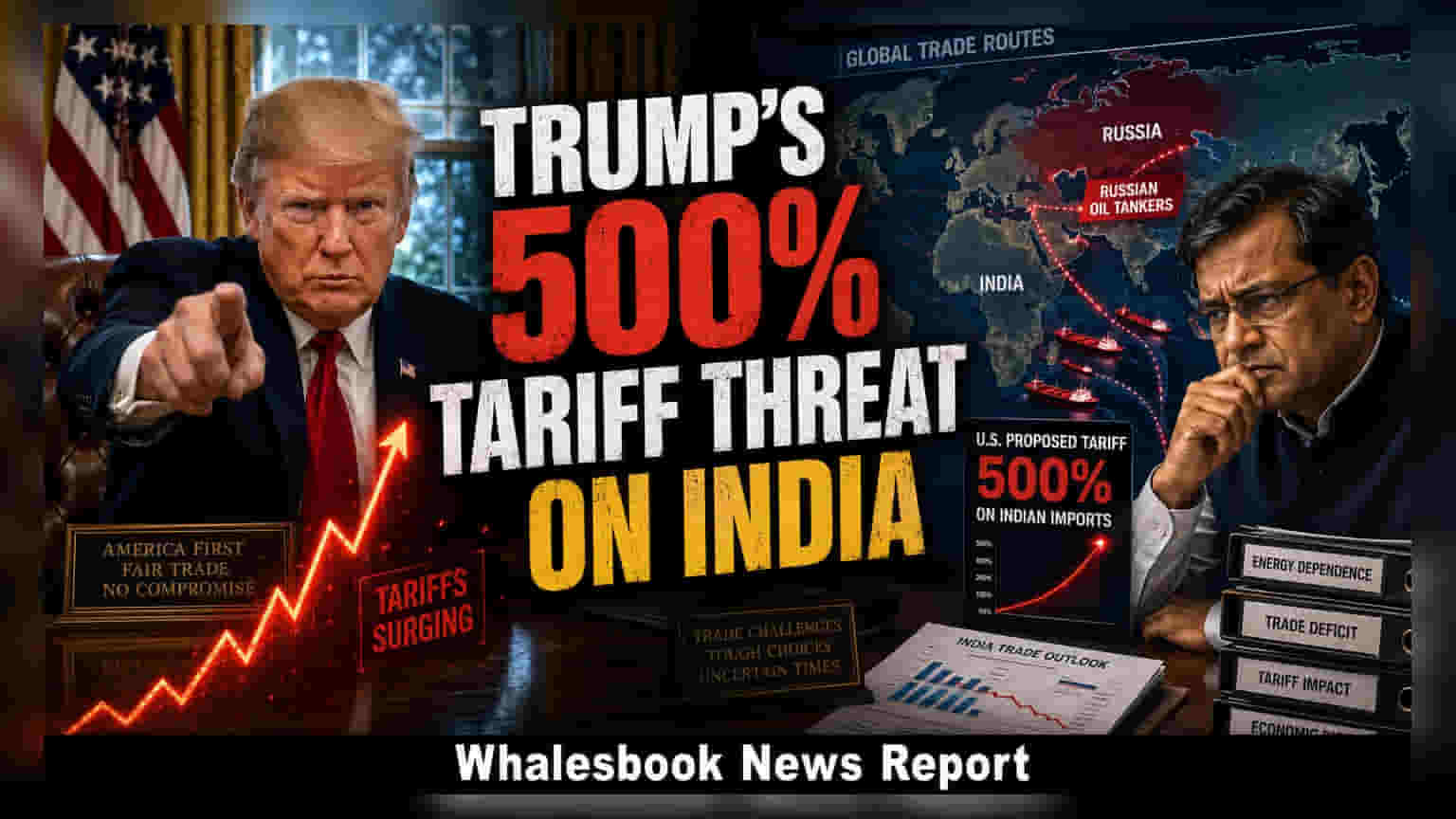
President Donald Trump has expressed support for the Sanctioning Russia Act, which could impose tariffs of up to 500% on nations purchasing Russian energy. This development creates potential trade risks for India, a major importer of Russian crude oil. Investors should monitor how this legislative move impacts India's energy procurement costs and refining margins.
President Donald Trump has signaled his support for the proposed Sanctioning Russia Act, a bill that seeks to curb Moscow’s energy revenue by authorizing secondary tariffs of up to 500% on countries that trade with the Russian energy sector. While the bill aims to intensify economic pressure on Russia following the conflict in Ukraine, its potential enactment has created uncertainty regarding the future cost and availability of crude oil for major importers like India.
Impact on India's Energy Procurement
India has been a significant buyer of Russian crude oil, though trade volumes have fluctuated based on global geopolitical conditions and diplomatic discussions with the United States. According to energy data provider Kpler, India’s imports of Russian crude oil shifted from approximately 1.84 million barrels per day in November 2025 to roughly 1.04 million barrels per day by February 2026. This downward trend reflects prior efforts to manage trade risks. A critical factor for domestic refiners is the recent expiration of a US Treasury waiver that previously permitted the purchase of Russian oil, which has created a challenging legal and compliance environment for Indian energy companies.
Legislative Process and Market Risks
Although the White House has confirmed the President's support for the legislation, the bill still faces significant hurdles in the US Senate. While supporters argue that targeting major markets like India and China is essential to draining Moscow's oil revenues, the bill has encountered internal opposition from some members of the Republican Party who are concerned about global economic repercussions. For Indian investors, the primary concern remains the potential for increased input costs. If enacted, such extreme tariffs could disrupt supply chains or force Indian refiners to source crude from more expensive markets, which would likely put pressure on profit margins. The final outcome of this legislation will depend on whether it clears the Senate and how the US administration chooses to implement the secondary tariff provisions against specific trading partners. Investors may track future updates regarding the bill’s progress and any official communications from the Indian government regarding trade negotiations with Washington.