

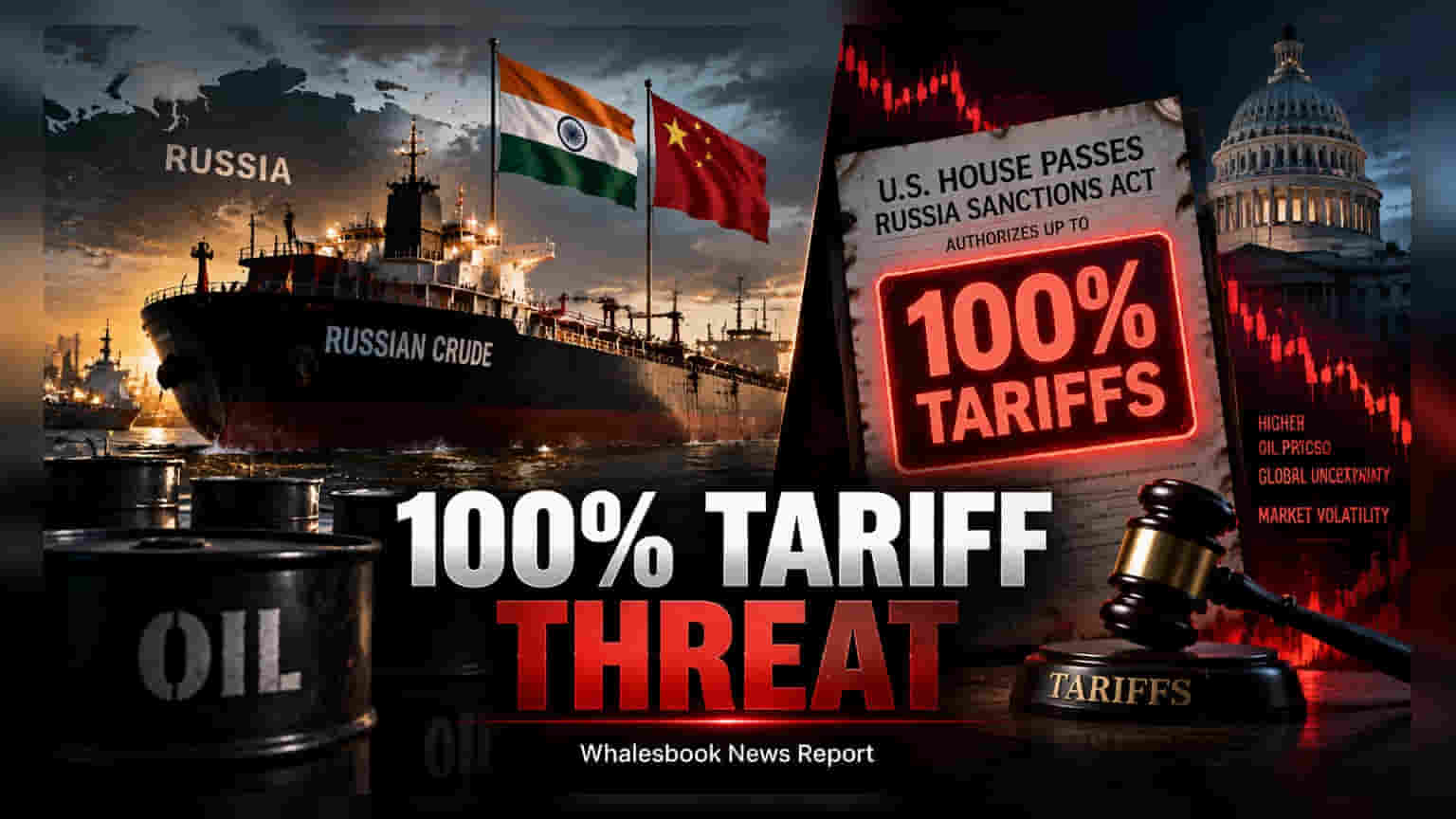
The US House of Representatives has passed legislation authorizing up to 100% tariffs on countries purchasing energy from Russia, targeting key importers like India. Investors are evaluating the potential for rising crude import costs and the impact on the margins of Indian oil marketing companies, as well as the broader risks to domestic inflation and trade stability.
The US House of Representatives has passed the 'Lindsey O. Graham Sanctioning Russia and Iran Act of 2026', a legislative move that authorizes the US government to impose tariffs of up to 100% on nations that continue to import oil and gas from Russia. The bill is now awaiting the signature of President Donald Trump. While the stated goal of the legislation is to restrict Russia's energy-related revenue, the proposed measures could have significant economic implications for major importers of Russian energy, including India and China.
Impact on Energy Import Costs
Since the start of the conflict in 2022, India has been a significant buyer of discounted Russian crude oil. This access to lower-cost energy has been a strategic factor in helping the country manage its import bill and Current Account Deficit. If the US proceeds with these sanctions and tariffs, and if they lead to secondary sanctions or broad enforcement, it could force India to pivot its energy procurement strategy.
For Indian investors, the primary concern lies in how this shift might affect the margins of domestic Oil Marketing Companies (OMCs) such as Indian Oil Corporation, Bharat Petroleum, and Hindustan Petroleum. If India is required to shift procurement toward costlier sources in the Middle East or elsewhere, the higher landed cost of crude oil could compress profit margins for these companies unless they are allowed to pass on the price increases to consumers at the pump.
Broader Macroeconomic Risks
Beyond the energy companies, the broader economy faces potential risks from these developments. A rise in the cost of oil imports generally puts pressure on the Indian Rupee and contributes to inflation. If energy costs rise significantly, it could complicate the Reserve Bank of India’s task of managing inflation, potentially keeping interest rates higher for longer to combat imported cost pressures.
The Ministry of External Affairs has acknowledged that India is engaged in high-level discussions with the US administration regarding the implications of this bill. As the situation evolves, investors may track whether the US effectively enforces these tariffs and how that enforcement influences global crude oil prices. Other key monitorables include any changes in retail fuel pricing policy, the ability of Indian refineries to secure alternative supplies without substantial cost hikes, and any official statements regarding the stability of bilateral trade relations between India and the US.