

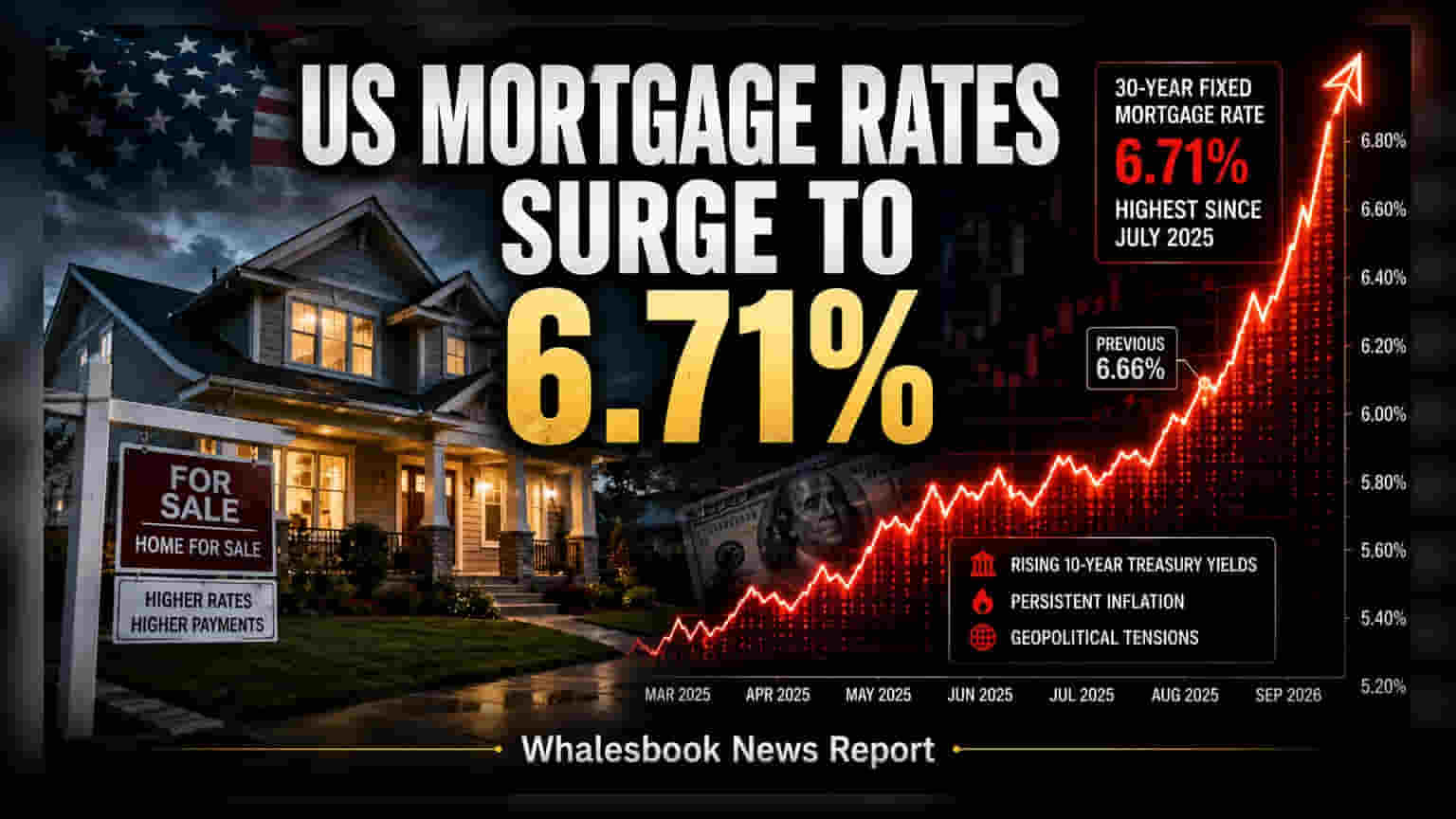
U.S. 30-year mortgage rates have surged to 6.71%, the highest level since July 2025, driven by rising Treasury yields and persistent inflation. This increase highlights ongoing borrowing cost pressures in the U.S. economy. For Indian investors, the trend matters as it influences global liquidity, currency strength, and foreign institutional investor sentiment, with markets now bracing for upcoming August inflation data.
The average rate for a 30-year fixed mortgage in the United States has climbed to 6.71%, according to the latest data from Freddie Mac. This marks the highest interest rate level since July 2025, reflecting a challenging environment for American homeowners and the broader housing sector. The increase from 6.66% in the previous period highlights how difficult it remains for borrowing costs to stabilize in the current economic environment.
Yields and Inflation Drive Home Loan Costs
Mortgage rates in the U.S. generally follow the direction of 10-year Treasury yields. In recent weeks, yields have risen as markets react to a combination of persistent inflation and geopolitical instability, specifically tensions involving the U.S. and Iran. These factors have driven up energy prices and created uncertainty, leading investors to demand higher returns for holding government debt. Consequently, the cost for banks to fund long-term home loans has increased, which is passed on to consumers.
Global Market Impact for Indian Investors
While the rise in U.S. mortgage rates directly impacts American households, it carries significant implications for Indian financial markets. When U.S. interest rates remain high or move upward, the U.S. Dollar tends to strengthen. This often leads to volatility in emerging markets, including India, as foreign institutional investors (FIIs) may shift capital toward safer, higher-yielding U.S. assets. A stronger dollar can also put pressure on the Indian Rupee and increase the cost of borrowing for Indian companies that rely on foreign debt. Indian investors often monitor these U.S. rate trends as a leading indicator for global liquidity and potential shifts in risk appetite among global fund managers.
Fed Outlook Remains Data-Dependent
Federal Reserve Governor Christopher Waller recently provided some clarity on the central bank's stance. While high borrowing costs are cooling parts of the economy, the Fed remains focused on data. Waller indicated that his vote at the upcoming September 15-16 policy meeting will depend on the August inflation report, which is scheduled for release on September 11, 2026.
Market expectations for a potential rate hike in September have fluctuated, with a current split in market sentiment. If the August inflation data comes in higher than expected, it could force the Federal Reserve to maintain a hawkish stance, keeping borrowing costs elevated. Conversely, cooler inflation data might provide the central bank room to pause rate hikes. For now, the combination of stubborn inflation and geopolitical risks remains the primary driver that investors will watch closely in the coming weeks.