 Whalesbook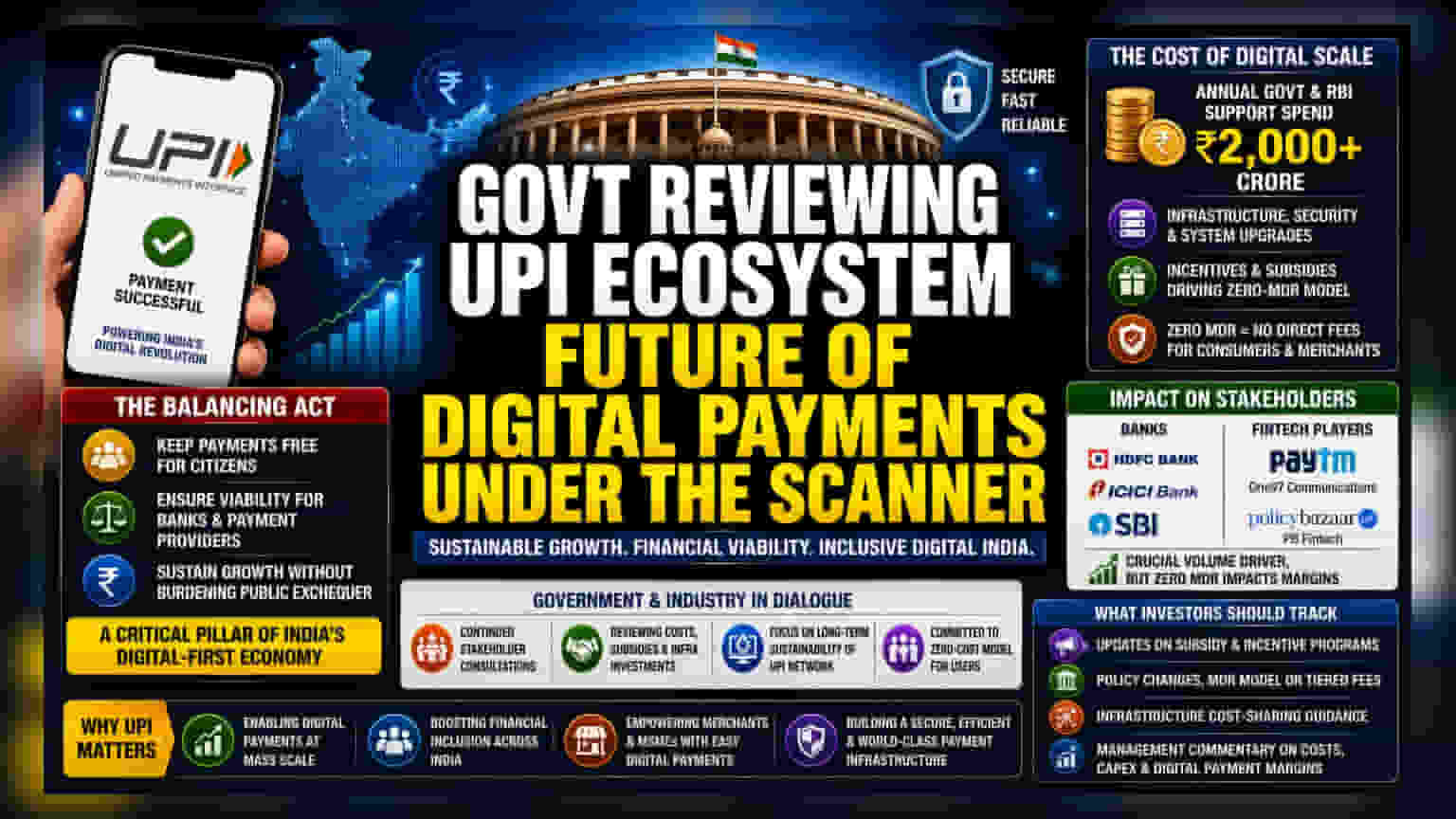


The Indian government is exploring ways to ensure the long-term viability of the UPI ecosystem while keeping transactions free for users. This review addresses rising infrastructure costs and is a key monitorable for banks and fintech companies managing the network.
What Happened
The Indian government is currently conducting a strategic review of the Unified Payments Interface (UPI) ecosystem to ensure its financial long-term viability. As transaction volumes on the platform continue to scale rapidly, the costs associated with maintaining and upgrading the digital infrastructure have increased. The Department of Financial Services (DFS) is engaging with industry stakeholders to find a balanced approach that supports the continued growth of digital payments while addressing the financial pressures faced by the entities that power the network.
The Cost of Digital Scale
For years, the UPI system has operated under a zero-Merchant Discount Rate (MDR) model, meaning consumers and merchants do not pay direct fees for transactions. While this has been instrumental in driving mass adoption, it places the entire cost burden of processing, security, and infrastructure maintenance on banks and payment providers. The government and the Reserve Bank of India (RBI) have been subsidizing this ecosystem, with recent data indicating an annual support spend exceeding ₹2,000 crore. This includes various incentive schemes and direct investment in infrastructure deployment to keep the digital payment rails efficient and secure.
Impact on Stakeholders
This review is particularly significant for financial institutions and payment service providers. Listed banks such as HDFC Bank, ICICI Bank, and State Bank of India, as well as fintech players like One97 Communications (Paytm) and PB Fintech, are deeply integrated into the UPI ecosystem. For these companies, UPI is a critical volume driver, but the lack of direct transaction fees (zero MDR) means they must monetize through other services or rely on internal cost efficiencies. Any shift in policy or subsidy structure could directly influence their operating margins and the resources they dedicate to digital payment infrastructure.
The Balancing Act
The primary challenge for authorities is to maintain the zero-cost model for citizens—a key pillar of India's digital-first economy—without exhausting the public exchequer or putting unsustainable financial strain on the banking system. The ongoing discussions suggest that while the government remains committed to the current consumer-friendly model, there is a clear acknowledgment that the current level of infrastructure spending is not indefinitely scalable without addressing the financial sustainability of the service providers.
What Investors Should Track
Investors should monitor official communications from the Ministry of Finance and the RBI regarding any potential changes to the UPI payment model or incentive structures. Key monitorables include potential updates on subsidy programs, any guidance on infrastructure sharing costs among participating banks, and whether the government considers a tiered fee structure for specific merchant categories. Furthermore, management commentary from banks and fintech companies during upcoming quarterly results will be vital to understand how these entities are managing the cost-to-income ratio for their digital payment divisions in the face of rising maintenance expenses.