

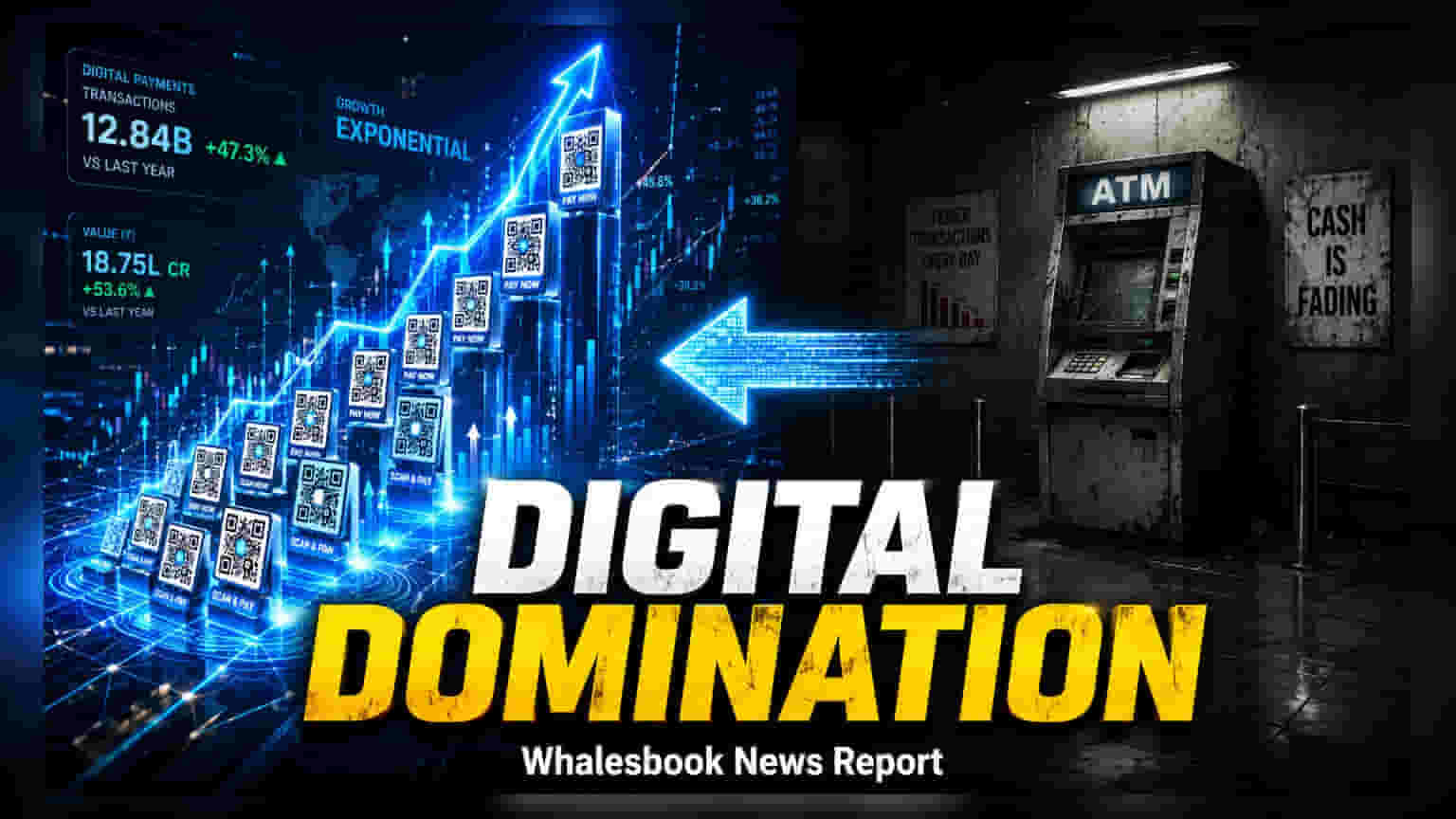
As India’s UPI QR transactions jump 16.9% year-on-year, traditional ATM networks are shrinking. This structural shift, coupled with potential legislative moves to allow a Merchant Discount Rate (MDR) on certain UPI payments, has significantly improved market sentiment. Fintech major One 97 Communications (Paytm) shares surged about 9% to a 52-week high, as investors weigh the possibility of future revenue monetization from digital transactions.
The Indian payment infrastructure is undergoing a fundamental transformation as software-led digital channels rapidly displace traditional hardware-reliant systems. Recent data highlights a clear trend: UPI QR code transactions have surged by 16.9% year-on-year, reaching 792.6 million by the end of June. Conversely, traditional financial access points like micro ATMs and off-site ATMs are seeing a consistent decline, with usage dropping 8.4% and 6.8% respectively. Overall, ATM withdrawal volumes have decreased by 11%, signaling that cash-based habits are quickly moving toward digital alternatives.
Market Reaction and Fintech Momentum
This trend has ignited significant investor interest in fintech companies, particularly One 97 Communications, the parent company of Paytm. On August 10, 2026, the company's stock rallied approximately 9% to reach a 52-week high. The market reaction is largely driven by evolving regulatory discussions regarding the Payment and Settlement Systems Act. Recent legislative amendments have opened the possibility for the government to consider levying a Merchant Discount Rate (MDR) on select high-value UPI transactions. For investors, this shift is critical because it suggests a path toward potential monetization for payment firms, which have historically operated with zero-cost UPI transactions.
Sector Dynamics and Future Outlook
While the shift toward a cashless economy is accelerating, with the cashless payments-to-GDP ratio projected to reach 35% in the current financial year, the transition involves complex trade-offs. The potential introduction of MDR is viewed by analysts as a double-edged sword. While it could improve the financial sustainability and EBITDA margins of fintech platforms, it also carries the risk of increasing transaction costs for merchants. Should these costs become a burden, there is a risk of a temporary pullback in the growth of digital payment adoption by smaller traders who currently benefit from the free-to-use infrastructure.
Investors are currently monitoring how these regulatory changes are implemented. The future performance of fintech stocks will likely depend on whether potential monetization measures are introduced without stifling the widespread adoption of UPI. For now, the market is pricing in a more optimistic scenario where digital payments provide a clearer, more profitable business model than previously expected. The key monitorable remains the specific regulatory notification regarding the fee structure and how it impacts the competitive positioning of various payment players.