

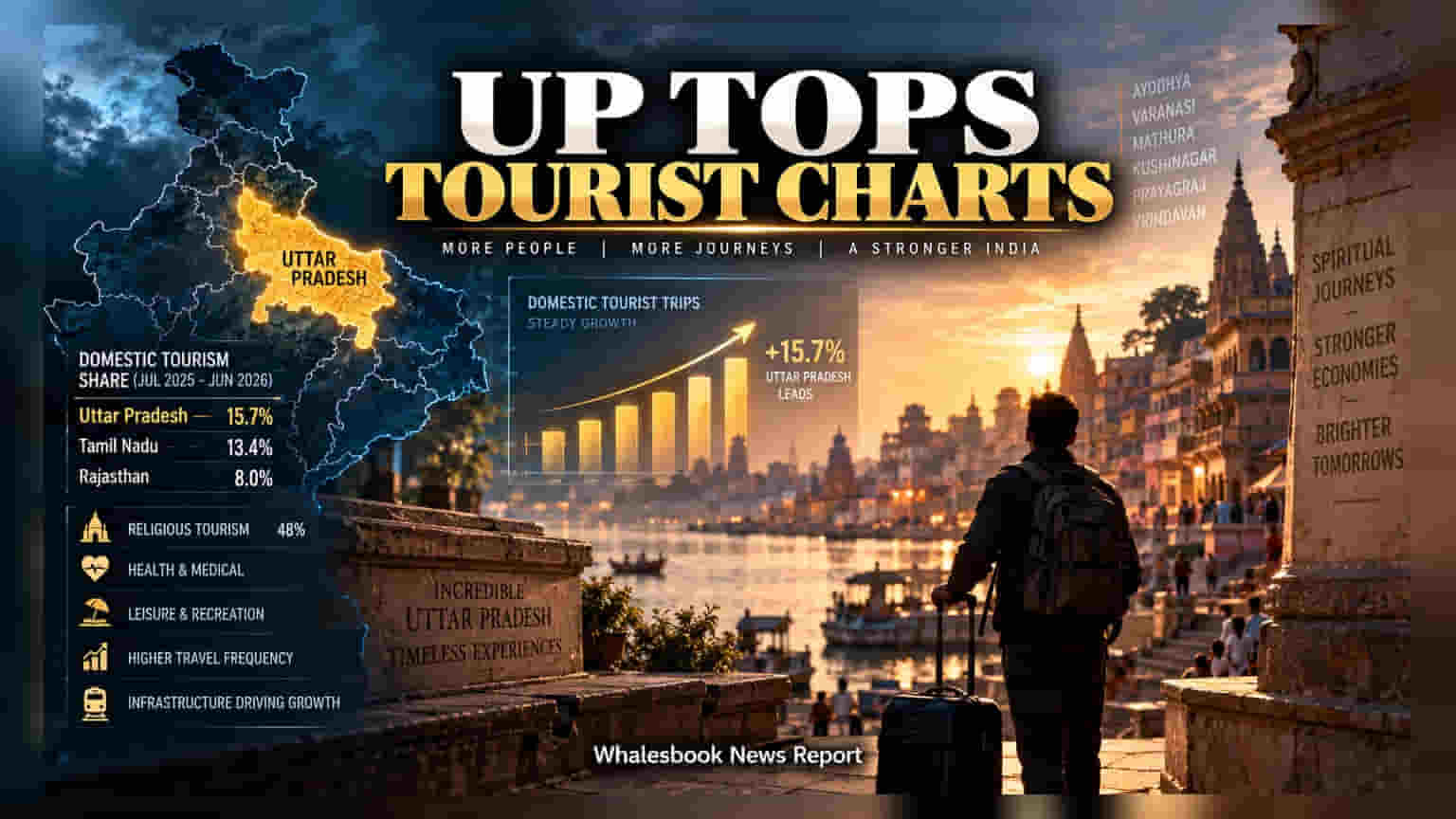
Uttar Pradesh has emerged as India's top domestic tourism destination, capturing a 15.7% share of total visitor-trips. This surge, led by pilgrimage and health travel, highlights potential growth for the hospitality, aviation, and infrastructure sectors. Investors should monitor how rising trip frequency and infrastructure spending impact earnings for travel-related companies.
Uttar Pradesh has secured the top position in India’s domestic tourism market, accounting for 15.7% of all visitor trips recorded between July 2025 and June 2026. This data, released by the Ministry of Statistics, positions the state ahead of Tamil Nadu and Rajasthan, which held 13.4% and 8% shares respectively. For investors, this shift highlights how regional development and increased connectivity are driving household spending in the travel and hospitality sectors.
The survey reveals that religious tourism remains the primary engine, driving 48% of all trips. While pilgrimage is the top reason for travel, rural households are increasingly looking toward health and medical services, while urban households focus on leisure and recreation. With trip frequency rising significantly compared to 2014-15 metrics—recording 127 overnight trips per 100 rural households and 132 for urban ones—the demand for travel services has clearly expanded.
Investors should focus on the impact this has on travel-linked businesses. The hospitality sector, including hotel chains and online travel platforms, directly benefits from higher occupancy and footfalls. Companies that have expanded their footprint in spiritual and leisure hubs in Northern India, particularly in states like Uttar Pradesh, are likely to see steady revenue growth as tourism volumes climb. Higher trip frequency suggests that travel has become a more regular part of household budgets rather than an occasional luxury.
Transportation costs remain the largest expense for travelers. This validates the government’s focus on infrastructure, including new airports, expressways, and improved rail connectivity. Companies involved in infrastructure development, as well as those in the aviation and railway booking space, are key beneficiaries of this trend. However, investors must consider the risk of seasonality. Travel peaks in May and October, creating pressure on infrastructure to handle surges. If connectivity and hotel supply cannot keep pace with this rising demand, service quality and customer satisfaction could suffer, potentially capping growth.
Furthermore, the high cost associated with health-related travel—averaging ₹41,649 per trip for urban households—shows that medical tourism is a durable segment that provides consistent demand regardless of holiday seasons. Looking ahead, investors should monitor quarterly occupancy rates for hotels in major tourist states and track the progress of government-led infrastructure projects. These factors will determine whether the current surge translates into sustained profitability for travel-related firms.